

Updated
|
How to Budget for Private School Tuition in 2025
A practical 2025 guide to budgeting private school tuition, evaluating costs, planning ahead, and building a multi-year strategy for K–12 education.

How to Budget for Private School Tuition in 2025

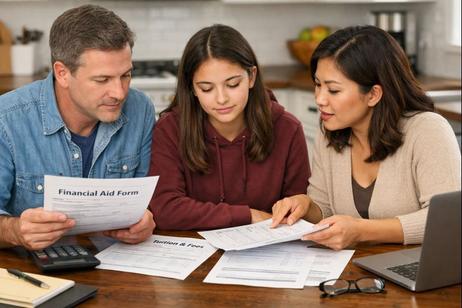
Planning for private school tuition requires foresight, clarity, and a commitment to understanding how costs evolve over time. Families often begin researching private elementary, middle, or high school education years before applying. What many soon discover is that tuition is only one part of a broader financial picture.

This updated 2025 guide offers a practical, nuanced approach to budgeting for private school, including cost drivers, multi-year planning, financial aid, and modern strategies that help families align education decisions with long-term financial stability. All insights reflect PrivateSchoolReview.com’s mission of empowering families to make informed, confident choices about their child’s educational path.

1. Understanding the Cost Landscape

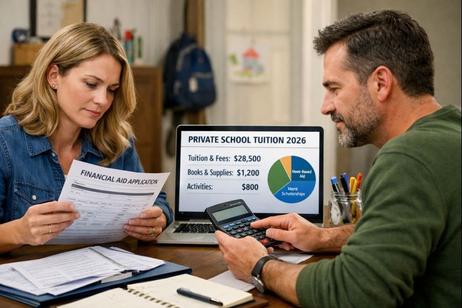
Private schools set tuition based on instructional resources, small class sizes, faculty compensation, facilities, and program offerings. As of 2025, many independent day schools report annual tuition ranging from roughly $15,000 to more than $35,000, depending on region and grade level. Boarding schools typically cost more, though boarding-specific considerations are outside the scope of most early K–12 planning.

A well-prepared budget considers far more than base tuition. Families should review the following categories:

Key cost elements:

  • Base tuition, usually billed annually

  • Books, uniforms, and classroom supplies

  • Technology fees for devices, software, or learning platforms

  • Transportation, whether bus service or family-managed

  • Extracurricular activities, such as athletics, arts programs, and clubs

  • Annual tuition increases, often 3 to 6 percent

Because many private schools revise tuition each year, a multi-year estimate is essential for accurate planning.

To explore how costs compare by

. . .read more

Planning Post-Secondary Pathways for Private-School Students

Updated
|
Planning Post-Secondary Pathways for Private-School Students
A 2025 guide to how private-school families can use dual enrollment, transfer pathways, and early college options to support post-secondary planning.

Planning Post-Secondary Pathways: A 2025 Guide for Private-School Families

Families who choose a private school often do so for small classes, strong academic preparation, and a clear pathway toward college. As students approach their junior and senior years, families begin to consider how to structure the transition from high school to post-secondary study. In 2025, with rising tuition and increasingly flexible college pathways, private-school students have more options than ever to build an efficient, cost-aware, and academically strong start to their college careers.

This updated guide focuses on the aspects of post-secondary planning most relevant to private elementary, middle, and high schools. It reflects Private School Review’s mission of helping families understand educational options, evaluate schools, and make informed decisions during the pre-college years.

While some private-school families once viewed alternative or nontraditional routes as outside the norm, early college planning has become a strategic tool. Dual enrollment, college-level coursework, transfer pathways, and structured advising now allow students to begin earning credit, reduce financial risk, and tailor their transition to a bachelor’s degree.

Below is an updated look at the key considerations for private-school families evaluating early college and flexible post-secondary pathways in 2025.


1. Cost Awareness and Financial Strategy

Private-school families are

. . .read more

How to Start a Private School in 2025: A Complete Guide

Updated
|
How to Start a Private School in 2025: A Complete Guide
Learn how to start a private school in 2025—from mission and legal structure to tuition, accreditation and growth strategy.

Introduction

Starting a private school in 2025 is both a bold undertaking and a timely opportunity. With evolving demographic trends, rising tuition pressures and shifting policy landscapes, founders of new independent schools must balance vision and practicality. In this updated guide for PrivateSchoolReview, we reflect on how to start a private school today—drawing on recent national data, regulatory changes and real-world examples—to offer a comprehensive roadmap for educators, entrepreneurs and mission-driven leaders.

1. Define Your Mission and Educational Model

Your first step in starting a private school is to articulate a compelling mission and select an educational model that aligns with community needs and your institution’s identity. Will your school be a classical liberal-arts day school, a faith-based academy, a Montessori microschool, or a STEM-driven prep school? Clear answers to these questions help you highlight your unique value proposition—especially as competition among schools intensifies and families demand clarity and differentiation. Preschool through grade 12 private schools remain a rich market, with many founders instilling distinctive traditions, cultures and academic philosophies.

2. Legal Structure & State Regulation

While there is no single federal law governing private K-12 schools, your new school must comply with your state’s private school regulations. The U.S. Department of Education maintains a state-by-state directory of registration, licensing and private school oversight requirements.

You must select a legal structure: a nonprofit (e.g., 501(c)(3)), a for-profit corporation, or sometimes a hybrid form. Nonprofits benefit

. . .read more

The A to Z of Private Schools in 2025

Updated
|
The A to Z of Private Schools in 2025
Explore the A to Z guide to private schools in 2025 — trends, tuition, programs, enrollment, choice policies and what families should know today.

The A to Z of Private Schools in 2025

In the evolving landscape of K–12 education, the decision to enrol a child in a private school remains one of the most significant choices a family will make. This A to Z guide offers parents, students and educators a comprehensive overview of private schools in 2025 — from Admissions and Tuition to Values, Workforce and Zoning considerations. The structure mirrors the classic A–Z format while reflecting the latest data, policies and real-world insights for this year.

A – Admissions & Accreditation

Admissions into private schools today often involve more than submitting an application and transcript. Many schools incorporate assessments, interviews and even student-portfolio reviews. According to a recent guide, private schools may set higher graduation requirements and expect a culture of “learning is expected, not optional.” Private School Review Accreditation remains a key differentiator: families should look for regional or national accrediting bodies to ensure curriculum quality and smooth college transitions.
Internal link: For boarding and day distinctions, see our related overview at BoardingSchoolReview.com.

B – Boarding versus Day School

While the vast majority of private K-12 schools are day schools, boarding options continue to attract families seeking immersive residential experiences. According to analysis, full boarding school costs for seven-day boarding in 2025 are averaging around $69,150 per year. Day-school private tuition is significantly lower (see Section T). When choosing between boarding or day, families should weigh campus

. . .read more

So Many Choices: Navigating Private School Selection in 2025

Updated
|
So Many Choices: Navigating Private School Selection in 2025
Discover how families are making informed private school choices in 2025 — tuition, enrollment trends, programs, and policy updates for private schooling.

So Many Choices

(Updated for 2025)

Choosing a private school for your child is one of the most significant decisions a family can make. The landscape of private education in the United States is changing—tuition levels are shifting, enrollment dynamics are evolving, and new programs and policies are influencing how families select schools. This article refreshes our earlier take with 2025 data, expert commentary, and real-world examples to help parents, students, and educators navigate “so many choices.”

1. The Big Picture: Tuition, Enrollment & Choice

Tuition Trends

In 2025, the cost of attending a private K-12 school remains highly variable. According to PrivateSchoolReview’s most recent figures, the national average private school tuition is about $14,999 per year for the 2025-26 school year, with elementary tuition averaging approximately $14,018, and high school tuition around $17,954.

Other sources point to a somewhat lower average—roughly $12,790 nationally—though with wide variability by region and type of school.
For example, in California the average private school tuition in 2025 is reported at $17,931 per year, with elementary at $17,293 and high school at $23,273. Private School Review

When boarding schools or highly selective independent schools come into play, costs can be far higher—day school peers report tuition above $30,000 in many cases, and boarding campuses commonly charge $55,000 to $70,000 + per year. Coursmos

Enrollment Trends

Enrollment growth in the private school sector continues, but the pace

. . .read more

Recent Articles

Private School Gap Years Before High School: Is It Worth It?
Learn how private school gap years before high school work, who benefits most, and whether delaying ninth grade is worth the investment.
What Happens When a Private School Closes Mid-Year? A Parent Survival Guide
What parents should do if a private school closes mid-year, including records, tuition, transfers, college applications, and student support.
How Private Schools Support Students Building Online Personal Brands
Discover how private schools help students build responsible online personal brands through digital literacy, entrepreneurship, and media education.