


Private School Review Blog

Can Private Schools Raise Fees After You Sign? - Can private schools increase mandatory fees after enrollment contracts are signed? Learn how contract terms, fee disclosures, state laws, and parent rights affect unexpected charges and available options. (Updated Nov. 3, 2026)
Financial Aid When a Sibling Graduates Private School - Learn how private school financial aid may change when an older sibling graduates, including revised family contributions, sibling discounts, college expenses, renewal decisions, and practical steps to protect affordability. (Updated Nov. 3, 2026)
Private School Expansion: Preserving School Culture - Discover how growing private schools can expand enrollment while preserving small classes, personal attention, strong relationships, and school culture, plus essential questions parents should ask before choosing a school. (Updated Nov. 3, 2026)

Quick Facts (26-27)

Updated
|
Project Based Learning in Private Schools Guide
Explore project-based learning in private schools, outcomes, assessment methods, and what parents should expect in 2026.

Project-based learning has become a defining feature of many modern classrooms, particularly within independent education. As families explore academic options, understanding how project-based learning in private schools, outcomes, and assessment work in practice can offer valuable insight into a school’s teaching philosophy and effectiveness.

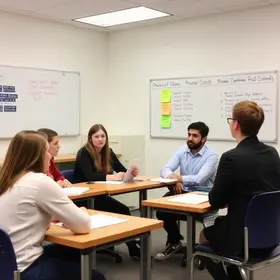
Unlike traditional instruction models that rely heavily on lectures and standardized tests, project-based learning, often abbreviated as PBL, emphasizes hands-on, inquiry-driven experiences. Students engage in extended projects that require critical thinking, collaboration, and real-world problem solving. In 2026, this approach is no longer experimental; it is a central strategy in many leading private schools.

What is Project-Based Learning?

Project-based learning is an instructional approach where students learn by actively exploring complex questions or challenges over time. Rather than passively receiving information, students take ownership of their learning through investigation and creation.

Key characteristics of PBL include:

  • Real-world relevance and authentic problems
  • Student-driven inquiry and research
  • Collaborative work and peer feedback
  • Integration of multiple subject areas
  • Public presentation or demonstration of learning

For example, instead of completing a worksheet on environmental science, students might design a sustainability plan for their school campus, incorporating data analysis, writing, and presentation skills.

Why Private Schools Are Embracing PBL

Private schools are often early adopters of innovative teaching methods due to their curricular flexibility. Over the past two years, many have expanded their use of project-based learning to better prepare students for higher education and evolving workforce demands.

Emphasis on Skill Development

Colleges and employers increasingly value skills such as critical thinking, communication,

. . .read more

AI Data Privacy Policies in Independent Schools

Updated
|
AI Data Privacy Policies in Independent Schools
Learn how independent schools manage AI data privacy, key policies, risks, and what parents should look for in 2026.

Artificial intelligence is rapidly reshaping classrooms, and with that transformation comes a pressing concern for families and educators alike: data privacy. As independent schools adopt AI-powered tools for instruction, assessment, and administration, understanding AI data privacy policies in independent schools has become essential for parents evaluating educational options in 2026.

From personalized learning platforms to automated grading systems, AI relies on large volumes of student data. How that data is collected, stored, and protected varies widely across institutions. This article examines what independent schools are doing to safeguard student information, the risks involved, and how families can make informed decisions.

Why AI Data Privacy Matters in Independent Schools

Independent schools often have greater flexibility than public institutions when adopting new technologies. This agility allows them to integrate advanced AI tools quickly, but it also places more responsibility on school leadership to establish strong data governance policies.

AI systems frequently process sensitive student information, including:

  • Academic performance and learning patterns
  • Behavioral data and engagement metrics
  • Personal identifiers such as names and contact details
  • In some cases, biometric or voice data

Without clear policies, this data can be vulnerable to misuse, unauthorized access, or long-term storage risks.

Recent guidance from the U.S. Department of Education emphasizes that schools must ensure AI tools comply with federal student privacy laws such as FERPA, even when using third-party vendors.

Key Components of Strong AI Data Privacy Policies

Not all independent schools approach AI data privacy the same way. However, high-quality policies typically include several

. . .read more

Private School Governance Structures Explained

Updated
|
Private School Governance Structures Explained
Learn how private school governance structures, board roles, and transparency shape school quality and accountability.

Private school governance structures play a central role in shaping the quality, accountability, and long-term success of independent schools. For families evaluating private education options, understanding how these institutions are governed offers valuable insight into decision-making, financial stewardship, and institutional integrity.

Unlike public schools, which are overseen by elected school boards and government agencies, private schools operate under independent governance systems. These typically involve boards of trustees or directors who are responsible for guiding the school’s mission, ensuring financial sustainability, and supporting leadership.

In recent years, governance transparency and board accountability have become increasingly important. As of 2024 and 2025, several national accreditation bodies and education associations have updated governance standards to emphasize ethical oversight, diversity in leadership, and clear communication with stakeholders. This shift reflects growing expectations among parents and educators for openness and responsible management.

This article explores how private school governance structures work, what responsibilities boards hold, and why transparency matters when choosing a school.

Understanding Private School Governance Structures

At most private schools, governance is separated from day-to-day management. This distinction ensures that strategic oversight remains independent while operational leadership is handled by school administrators.

Key Components of Governance

A typical private school governance structure includes:

  • A board of trustees or directors
  • A head of school or principal
  • Committees focused on finance, academics, development, and governance

The board is responsible for setting the strategic direction, while the head of school implements policies and manages daily operations.

This structure is designed to maintain checks and balances. According

. . .read more

Alternative Transcript Models in Private Schools

Updated
|
Alternative Transcript Models in Private Schools
Explore alternative transcript models, mastery transcripts, and portfolio admissions in private schools and what they mean for college admissions.

Alternative transcript models, mastery transcripts, and portfolio admissions are reshaping how private school students present their academic achievements in 2026. As colleges place increasing value on skills, competencies, and authentic learning, traditional GPA-based transcripts are no longer the only pathway to demonstrate readiness for higher education.

Private schools, known for their flexibility and innovation, are leading this shift. By adopting mastery-based transcripts and portfolio-driven admissions approaches, these institutions aim to provide a more complete and accurate picture of student learning.

This article explains how these models work, why they are gaining traction, and what families should consider when evaluating schools that use them.

What Are Alternative Transcript Models?

Alternative transcript models move beyond conventional letter grades and cumulative GPAs. Instead, they emphasize demonstrated mastery, skills, and real-world application of knowledge.

These models typically include:

  • Competency-based evaluations instead of grades
  • Narrative feedback from teachers
  • Evidence of student work and projects
  • Skills progression across disciplines

The goal is to provide a more comprehensive view of a student’s abilities, rather than a single numerical summary.

This approach aligns with broader shifts in education, including competency-based learning models supported by organizations such as the U.S. Department of Education.

Understanding Mastery Transcripts

Mastery transcripts are a leading form of alternative transcripts. Developed in part by the Mastery Transcript Consortium, they replace traditional course listings and grades with a system that tracks skill development.

Key Features of Mastery Transcripts

  • Skills-based reporting, such as critical thinking or scientific reasoning
  • Levels of mastery, rather than letter grades
  • Digital platforms
. . .read more

Independent School Accreditation Explained

Updated
|
Independent School Accreditation Explained
Learn how independent school accreditation works, why it matters, and what families should look for when evaluating private schools.

Independent school accreditation, explained clearly, is essential for families evaluating private education options in 2026. While private schools are not required to follow the same regulations as public schools, accreditation provides an important layer of accountability, quality assurance, and continuous improvement.

For parents, accreditation signals that a school meets established standards in areas such as curriculum, faculty qualifications, governance, and student outcomes. For schools, it serves as both a benchmark and a roadmap for ongoing development.

This guide explains how independent school accreditation works, who oversees it, and why it should play a central role in your school search.

What Is Independent School Accreditation?

Independent school accreditation is a voluntary process through which private schools undergo evaluation by an external accrediting organization. The goal is to ensure that the school meets specific educational and operational standards.

Accreditation typically involves:

  • A comprehensive self-study conducted by the school
  • A peer review process by educators from other institutions
  • An on-site evaluation visit
  • Ongoing monitoring and periodic re-accreditation

Unlike government regulation, accreditation is conducted by independent agencies. However, many are recognized by national organizations such as the Council for Higher Education Accreditation.

For families researching options, accreditation is one of the most reliable indicators of institutional quality. It complements other considerations discussed in 7 Reasons Why Private School May Be The Right Choice.

Who Accredits Independent Schools?

Several regional and national organizations accredit private schools in the United States and internationally. These agencies establish standards and oversee the evaluation process.

Major Accrediting
. . .read more

Recent Articles

Can Private Schools Raise Fees After You Sign?
Can private schools increase mandatory fees after enrollment contracts are signed? Learn how contract terms, fee disclosures, state laws, and parent rights affect unexpected charges and available options.
Financial Aid When a Sibling Graduates Private School
Learn how private school financial aid may change when an older sibling graduates, including revised family contributions, sibling discounts, college expenses, renewal decisions, and practical steps to protect affordability.
Private School Expansion: Preserving School Culture
Discover how growing private schools can expand enrollment while preserving small classes, personal attention, strong relationships, and school culture, plus essential questions parents should ask before choosing a school.