Evaluating Schools

Here you will find resources and tools to aid in your search and evaluation of private schools. Explore the ranking system and read what schools have to say about it. Learn more about the most important questions to ask and how an education consultant can get answers. Use our checklists to help compare school administration, curriculum and more.

View the most popular articles in Evaluating Schools:

How Much Teacher Access Does Your Child Get?

Updated
|
How Much Teacher Access Does Your Child Get?
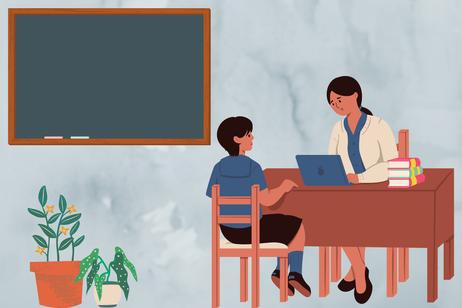
Learn how to evaluate teacher access at private schools, including extra-help time, advising, communication, academic support, and the questions families should ask before choosing a school today.

Small classes are one of private education's most familiar selling points. A school may advertise a low student-teacher ratio, individualized attention and faculty members who know every child. But those numbers do not necessarily tell parents how much teacher access their child will actually receive outside class.

Can a student meet a math teacher before tomorrow's test? Will an English teacher review an essay draft? If a ninth grader is confused for several days, does someone notice and arrange help, or is the student expected to initiate it?

For families evaluating private schools in 2026, teacher access deserves to be examined as a practical service rather than an abstract benefit. The strongest question is not simply how many students sit in a classroom. It is what happens when one of those students needs additional time.

Teacher Access Is Different From a Low Student-Teacher Ratio

A low student-teacher ratio can create favorable conditions for individual attention, but it does not guarantee availability outside scheduled lessons.

Consider two schools with similar ratios. At one, teachers hold regular extra-help periods, advise students, supervise study halls and remain on campus after classes. At another, teachers teach full schedules, coach activities and handle administrative responsibilities that leave relatively little unscheduled time.

The statistics look similar. The student experience may be very different.

This is why families should investigate the structure of the school day. Private School Review's overview of daily life for private school students illustrates how academics, advisory periods, lunch,

. . .read more

How Much Homework Is Too Much?

Updated
|
How Much Homework Is Too Much?
Learn how to compare private school homework expectations, recognize excessive workloads, evaluate assignment quality, and ask better questions about academic balance before choosing a school for your child.

Homework is one of the hardest parts of a private school experience to evaluate before enrollment. Families can tour classrooms, compare curricula, review course catalogs, and meet teachers, but the evening workload remains largely invisible.

That matters because two schools describing themselves as “academically rigorous” can create very different lives for students. One may expect focused reading, problem-solving, and writing that can be completed within a predictable period. Another may routinely produce late nights because several departments assign major work simultaneously.

So, how much homework is too much? There is no universal number that applies to every student or grade. A better approach is to examine workload in context: the purpose of assignments, how long students actually spend completing them, whether departments coordinate deadlines, and what students must sacrifice to keep up.

For families comparing private schools in 2026, homework deserves to be treated as a school-selection issue, not something to discover in September.

Why Homework Hours Alone Can Be Misleading

Parents often begin with a straightforward admissions question: “How many hours of homework should we expect each night?”

The answer is useful, but it needs context.

Thirty minutes of challenging mathematics may require greater concentration than an hour of routine exercises. Reading 40 pages of a novel is different from analyzing a difficult primary source. Preparing a presentation over several nights is different from completing repetitive worksheets.

Research also suggests that homework's relationship with achievement is complicated. A 2024 systematic review indexed by the

. . .read more

Ask Current Parents What Admissions Won't Answer

Updated
|
Ask Current Parents What Admissions Won't Answer
Learn how to ask current private school parents revealing questions about culture, academics, communication, costs, discipline, and community life before deciding whether a school truly fits your family well.

Admissions officers are valuable sources of information. They can explain curriculum, class sizes, financial aid, extracurricular programs, application requirements, and the school's educational philosophy. But there are some questions they cannot answer in quite the same way as a parent who has experienced the school from the other side of enrollment.

What happens when your child struggles? How responsive are teachers after the welcome period ends? Are families expected to participate in fundraising constantly? How intense is the homework in practice? Does the parent community feel welcoming, competitive, or difficult to enter?

These are not necessarily questions admissions "won't answer" because a school is hiding something. Rather, current parents possess a different kind of information: lived experience.

For families evaluating private schools in 2026, speaking with current parents can therefore become an important part of due diligence. The key is knowing whom to ask, what to ask, and how to distinguish one family's experience from a broader pattern.

Why Current Parents Can Tell You Something Different

A school tour shows you the institution intentionally. A parent conversation can help you understand it incidentally.

Private School Review's How to Choose a Private School: 2026 Parent Guide recommends looking beyond basic academics to factors including culture, student support, extracurricular opportunities, costs, and admissions procedures. Those categories provide a useful starting point, but current families can often explain how policies work in daily life.

For example, an admissions officer might explain that teachers communicate regularly with families. A parent

. . .read more

How to Compare Schools When Every Website Says "Individualized"

Updated
|
How to Compare Schools When Every Website Says "Individualized"
Learn how to compare private schools beyond marketing language by evaluating academics, support services, teaching methods, and student outcomes.

Visit the websites of several private schools, and you will quickly notice a recurring theme. Nearly every school describes its educational approach as "individualized," "personalized," or "student-centered." While these phrases sound appealing, they often reveal very little about what students actually experience in the classroom.

In reality, individualized education can look very different from one school to another. At one school, it may mean small classes and frequent teacher feedback. At another, it could involve flexible course selection, specialized learning support, or opportunities for independent research. The only way to understand what a school truly offers is to look beyond its marketing language.

By asking thoughtful questions, observing classrooms, and comparing schools using consistent criteria, families can make decisions based on substance rather than slogans.

What Does "Individualized" Really Mean?

Unlike terms such as accreditation or graduation requirements, "individualized learning" has no single definition. Schools are free to interpret the concept in ways that reflect their own educational philosophy.

Some schools individualize instruction by adapting lessons for different learning styles. Others focus on mentoring relationships, academic advising, or giving students greater flexibility in choosing advanced coursework and extracurricular opportunities.

When admissions staff describe their school as individualized, ask for specific examples rather than general statements. A strong school should be able to explain exactly how its approach benefits students daily.

Look Beyond Class Size

Small classes are often promoted as evidence of individualized education, but numbers alone do not guarantee personal attention.

Instead of focusing only on student-to-teacher

. . .read more

Choosing Between a Traditional Private School and a Microschool

Updated
|
Choosing Between a Traditional Private School and a Microschool
Compare traditional private schools and microschools to understand differences in academics, class size, flexibility, cost, and student experience before choosing the best educational fit.

For decades, families exploring private education generally compared independent schools, faith-based schools, and boarding schools. Today, another option is becoming increasingly visible: the microschool.

Microschools have grown rapidly since the pandemic, offering highly personalized learning environments with very small enrollments and flexible instructional models. At the same time, traditional private schools continue to attract families seeking established academic programs, extensive extracurricular opportunities, and proven college preparation.

Neither model is inherently better. The right choice depends on your child's learning style, personality, academic needs, and your family's expectations. Understanding how these two approaches differ can help you make a more informed decision.

What Is a Microschool?

A microschool is typically a small learning community serving anywhere from a handful of students to several dozen. Many combine elements of private schooling, homeschooling, project-based learning, and individualized instruction. Some operate as fully accredited private schools, while others function under different state educational regulations.

Because microschools vary significantly, families should carefully investigate curriculum, accreditation, staffing, and long-term academic planning before enrolling.

The rapid growth of microschools has been fueled by increased interest in school choice and flexible educational models.

What Traditional Private Schools Offer

Traditional private schools generally enroll larger student populations and follow well-established academic calendars and grade-level structures. Most offer comprehensive curricula, organized athletics, performing arts, clubs, advanced coursework, and college counseling.

These schools have often spent decades building their educational programs and developing relationships with colleges and universities. Families who value consistency, broad extracurricular offerings, and established school traditions

. . .read more

Recent Articles

Should Your Child Stay at the Same Private School K–12?
Explore whether your child should attend the same private school from kindergarten through graduation, weighing academic continuity, friendships, changing needs, tuition costs, and opportunities at different educational stages.
When Your Child's Closest Friends Leave Private School
Learn how to support your child when close friends leave private school, manage loneliness, maintain friendships, encourage new connections, recognize emotional challenges, and decide when additional school support is needed.
When Your Child Doesn't Connect With Their Teacher
Discover when parents should intervene if their child struggles to connect with a private school teacher, including warning signs, communication strategies, classroom concerns, and practical steps toward improving relationships.

Choosing a Private School