
This is the first of three articles addressing the advantages of sending your child to private school. Private schools offer several advantages specific to students, of which you, as a parent, need to be aware. Here are three of them.
1. Your child will build a network of friends that she will have for life.
Some may wonder why I would put this benefit for students at the top of my list. That's because I sincerely believe networking is the key to success in almost everything. Because most private schools are relatively small communities, your child will have a perfect chance of getting to know almost everybody in the school community, especially her classmates. According to the National Center for Education Statistics, private schools generally have smaller enrollments than public schools, creating opportunities for closer relationships among students and teachers. While your child may come from an entirely different background, perhaps even another country, from her classmates, she will get to know everybody in the classroom, on the playing field, and on the stage. With social media platforms such as Instagram, TikTok, Snapchat, LinkedIn, and other messaging apps providing instantaneous communication, it is relatively easy to keep that high school network of friends going after she graduates.
This close-knit network of friends from school will help open doors for years after she graduates. The bonds of friendship developed in private school are an essential advantage for a private school student as she begins her career.
Private schools can build team spirit and school pride because everybody is on the same page. Remember: you chose the school, and the school chose you. Both parties mutually agreed to this partnership. There's no passive acceptance factor here. You didn't have to send your child to a school simply because you lived within school district boundaries. You wanted your child to attend that specific private school. That school wanted her to attend.
Implicit in that acceptance is that you bought into the school's aims and objectives, philosophy, and the general way things are done. Without constant distractions from parents with other agendas, it is possible to build community spirit and a sense of purpose within a school. That, in turn, creates strong bonds among the students as they progress through their school years and then finally head off to college and their careers. A vital constant, an anchor if you will, is that network of friends she built during her years at private school. It is a distinct advantage of attending private school.
Families comparing different school communities may also find Making the Right Choice: A Parent's Guide to Private School Selection helpful when evaluating school culture and student life.
This video offers a look at the University of Chicago Lab Schools.
2. The demands of rigorous academic studies, athletics, and extracurricular activities will stretch her.
The amount of work involved and the intensity of private school academics are game-changers for most young people. They begin to ask themselves, "Is it my best?" versus "I can get away with that." Rigorous academics in most private schools expect greatness, your child's personal best. The teaching and the coursework are designed with that goal in mind. Children will rise to those expectations, too. Perhaps that is something a helicopter parent can't understand. If everybody in her class is working hard and doing their best, so will she. Peer pressure works in a classroom, too.
I remember asking my eldest daughter how her English classes were going when she attended Kent School. "Dad! I love it. We are studying three Shakespeare plays in the first semester. At my old high school, I would have been lucky to get through one play in a year." Her old high school was an excellent public school, but it simply didn't have the flexibility or resources to offer the level of academic challenge our daughter needed to stretch her mind and intellect.
Private schools typically set aside time during the school day for athletics or wellness activities. Everybody participates in something. Private schools believe in educating the whole child. Consequently, physical activity is part of the regular program. More importantly, participation in sports teaches your child how important exercise is for her well-being. Teaching her the value of regular exercise while she is young helps establish healthy habits that can last a lifetime.
Extracurricular activities are not "extra" in most private schools. Nor is participation optional at many schools. Once again, everybody participates in some club or group. Your daughter may not be the next Renée Fleming, but she will never forget the thrill of the school's choir performing in a renowned concert hall or the robotics team competing in a regional championship. Teaching students that what they thought was impossible is, in fact, possible with some hard work and effort is an invaluable lesson. That's what schools and teachers do.
Academics, athletics, and extracurricular activities comprise the three parts of the "stretching" process, which will impact your child. All of these benefit her as a young person and later in life. They embody the school's mission to educate the whole child. She isn't attending school simply to learn physics and math. She's there to exercise her body and learn how to work with her teammates to win the game. She's there to sing in the choir, play trumpet in the band, join the debate team, or participate in student government. These experiences help produce a child who is well-rounded and ready for anything.
The U.S. Department of Education continues to emphasize the importance of providing students with access to a well-rounded education that includes academics, the arts, physical education, and extracurricular opportunities.
Parents interested in comparing academic offerings may also enjoy What to Research Before Choosing a Private School.
This video offers a student's perspective on The Rectory School.
3. She will build confidence in her abilities as she accomplishes things she probably didn't realize she could achieve.
A skilled teacher's ability to see each of her students' potential is just part of the DNA many teachers seem to be born with. Your daughter may have no clue what Fermat's Theorem is. She may even hate math. But watch the transformation that occurs when that "Eureka!" moment happens. She will "get it" and suddenly realize how it works and that she can do it. Then, on to the next challenge.
Teaching children how to cope with challenges, think critically, synthesize information, and solve problems is another tangible benefit of a private school education for your child.
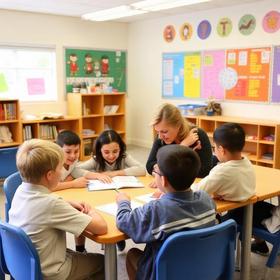
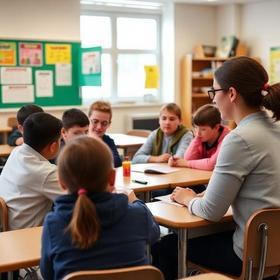
Small class sizes make real teaching possible. Your child will not simply be a number. She will be one of a dozen or so students seated around a table with her teacher. Analysis, discussion, debate, opinion, research, collaboration, and presentation skills are all part of her learning experience. The advantage here is that a private school education can be solid preparation for college work.
Research from the Institute of Education Sciences continues to demonstrate that strong teacher-student relationships, active classroom engagement, and individualized instruction contribute to improved academic outcomes and increased student confidence.
With all the negativity in the world today, building confidence and a "can-do" attitude in our children is critically important. Private schools often set personal growth as a goal for every student. Yes, it happens at different rates of speed. However, three or four years after she enters the school, she will be a much more confident young person who can handle just about anything life throws at her because of all her experiences at her private school.
Parents interested in learning more about the support available for students may also find How Private Schools Support Students with Learning Differences helpful when comparing schools and the academic resources they provide.
A final word to you as a parent: Your child will probably not appreciate how these three benefits work together to produce the results you know are possible and very much want. Don't dwell on that. She will look back in a few years and realize what a wonderful thing you did for her. Do I sound manipulative? Of course! But for the right reasons.