
Voucher eligibility can look simple in headlines, but the fine print often tells a different story. As more states expand school choice programs, parents are encountering a growing mix of vouchers, education savings accounts (ESAs), tax-credit scholarships, and specialized scholarships for students with disabilities.
For families considering private school, these programs can make tuition more manageable. Yet eligibility rules are rarely identical from one state to another. Some programs prioritize income, others require previous public school attendance, and many depend on whether the private school participates. Parents who miss those details may lose funding, miss deadlines, or assume a school is covered when it is not.
Why Voucher Eligibility Deserves Careful Review
School choice policies continue to shift in 2026. The National Conference of State Legislatures notes that voucher programs vary significantly by state, including who qualifies, how funding is distributed, and what educational expenses are covered. Parents should review their state's current rules through official program pages before making enrollment decisions.
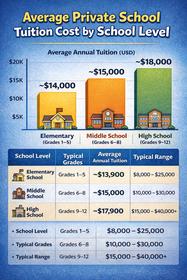
Private School Review's guide to free private schools and voucher programs explains why families should compare voucher amounts, private school costs, and school participation before assuming a program will cover the full expense.
Common Voucher Eligibility Rules Parents Miss
Prior Public School Attendance
Some voucher programs were designed to help students transfer out of public schools. That means a child already enrolled in private school may not qualify, even if the family otherwise meets income or residency rules.
Parents should ask:
- Does my child need prior public school enrollment?
- Are incoming kindergarten students exempt?
- Are transfer, military, or foster students treated differently?
- Does homeschooling affect eligibility?
These details matter because a student's enrollment history can determine whether funding is available.
Income Limits and Documentation
Many programs still use income-based eligibility, even as some states move toward universal access. Families may need tax returns, proof of household size, pay stubs, or other documentation.
Parents comparing affordability should also review Private School Review's guides to financial aid for private schools and paying for private school.
Residency Rules
Voucher programs are usually state-specific. Families who recently moved, share custody across state lines, or are relocating for work should confirm residency requirements before applying.
Proof may include a lease, utility bill, state tax record, or other documentation.
School Participation Is Not Automatic
Even when a student qualifies, the chosen private school must participate in the program. Some schools accept vouchers or ESAs; others do not. Some may participate but still require families to pay the difference between the award and full tuition.
This is where school research matters. Parents comparing educational options may benefit from Private School Review's guide on private school versus public school. Families evaluating admissions, cost, and fit can also consult Choosing the Right Private School Path.
Students With Disabilities May Have Different Rules
Some states offer separate scholarship pathways for students with disabilities. These programs may require an individualized education program (IEP), a formal diagnosis, or prior public school services.
Parents should review both state program rules and federal special education protections. The U.S. Department of Education provides IDEA resources explaining federal special education rights and services.
Military Families, Foster Children, and Other Special Categories
Many states create separate eligibility pathways for students facing unique circumstances.
Examples may include:
- Children of active-duty military personnel
- Foster children
- Adopted children
- Students assigned to low-performing public schools
- Students with disabilities
Parents should review all available pathways rather than assuming only one category applies to their family.
Deadlines Can Be Earlier Than Expected
Voucher applications often have fixed windows. Missing a deadline can mean waiting until the next school year.
Parents should track:
- Application opening dates
- Document submission deadlines
- School enrollment deadlines
- Award acceptance dates
- Annual renewal requirements
Private schools may also have admissions deadlines that do not align perfectly with voucher timelines.
The Total Cost May Still Exceed the Voucher
A voucher may reduce tuition but not eliminate all expenses. Families should ask whether the award covers:
- Tuition only
- Registration fees
- Books and supplies
- Transportation
- Technology
- Uniforms
- Activity fees
For school-level data, parents can use the National Center for Education Statistics Private School Search database.
Annual Renewal Rules Matter
Some families assume voucher approval is permanent. In many programs, eligibility must be renewed annually.
Renewal may require updated income documents, proof of continued residency, enrollment verification, or compliance with program rules. Missing renewal requirements can interrupt funding and leave parents responsible for tuition.
The U.S. Department of Education also provides information about federal education programs and family resources.
Questions Parents Should Ask Before Applying
Before relying on voucher funding, parents should ask:
- What exact eligibility category applies to my child?
- Does prior public school enrollment matter?
- Is there an income limit?
- What proof of residency is required?
- Does the private school accept the voucher?
- Will the voucher cover full tuition or only part of it?
- What costs remain after the award?
- Is renewal required every year?
These questions help parents avoid surprises after they have already chosen a school.
Making a Confident School Choice
Voucher eligibility can open doors for families, but the fine print matters. Prior enrollment rules, income verification, residency requirements, school participation, and renewal deadlines can all affect whether a child actually receives funding.
Parents who review rules early, confirm school participation, and compare the full cost of attendance are better prepared to make informed decisions. Understanding voucher eligibility before applying can prevent costly mistakes and help families choose a private school with greater confidence.