
For many families, finding an affordable private school feels like the perfect solution. Lower tuition can make private education accessible without placing excessive strain on a household budget. In an era of rising educational costs, schools that advertise affordability often attract significant interest from parents seeking smaller classes, specialized instruction, or a values-based education.
However, affordability can sometimes come with tradeoffs. While many lower-cost private schools provide excellent educational experiences, others may operate with fewer resources, reduced support services, or more limited academic offerings. Understanding what is included in a school's tuition, and what may be missing, can help families make more informed decisions.
The goal is not to determine whether an affordable private school is good or bad. Rather, it is about understanding how lower tuition can affect the overall educational experience and whether those trade-offs align with a child's needs.
Why Private School Tuition Varies So Widely
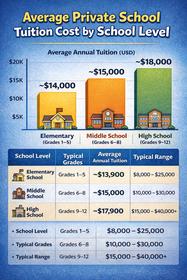
Private school tuition can range from a few thousand dollars per year to more than $50,000 annually. Several factors influence pricing, including:
- Faculty salaries
- Campus facilities
- Student support services
- Technology investments
- Athletic programs
- Arts programs
- Transportation offerings
- Boarding options
As explained in Private School Review's guide to paying for private school, tuition alone does not always reflect the full educational value a school provides.
A lower tuition bill may result from efficient operations, religious sponsorship, strong fundraising, or modest facilities. In other cases, it may indicate that certain services simply are not offered.
Student Support Services Are Often the First Difference
One of the most significant distinctions between lower- and higher-cost private schools lies in student support services.
These may include:
- Academic intervention programs
- Learning specialists
- Reading support
- Math tutoring
- School psychologists
- Speech and language services
- College counseling
- Mental health counseling
Some affordable private schools maintain robust support systems. Others operate with minimal specialized staff.
Parents of students with learning differences should pay particular attention to available resources. The U.S. Department of Education provides information about educational supports and student services that families may wish to compare against what individual schools offer.
Academic Course Selection May Be More Limited
A school can provide an excellent core education while still offering fewer academic choices.
Families should examine:
- Advanced Placement (AP) offerings
- Honors courses
- STEM programs
- Foreign language options
- Dual enrollment opportunities
- Specialized electives
A smaller private school may have fewer teachers available to support a broad range of courses. As a result, students may encounter fewer scheduling options than they would at larger private or public schools.
Parents comparing educational pathways may benefit from Private School Review's guide on private school versus public school, which discusses differences in academic offerings and resources.
Extracurricular Programs May Be Smaller
Sports, arts, clubs, and leadership opportunities contribute significantly to student development.
Affordable schools may offer:
- Fewer athletic teams
- Limited performing arts programs
- Smaller club selections
- Reduced competition travel opportunities
- Fewer specialized facilities
This does not necessarily create a weaker educational environment. In fact, smaller schools sometimes provide greater participation opportunities because fewer students compete for available positions.
The key question is whether the available activities align with a child's interests and goals.
Families seeking benchmarks for extracurricular offerings at independent schools can explore resources from the National Association of Independent Schools, which provides research and guidance on student engagement, school programs, and educational best practices.
Technology Resources Can Vary
Technology spending represents a substantial expense for schools.
Higher-tuition schools often invest heavily in:
- One-to-one device programs
- Advanced computer labs
- Robotics programs
- Engineering makerspaces
- Interactive classroom technology
Lower-cost schools may use shared devices, older equipment, or fewer specialized technology resources.
Parents should ask not only what technology exists but also how effectively it is integrated into instruction.
College Counseling May Look Different
Many families choose private schools partly because of college preparation.
However, college counseling services vary considerably.
A school with higher tuition may employ multiple dedicated college counselors who begin working with students early in high school. More affordable schools may rely on a single counselor who balances college advising with additional responsibilities.
Families should ask:
- How many students are assigned to each counselor?
- When does college planning begin?
- Are financial aid workshops offered?
- What level of application support is provided?
Private School Review's article on financial aid for private schools highlights how financial planning often becomes part of the broader college preparation process.
Facility Differences Are Not Always Obvious
Parents touring schools naturally notice classrooms and common spaces. However, facility differences often extend beyond first impressions.
Lower tuition schools may have:
- Older buildings
- Smaller libraries
- Fewer athletic facilities
- Limited science lab space
- Shared multipurpose rooms
Meanwhile, higher-cost schools often support extensive facility investments through tuition, donations, and endowment income.
Facility quality does not automatically determine educational quality, but it can influence the breadth of student experiences available.
Research from the National Center for Education Statistics can help families understand broader trends in private school enrollment, staffing, and educational resources across the United States.
Transportation and Auxiliary Services
Another area where affordable schools may reduce costs involves auxiliary services.
Examples include:
- Transportation: Fewer bus routes or no bus service
- Lunch Programs: Limited meal options
- After-School Care: Reduced availability
- Summer Programs: Fewer enrichment opportunities
- Health Services: Limited on-site staffing
Parents should calculate the total cost of attendance rather than focusing exclusively on tuition.
Questions Parents Should Ask During School Tours
When evaluating an affordable private school, families should ask specific questions about services and support.
Consider asking:
- What academic support services are available?
- How many college counselors serve students?
- What advanced courses are offered?
- Which extracurricular programs are available?
- What technology resources do students use?
- Are transportation services provided?
- What additional fees should families expect?
- How does the school support students with learning differences?
The answers often provide a clearer picture of value than tuition alone.
Affordable Does Not Mean Lower Quality
It is important to remember that affordability and quality are not opposites.
Many affordable private schools deliver exceptional educational outcomes through strong leadership, dedicated teachers, community support, and clear educational missions. Religious schools, in particular, often maintain lower tuition through church sponsorship and donor support.
Private School Review's article on free private schools and voucher programs also highlights how scholarships, vouchers, and financial aid can help families access schools that may otherwise appear unaffordable.
Families interested in broader school choice trends can review data from the National Conference of State Legislatures, which tracks voucher programs and other educational choice initiatives across the country.
The challenge is ensuring that lower tuition aligns with a family's expectations and a student's needs.
Looking Beyond the Price Tag
An affordable private school can be an excellent choice, but families should look beyond tuition when comparing options. Academic support, counseling services, extracurricular opportunities, technology resources, and facility investments all contribute to the overall educational experience.
The most affordable school is not always the best value, and the most expensive school is not always the best fit. By carefully evaluating what services are included and which may be limited, parents can make more informed decisions about whether an affordable private school provides the opportunities their child needs to thrive.