
School Facts
School Type
Religious Affiliation
Grades Offered
Grades Nursery/Preschool
Student Body
Total Students
25 students
Student Body Type
Co-ed
% Students of Color
17%
State avg.: 25%
Academic Profile
Total Classroom Teachers
2 teachers
Student-Teacher Ratio
13:1
National avg.: 11:1
Average Class Size
13 students
Classroom Dress Code
Casual
Must be potty trained
Tuition & Financial Aid
Admission Deadline
None / Rolling
Tuition Notes
Tuition based on number of days attended by students - 2 or 3 day programs available - M/W or T/Th, with a Friday program (Pre-K) for 4 year olds.
Admissions Director
Terry Weimer
School Notes
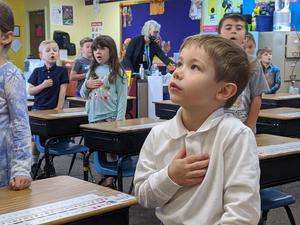
- Children's Day Preschool is a play based curriculum which offers a safe and stimulating environment that is developmentally appropriate and strives to meet each child's individual needs.
- Our program encourages learning and interaction through a variety of activities and centers.
- Children's Day Preschool is a play based curriculum which offers a safe and stimulating environment that is developmentally appropriate and strives to meet each child's individual needs. Our program encourages learning and interaction through a variety of activities and centers.
Source: National Center for Education Statistics (NCES)
Frequently Asked Questions
When is the application deadline for Children's Day Preschool?
The application deadline for Children's Day Preschool is rolling (applications are reviewed as they are received year-round).
Nearby Private Schools
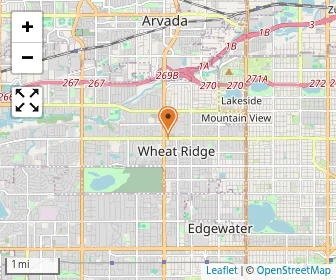
The nearest high school and elementary school to Children's Day Preschool is Beth Eden Baptist School (0.3 miles away)
The nearest preschool is Sts Peter & Paul Catholic Stem School (0.5 miles away)
Show me:
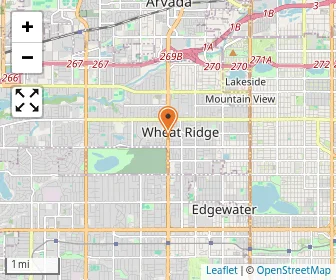
Distance: 0.3 mi
Gr: K-12 | 143 students
Baptist
2600 Wadsworth Blvd
Wheat Ridge, CO 80033
(303) 232-2313
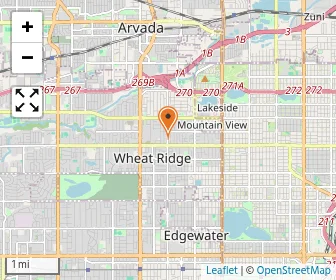
Distance: 0.5 mi
Gr: PK-8 | 286 students
Avg. class size: 40 students
Specialized Curriculum (Catholic)
3920 Pierce St
Wheat Ridge, CO 80033
(303) 424-0402
Distance: 1.3 mi
Gr: K-8 | 870 students
Avg. class size: 100 students
Sports: 13 | Extracurriculars: 5
Christian
4890 Carr Street
Arvada, CO 80002
(303) 424-7310
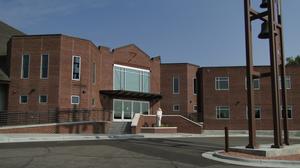
Distance: 1.4 mi
Gr: NS-8 | 335 students
Avg. class size: 18 students
Sports: 7 | Extracurriculars: 8
Lutheran Church Missouri Synod
2100 Wadsworth Blvd
Denver, CO 80214
(303) 233-0401
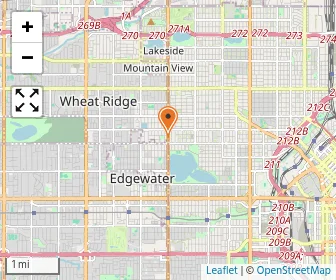
Distance: 1.7 mi
Gr: 9-12 | 10 students
All-girls | Alternative School
1380 Ammons St
Denver, CO 80214
(303) 860-1702
Distance: 0.3 mi
Gr: K-12 | 143 students
Baptist
2600 Wadsworth Blvd
Wheat Ridge, CO 80033
(303) 232-2313
Distance: 1.7 mi
Gr: 9-12 | 10 students
All-girls | Alternative School
1380 Ammons St
Denver, CO 80214
(303) 860-1702
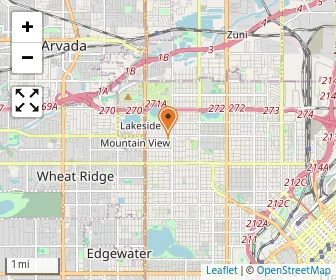
Distance: 1.9 mi
Gr: 9-12 | 427 students
Catholic
4343 Utica St
Denver, CO 80212
(303) 455-7449

Distance: 2.1 mi
Gr: 1-12 | 46 students
Special Education School
2950 Tennyson St
Denver, CO 80212
(303) 433-2541
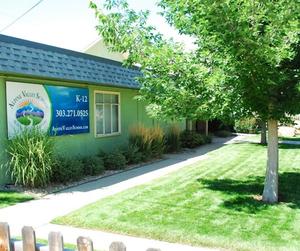
Distance: 2.3 mi
Gr: K-12 | 35 students
Alternative School
4501 Parfet St
Wheat Ridge, CO 80033
(303) 271-0525
Distance: 0.3 mi
Gr: K-12 | 143 students
Baptist
2600 Wadsworth Blvd
Wheat Ridge, CO 80033
(303) 232-2313
Distance: 0.5 mi
Gr: PK-8 | 286 students
Avg. class size: 40 students
Specialized Curriculum (Catholic)
3920 Pierce St
Wheat Ridge, CO 80033
(303) 424-0402
Distance: 1.3 mi
Gr: K-8 | 870 students
Avg. class size: 100 students
Sports: 13 | Extracurriculars: 5
Christian
4890 Carr Street
Arvada, CO 80002
(303) 424-7310
Distance: 1.4 mi
Gr: NS-8 | 335 students
Avg. class size: 18 students
Sports: 7 | Extracurriculars: 8
Lutheran Church Missouri Synod
2100 Wadsworth Blvd
Denver, CO 80214
(303) 233-0401

Distance: 2.0 mi
Gr: 1-8
Christian
10555 W. 44th Ave.
Wheat Ridge, CO 80033
(303) 432-7127
Distance: 0.5 mi
Gr: PK-8 | 286 students
Avg. class size: 40 students
Specialized Curriculum (Catholic)
3920 Pierce St
Wheat Ridge, CO 80033
(303) 424-0402
Distance: 1.4 mi
Gr: NS-8 | 335 students
Avg. class size: 18 students
Sports: 7 | Extracurriculars: 8
Lutheran Church Missouri Synod
2100 Wadsworth Blvd
Denver, CO 80214
(303) 233-0401
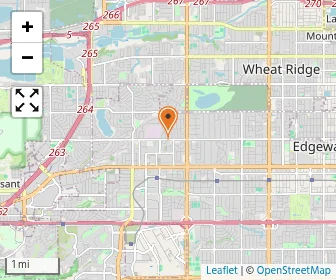
Distance: 2.4 mi
Gr: PK-8 | 257 students
Avg. class size: 22 students
Sports: 5 | Extracurriculars: 9
Catholic
10530 W 20th Ave
Denver, CO 80215
(303) 233-2500
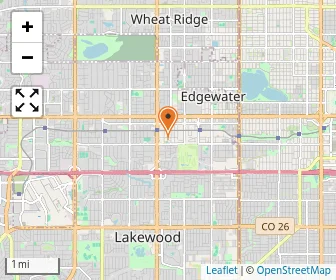
Distance: 2.4 mi
Gr: PK-7 | 132 students
Catholic
1100 Upham St
Denver, CO 80214
(303) 237-0401
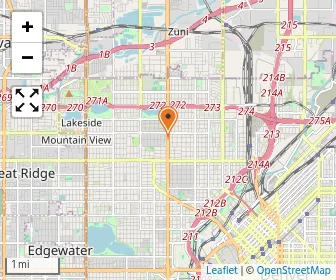
Distance: 2.9 mi
Gr: PK-8 | 147 students
Sports: 4
Catholic
4200 Federal Blvd
Denver, CO 80211
(303) 477-8035
School
(Math and Reading Proficiency)
(Math and Reading Proficiency)
Location
Miles
Quick Facts
Stevens Elementary School
(Math: 10-14% | Reading: 20-24%)
Rank:
Rank:
2/
Bottom 50%10
4001 Reed Street
Wheat Ridge, CO 80033
(303) 982-2198
Wheat Ridge, CO 80033
(303) 982-2198
0.4 miles
Gr: PK-5 | 469 students Student-Teacher Ratio: 13:1 Minority enrollment: 54%
Wheat Ridge High School
(Math: 30-34% | Reading: 57%)
Rank:
Rank:
7/
Top 50%10
9505 West 32nd Avenue
Wheat Ridge, CO 80033
(303) 982-7695
Wheat Ridge, CO 80033
(303) 982-7695
1.3 miles
Gr: 9-12 | 932 students Student-Teacher Ratio: 18:1 Minority enrollment: 46%
Jefferson Junior/senior High School
(Math: 3% | Reading: 15%)
Rank:
Rank:
1/
Bottom 50%10
2305 Pierce Street
Denver, CO 80214
(303) 982-6056
Denver, CO 80214
(303) 982-6056
1.4 miles
Gr: 7-12 | 601 students Student-Teacher Ratio: 14:1 Minority enrollment: 93%
Lumberg Elementary School
(Math: ≤5% | Reading: 10-14%)
Rank:
Rank:
1/
Bottom 50%10
6705 West 22nd Avenue
Denver, CO 80214
(303) 982-6182
Denver, CO 80214
(303) 982-6182
1.4 miles
Gr: PK-6 | 526 students Student-Teacher Ratio: 16:1 Minority enrollment: 91%
Slater Elementary School
(Math: 6-9% | Reading: 20-24%)
Rank:
Rank:
1/
Bottom 50%10
8605 West 23rd Avenue
Denver, CO 80215
(303) 982-7575
Denver, CO 80215
(303) 982-7575
1.4 miles
Gr: PK-5 | 280 students Student-Teacher Ratio: 13:1 Minority enrollment: 72%
Recent Articles

Private School Tuition Insurance: Is It Worth Buying?
Is private school tuition insurance worth buying? Learn what policies cover, compare costs and exclusions, and decide whether protecting your tuition investment makes financial sense for your family.

Medical Leave and Private School Tuition: Parent Guide
What happens to private school tuition during medical leave? Learn about refunds, tuition insurance, enrollment contracts, financial aid, and protecting your child's education while managing unexpected medical expenses and recovery.

Private School Commute: Is the Travel Time Worth It?
Is the commute to private school worth it? Learn how to calculate travel time, protect family routines, assess student well-being, and decide whether a longer journey makes educational sense.