
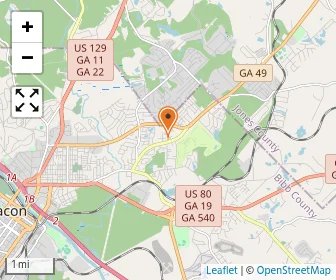
About the School
- Located in Macon, GA, Neighborhood Academy is a nonsectarian private school serving preschool through 7th grade with a total enrollment of 26 students in a city setting.
- The school has a student–teacher ratio of 26:1, supported by one full–time teacher.
- Neighborhood Academy's student body is 100 percent students of color, reflecting the demographic composition of its community.
- As a co–ed school with a program type of regular elementary and secondary education, it offers programming for early childhood through middle school levels.
- Neighborhood Academy operates without religious affiliation in a midsize city locale, distinguishing it within the Macon private school landscape.
School Facts
Religious Affiliation
Grades Offered
Grades Prekindergarten-7
Students By Grade
Student Body
Total Students
26 students
Student Body Type
Co-ed
% Students of Color
100%
State avg.: 28%
Academics & Faculty
Total Classroom Teachers
1 teacher
Student-Teacher Ratio
26:1
National avg.: 11:1
Tuition & Acceptance Rate
Admission Deadline
None / Rolling
Frequently Asked Questions
When is the application deadline for Neighborhood Academy?
The application deadline for Neighborhood Academy is rolling (applications are reviewed as they are received year-round).
Nearby Private Schools
The nearest high school to Neighborhood Academy is Mount De Sales Academy (4.1 miles away)
The nearest elementary school and preschool is St. Josephs Catholic School (3.8 miles away)
Show me:
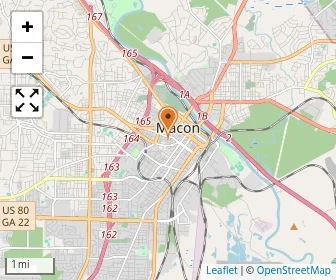
Distance: 3.8 mi
Gr: PK-5 | 208 students
Catholic
905 High St
Macon, GA 31201
(478) 742-0636
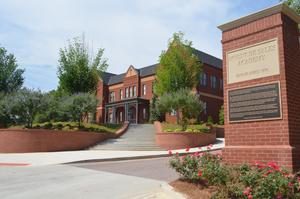
Distance: 4.1 mi
Gr: 6-12 | 493 students
Avg. class size: 14 students
Sports: 15 | Extracurriculars: 19
Catholic
851 Orange Street
Macon, GA 31201
(478) 751-3240
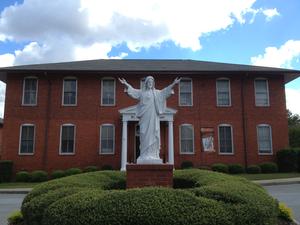
Distance: 4.4 mi
Gr: PK-8 | 181 students
Avg. class size: 18 students
Sports: 4 | Extracurriculars: 2
Catholic
133 Ward St
Macon, GA 31204
(478) 743-3985
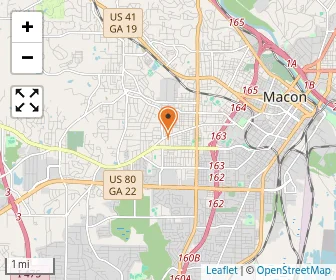
Distance: 6.0 mi
Gr: K-2 | 107 students
345 Edward Ave
Macon, GA 31204
(478) 745-0333
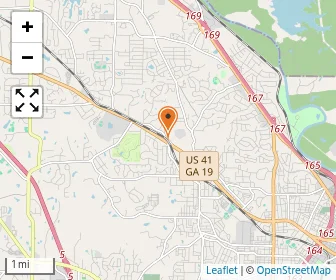
Distance: 7.1 mi
Gr: 2-12 | 57 students
Avg. class size: 10 students
Special Education School
4375 Rivoli Dr
Macon, GA 31210
(478) 477-9844
Distance: 4.1 mi
Gr: 6-12 | 493 students
Avg. class size: 14 students
Sports: 15 | Extracurriculars: 19
Catholic
851 Orange Street
Macon, GA 31201
(478) 751-3240
Distance: 7.1 mi
Gr: 2-12 | 57 students
Avg. class size: 10 students
Special Education School
4375 Rivoli Dr
Macon, GA 31210
(478) 477-9844
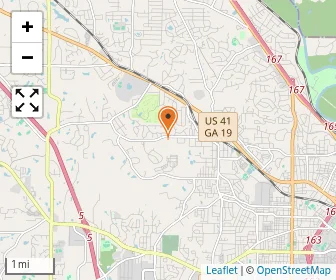
Distance: 7.5 mi
Gr: PK-12 | 394 students
Avg. class size: 15 students
Sports: 11 | Extracurriculars: 5
Christian
4652 Ayers Road
Macon, GA 31210
(478) 471-0285

Distance: 7.7 mi
Gr: PK-12 | 4 students
Avg. class size: 12 students
Extracurriculars: 1
Christian
Po Box 28921
Macon, GA 31221
(478) 501-3473
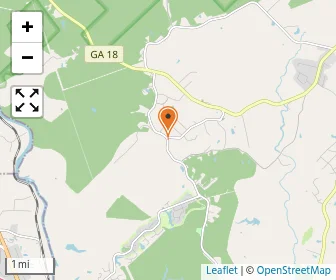
Distance: 8.5 mi
Gr: NS-12 | 16 students
Extracurriculars: 1
Baptist
4364 Upper River Rd
Gray, GA 31032
(478) 986-5780
Distance: 3.8 mi
Gr: PK-5 | 208 students
Catholic
905 High St
Macon, GA 31201
(478) 742-0636
Distance: 4.1 mi
Gr: 6-12 | 493 students
Avg. class size: 14 students
Sports: 15 | Extracurriculars: 19
Catholic
851 Orange Street
Macon, GA 31201
(478) 751-3240
Distance: 4.4 mi
Gr: PK-8 | 181 students
Avg. class size: 18 students
Sports: 4 | Extracurriculars: 2
Catholic
133 Ward St
Macon, GA 31204
(478) 743-3985
Distance: 6.0 mi
Gr: K-2 | 107 students
345 Edward Ave
Macon, GA 31204
(478) 745-0333
Distance: 7.1 mi
Gr: 2-12 | 57 students
Avg. class size: 10 students
Special Education School
4375 Rivoli Dr
Macon, GA 31210
(478) 477-9844
Distance: 3.8 mi
Gr: PK-5 | 208 students
Catholic
905 High St
Macon, GA 31201
(478) 742-0636
Distance: 4.4 mi
Gr: PK-8 | 181 students
Avg. class size: 18 students
Sports: 4 | Extracurriculars: 2
Catholic
133 Ward St
Macon, GA 31204
(478) 743-3985
Distance: 7.5 mi
Gr: PK-12 | 394 students
Avg. class size: 15 students
Sports: 11 | Extracurriculars: 5
Christian
4652 Ayers Road
Macon, GA 31210
(478) 471-0285
Distance: 7.7 mi
Gr: PK-12 | 4 students
Avg. class size: 12 students
Extracurriculars: 1
Christian
Po Box 28921
Macon, GA 31221
(478) 501-3473
Distance: 7.9 mi
Gr: PK-8 | 122 students
Montessori School
855 Tolliver Place
Macon, GA 31210
(478) 757-8927
School
(Math and Reading Proficiency)
(Math and Reading Proficiency)
Location
Miles
Quick Facts
Hunt Elementary School
(Math: 15% | Reading: 12%)
Rank:
Rank:
1/
Bottom 50%10
1750 Us Highway 341
Fort Valley, GA 31030
(478) 825-5296
Fort Valley, GA 31030
(478) 825-5296
8662.5 miles
Gr: PK-5 | 654 students Student-Teacher Ratio: 15:1 Minority enrollment: 93%
Monroe County Middle School- Banks Stephens Campus
(Math: 45% | Reading: 53%)
Rank:
Rank:
8/
Top 30%10
66 Thornton Rd
Forsyth, GA 31029
(478) 994-6186
Forsyth, GA 31029
(478) 994-6186
8664.8 miles
Gr: 6-8 | 1,062 students Student-Teacher Ratio: 16:1 Minority enrollment: 32%
T.g. Scott Elementary School
(Math: 59% | Reading: 54%)
Rank:
Rank:
9/
Top 20%10
70 Thornton Rd
Forsyth, GA 31029
(478) 994-3495
Forsyth, GA 31029
(478) 994-3495
8664.9 miles
Gr: PK-5 | 835 students Student-Teacher Ratio: 14:1 Minority enrollment: 28%
Katherine B. Sutton Elementary School
(Math: 38% | Reading: 46%)
Rank:
Rank:
7/
Top 50%10
1315 Ga Highway 83 N
Forsyth, GA 31029
(478) 994-9906
Forsyth, GA 31029
(478) 994-9906
8665.3 miles
Gr: PK-5 | 730 students Student-Teacher Ratio: 13:1 Minority enrollment: 35%
Kay Road Elementary School
(Math: 37% | Reading: 37%)
Rank:
Rank:
6/
Top 50%10
880 Kay Rd
Byron, GA 31008
(478) 825-8893
Byron, GA 31008
(478) 825-8893
8666 miles
Gr: PK-5 | 512 students Student-Teacher Ratio: 13:1 Minority enrollment: 74%
Recent Articles

How Much Homework Is Too Much?
Learn how to compare private school homework expectations, recognize excessive workloads, evaluate assignment quality, and ask better questions about academic balance before choosing a school for your child.

Learning Support Without a Formal Program
Learn what private schools mean by informal learning support, how services differ from formal programs, and which questions families should ask before choosing the right school today.

Beyond AP vs. IB: How to Judge Academic Rigor
Learn how to judge academic rigor at private schools without AP or IB by examining curriculum depth, assessments, faculty expectations, advanced coursework, student work, and college preparation outcomes.