About the School
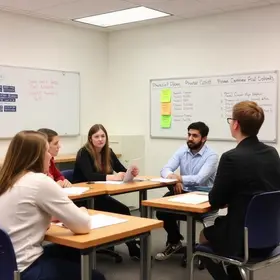
- Singing Winds School in River Grove, IL, serves 38 co–ed students from pre–kindergarten through 6th grade in an urban community setting.
- The school has a student–teacher ratio of 6:1 with a total of 6 teaching staff supporting individualized instruction.
- Singing Winds School is a nonsectarian elementary program affiliated with the Association of Waldorf Schools of North America.
- Approximately 28% of students at Singing Winds School represent diverse racial and ethnic backgrounds.
- Nearby private schools in River Grove and surrounding areas offer different grade spans and enrollment sizes, with Singing Winds focused on small–group learning from PK to grade 6.
School Facts
School Type
Religious Affiliation
Grades Offered
Grades Prekindergarten-6
Students By Grade
Student Body
Total Students
38 students
Student Body Type
Co-ed
% Students of Color
28%
State avg.: 34%
Academic Profile
Total Classroom Teachers
6 teachers
Student-Teacher Ratio
6:1
National avg.: 11:1
Tuition & Financial Aid
Admission Deadline
None / Rolling
Frequently Asked Questions
When is the application deadline for Singing Winds School?
The application deadline for Singing Winds School is rolling (applications are reviewed as they are received year-round).
Nearby Private Schools
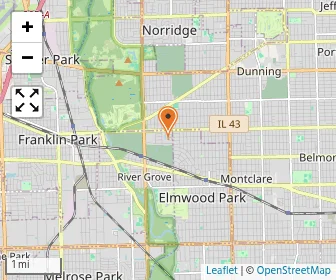
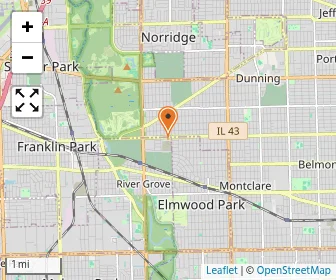
The nearest high school to Singing Winds School is Guerin Prep High School (0.1 miles away)
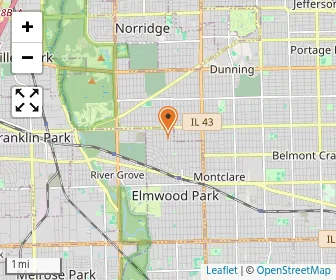
The nearest elementary school and preschool is St. Celestine School (0.5 miles away)
Show me:
Distance: 0.1 mi
Gr: 9-12 | 259 students
Sports: 14 | Extracurriculars: 27
Catholic
8001 Belmont Ave
River Grove, IL 60171
(708) 453-6233
Distance: 0.5 mi
Gr: PK-8 | 442 students
Avg. class size: 22 students
Sports: 6
Catholic
3017 N 77th Ave
Elmwood Park, IL 60707
(708) 453-8234
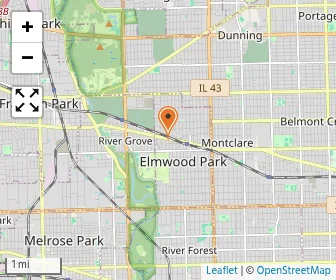
Distance: 0.6 mi
Gr: PK-8 | 158 students
Avg. class size: 17 students
Sports: 3 | Extracurriculars: 10
Catholic
3535 N Panama Ave
Chicago, IL 60634
(773) 589-1000
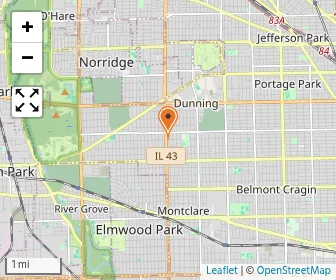
Distance: 0.7 mi
Gr: PK-K | 60 students
Daycare / Preschool
7801 W Grand Avenue
Elmwood Park, IL 60707
(708) 452-7666
Distance: 1.3 mi
Gr: PK-K | 41 students
Daycare / Preschool (Lutheran Church Missouri Synod)
7151 W Cornelia Ave
Chicago, IL 60634
(773) 736-1157
Distance: 0.1 mi
Gr: 9-12 | 259 students
Sports: 14 | Extracurriculars: 27
Catholic
8001 Belmont Ave
River Grove, IL 60171
(708) 453-6233
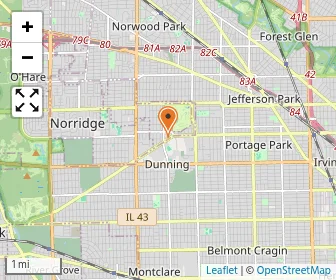
Distance: 2.3 mi
Gr: PK-12 | 64 students
Special Education School
6737 W Forest Preserve Ave
Chicago, IL 60634
(773) 286-6226
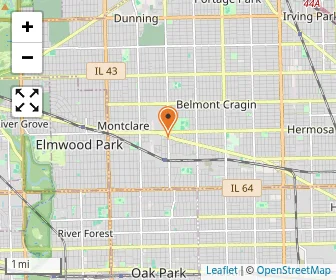
Distance: 2.4 mi
Gr: 9-12 | 50 students
Alternative School (Church of God in Christ)
1228 Cuyler Ave ,
Berwyn, IL 60402
(773) 309-1047
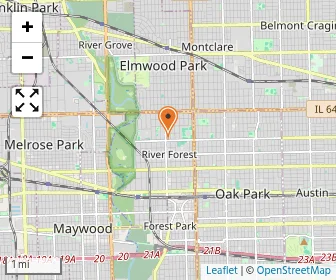
Distance: 2.4 mi
Gr: 9-12 | 422 students
All-girls (Catholic)
7574 Division St
River Forest, IL 60305
(708) 771-8383
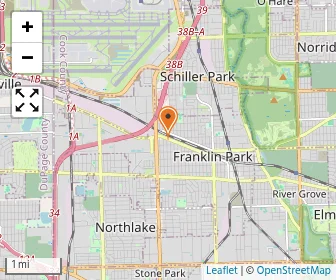
Distance: 2.8 mi
Gr: 3-12 | 21 students
Avg. class size: 10 students
10217 Franklin Ave
Franklin Park, IL 60131
(847) 593-4120
Distance: 0.5 mi
Gr: PK-8 | 442 students
Avg. class size: 22 students
Sports: 6
Catholic
3017 N 77th Ave
Elmwood Park, IL 60707
(708) 453-8234
Distance: 0.6 mi
Gr: PK-8 | 158 students
Avg. class size: 17 students
Sports: 3 | Extracurriculars: 10
Catholic
3535 N Panama Ave
Chicago, IL 60634
(773) 589-1000
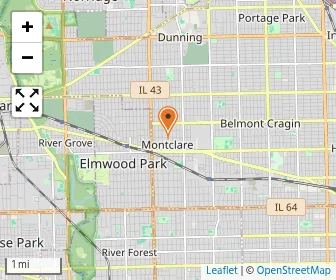
Distance: 1.5 mi
Gr: PK-8 | 175 students
Sports: 4 | Extracurriculars: 8
Catholic
2559 N Sayre Ave
Elmwood Park, IL 60707
(773) 637-5130
Distance: 2.0 mi
Gr: PK-8 | 95 students
Montessori School
7415 North Ave
River Forest, IL 60305
(708) 366-1080

Distance: 2.0 mi
Gr: PK-8 | 268 students
Sports: 5 | Extracurriculars: 5
Catholic
1515 Lathrop Ave
River Forest, IL 60305
(708) 771-5905
Distance: 0.5 mi
Gr: PK-8 | 442 students
Avg. class size: 22 students
Sports: 6
Catholic
3017 N 77th Ave
Elmwood Park, IL 60707
(708) 453-8234
Distance: 0.6 mi
Gr: PK-8 | 158 students
Avg. class size: 17 students
Sports: 3 | Extracurriculars: 10
Catholic
3535 N Panama Ave
Chicago, IL 60634
(773) 589-1000
Distance: 0.7 mi
Gr: PK-K | 60 students
Daycare / Preschool
7801 W Grand Avenue
Elmwood Park, IL 60707
(708) 452-7666
Distance: 1.3 mi
Gr: PK-K | 41 students
Daycare / Preschool (Lutheran Church Missouri Synod)
7151 W Cornelia Ave
Chicago, IL 60634
(773) 736-1157
Distance: 1.3 mi
Gr: K | 24 students
Daycare / Preschool
2915 Maple St
Franklin Park, IL 60131
(847) 455-5437
School
(Math and Reading Proficiency)
(Math and Reading Proficiency)
Location
Miles
Quick Facts
John Mills Elementary School
(Math: 14% | Reading: 40%)
Rank:
Rank:
6/
Top 50%10
2824 N 76th Ave
Elmwood Park, IL 60707
(708) 452-3560
Elmwood Park, IL 60707
(708) 452-3560
0.6 miles
Gr: PK-5 | 711 students Student-Teacher Ratio: 14:1 Minority enrollment: 72%
River Grove Elementary School
(Math: 20% | Reading: 35%)
Rank:
Rank:
6/
Top 50%10
2650 Thatcher Ave
River Grove, IL 60171
(708) 453-6172
River Grove, IL 60171
(708) 453-6172
0.7 miles
Gr: PK-8 | 722 students Student-Teacher Ratio: 14:1 Minority enrollment: 61%
Canty Elementary School
(Math: 36% | Reading: 39%)
Rank:
Rank:
8/
Top 30%10
3740 N Panama Ave
Chicago, IL 60634
(773) 534-1238
Chicago, IL 60634
(773) 534-1238
0.9 miles
Gr: PK-8 | 791 students Student-Teacher Ratio: 13:1 Minority enrollment: 59%
Dever Elementary School
(Math: 14% | Reading: 21%)
Rank:
Rank:
4/
Bottom 50%10
3436 N Osceola Ave
Chicago, IL 60634
(773) 534-3090
Chicago, IL 60634
(773) 534-3090
0.9 miles
Gr: PK-8 | 733 students Student-Teacher Ratio: 14:1 Minority enrollment: 68%
Elmwood Park High School
(Math: 20% | Reading: 23%)
Rank:
Rank:
5/
Bottom 50%10
8201 W Fullerton Ave
Elmwood Park, IL 60707
(708) 452-7272
Elmwood Park, IL 60707
(708) 452-7272
0.9 miles
Gr: 9-12 | 1,015 students Student-Teacher Ratio: 14:1 Minority enrollment: 65%
Recent Articles

Private School Tuition Insurance: Is It Worth Buying?
Is private school tuition insurance worth buying? Learn what policies cover, compare costs and exclusions, and decide whether protecting your tuition investment makes financial sense for your family.

Medical Leave and Private School Tuition: Parent Guide
What happens to private school tuition during medical leave? Learn about refunds, tuition insurance, enrollment contracts, financial aid, and protecting your child's education while managing unexpected medical expenses and recovery.

Private School Commute: Is the Travel Time Worth It?
Is the commute to private school worth it? Learn how to calculate travel time, protect family routines, assess student well-being, and decide whether a longer journey makes educational sense.