
About the School
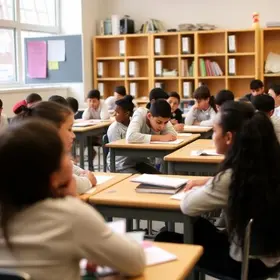
- Alt School in San Francisco, CA enrolls 261 students in grades K–8 within a nonsectarian, city–based private school setting.
- The school maintains a student–teacher ratio of 5:1 with 49 teachers serving its K–8 enrollment.
- Alt School's student population includes 35% students of color, reflecting diversity in an urban learning environment.
- The school provides regular elementary and secondary education in a co–ed format, located in a large city community.
- Tuition and acceptance rate details are consistent with typical ranges for San Francisco private schools.
School Facts
Student Body
Total Students
261 students
Student Body Type
Co-ed
% Students of Color
35%
State avg.: 52%
Academic Profile
Total Classroom Teachers
49 teachers
Student-Teacher Ratio
5:1
National avg.: 11:1
Tuition & Financial Aid
Admission Deadline
None / Rolling
Frequently Asked Questions
When is the application deadline for Alt School?
The application deadline for Alt School is rolling (applications are reviewed as they are received year-round).
Nearby Private Schools
The nearest high school to Alt School is Rise Institute (0.8 miles away)
The nearest elementary school is Live Oak School (0.6 miles away)
The nearest preschool is La Scuola International School (1.6 miles away)
Show me:

Gr: Inquire with school | 21 students
128 Woodland Ave
San Francisco, CA 94117
(202) 341-9939

Gr: Inquire with school | 21 students
Specialized Curriculum
2265 Third St
San Francisco, CA 94107
(415) 598-9038
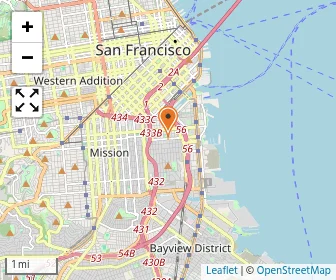
Distance: 0.6 mi
Gr: K-8 | 426 students
Avg. class size: 22 students
Sports: 5
1555 Mariposa Street
San Francisco, CA 94107
(415) 861-8840
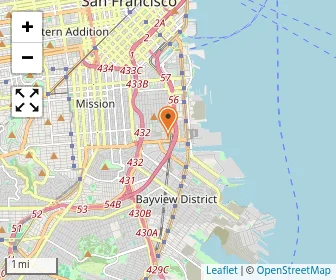
Distance: 0.8 mi
Gr: 8-12 | 14 students
Alternative School
1760 Cesar Chavez Ste R
San Francisco, CA 94124
(415) 641-1878
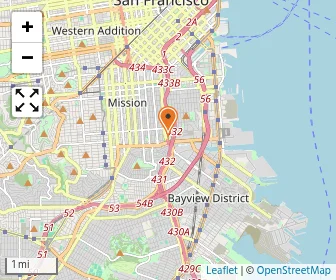
Distance: 1.2 mi
Gr: 2-7 | 27 students
Avg. class size: 6 students
Sports: 1
1499 Potrero Ave Ste 1
San Francisco, CA 94110
(415) 596-9004
Distance: 0.8 mi
Gr: 8-12 | 14 students
Alternative School
1760 Cesar Chavez Ste R
San Francisco, CA 94124
(415) 641-1878

Distance: 1.6 mi
Gr: 6-12 | 100 students
Sports: 5
Christian
1601 Galvez Ave
San Francisco, CA 94124
(415) 966-1963
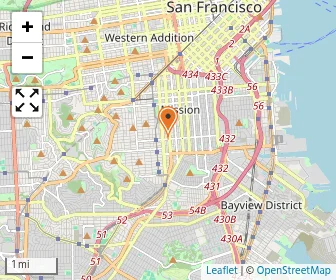
Distance: 2.0 mi
Gr: 9-12 | 336 students
Avg. class size: 18 students
Sports: 11 | Extracurriculars: 17
All-girls (Catholic)
3625 24th St
San Francisco, CA 94110
(415) 824-2052
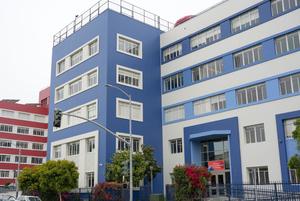
Distance: 2.1 mi
Gr: PK-12 | 1,060 students
Avg. class size: 13 students
Sports: 12 | Extracurriculars: 8
150 Oak Street
San Francisco, CA 94102
(415) 558-2000
Distance: 2.1 mi
Gr: 8-12 | 18 students
Special Education School
95 Gough St
San Francisco, CA 94102
(415) 861-5806
Distance: 0.6 mi
Gr: K-8 | 426 students
Avg. class size: 22 students
Sports: 5
1555 Mariposa Street
San Francisco, CA 94107
(415) 861-8840
Distance: 0.8 mi
Gr: 8-12 | 14 students
Alternative School
1760 Cesar Chavez Ste R
San Francisco, CA 94124
(415) 641-1878
Distance: 1.2 mi
Gr: 2-7 | 27 students
Avg. class size: 6 students
Sports: 1
1499 Potrero Ave Ste 1
San Francisco, CA 94110
(415) 596-9004
Distance: 1.4 mi
Gr: K-8 | 183 students
Avg. class size: 20 students
Sports: 4 | Extracurriculars: 1
Catholic
1266 Florida St
San Francisco, CA 94110
(415) 647-8662
Distance: 1.6 mi
Gr: NS-8 | 282 students
Avg. class size: 18 students
Sports: 5 | Extracurriculars: 21
3250 18th St
San Francisco, CA 94110
(415) 551-0000
Distance: 1.6 mi
Gr: NS-8 | 282 students
Avg. class size: 18 students
Sports: 5 | Extracurriculars: 21
3250 18th St
San Francisco, CA 94110
(415) 551-0000
Distance: 1.6 mi
Gr: NS-8
Avg. class size: 16 students
Sports: 3 | Extracurriculars: 19
250 10th Street
San Francisco, CA 94103
(415) 202-0770

Distance: 1.7 mi
Gr: NS-8 | 94 students
Avg. class size: 8 students
Sports: 5 | Extracurriculars: 5
Specialized Curriculum (Christian)
1560 Treat Avenue
San Francisco, CA 94110
(415) 874-9631
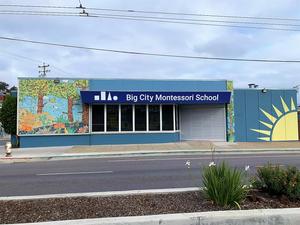
Distance: 1.8 mi
Gr: NS-PK | 75 students
Avg. class size: 25 students
Montessori School
240 Industrial Street
San Francisco, CA 94124
(415) 648-5777
Distance: 1.9 mi
Gr: PK-8 | 184 students
Avg. class size: 20 students
Sports: 4 | Extracurriculars: 5
1387 Valencia St
San Francisco, CA 94110
(415) 567-6177
School
(Math and Reading Proficiency)
(Math and Reading Proficiency)
Location
Miles
Quick Facts
Webster (Daniel) Elementary School
(Math: 45-49% | Reading: 50-54%)
Rank:
Rank:
8/
Top 30%10
465 Missouri St.
San Francisco, CA 94107
(415) 695-5787
San Francisco, CA 94107
(415) 695-5787
0.5 miles
Gr: K-5 | 354 students Student-Teacher Ratio: 22:1 Minority enrollment: 72%
King (Thomas Starr) Elementary School
(Math: 60-64% | Reading: 55-59%)
Rank:
Rank:
9/
Top 20%10
1215 Carolina St.
San Francisco, CA 94107
(415) 695-5797
San Francisco, CA 94107
(415) 695-5797
0.8 miles
Gr: K-5 | 333 students Student-Teacher Ratio: 20:1 Minority enrollment: 90%
Downtown High School
Alternative School
(Math: ≤20% | Reading: ≤20%)
Rank:
Rank:
2/
Bottom 50%10
693 Vermont St.
San Francisco, CA 94107
(415) 695-5860
San Francisco, CA 94107
(415) 695-5860
0.9 miles
Gr: 9-12 | 174 students Student-Teacher Ratio: 44:1 Minority enrollment: 96%
Bryant Elementary School
(Math: 10-14% | Reading: 25-29%)
Rank:
Rank:
2/
Bottom 50%10
2641 25th St.
San Francisco, CA 94110
(415) 695-5780
San Francisco, CA 94110
(415) 695-5780
1.2 miles
Gr: K-5 | 237 students Student-Teacher Ratio: 20:1 Minority enrollment: 97%
Life Learning Academy Charter
Charter School
(Math: <50% | Reading: ≥50%)
Rank:
Rank:
8/
Top 30%10
651 Eighth St. Bldg. 229 Treas
San Francisco, CA 94130
(415) 397-8957
San Francisco, CA 94130
(415) 397-8957
1.2 miles
Gr: 9-12 | 47 students Student-Teacher Ratio: 8:1 Minority enrollment: 87%
Recent Articles

Private School Tuition Insurance: Is It Worth Buying?
Is private school tuition insurance worth buying? Learn what policies cover, compare costs and exclusions, and decide whether protecting your tuition investment makes financial sense for your family.

Medical Leave and Private School Tuition: Parent Guide
What happens to private school tuition during medical leave? Learn about refunds, tuition insurance, enrollment contracts, financial aid, and protecting your child's education while managing unexpected medical expenses and recovery.
Private School Commute: Is the Travel Time Worth It?
Is the commute to private school worth it? Learn how to calculate travel time, protect family routines, assess student well-being, and decide whether a longer journey makes educational sense.