



Updated
|
Stackable Credentials and Post-Secondary Pathways for Private School Graduates
How private school graduates can use stackable credentials and transfer pathways to build flexible, affordable routes to careers and bachelor’s degrees.

Stackable Credentials: A Flexible Post-Secondary Pathway for Private School Graduates

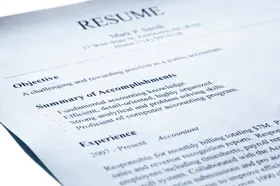
Families choosing private elementary, middle, and high schools often focus on academic rigor, small classes, and strong preparation for college. As graduates consider their next steps, many continue directly into four-year colleges. Yet in 2025, the landscape of post-secondary education is broader and more flexible than it was even a decade ago. Increasingly, students are combining short-term industry credentials, technical certificates, and transfer pathways to build customized routes toward bachelor’s degrees and early career experience.

This updated guide explains how private school alumni can use stackable credentials and related transfer options to pursue efficient, affordable, and strategically sequenced post-secondary experiences. It stays squarely within the K–12 context by helping families understand how high school preparation influences these pathways and what students should consider before graduation. For additional context on evaluating secondary options, families may also find Private School Review resources such as https://www.privateschoolreview.com/blog/how-to-evaluate-private-schools helpful.

What Are Stackable Credentials?

Stackable credentials refer to a sequence of short, industry-recognized credentials that build toward higher qualifications. Each milestone may consist of a certificate, micro-credential, or technical award. Taken together, they can allow a student to secure early work opportunities, develop new skills, and eventually progress into an associate or bachelor’s program through structured transfer agreements.

These credentials:

  • Are designed to have standalone value in the labor market

  • Can accumulate toward more advanced

. . .read more

Exploring Private School Jobs 2025 – Opportunities & Insights

Updated
|
Exploring Private School Jobs 2025 – Opportunities & Insights
Discover updated trends for private school jobs in 2025, including hiring needs, roles, salaries and benefits for educators in independent schools.

Exploring Private School Jobs: Opportunities and Insights

For many educators, the idea of working in a private-school setting evokes images of smaller class sizes, engaged parents and more autonomy. In 2025, the landscape of private-school employment is evolving—driven by technological change, shifting demographics, increased competition for talent and broader demands on school staff. This article updates key insights on private-school jobs, helping parents, students and educators understand the opportunities and realities of working in private schools.

1. What’s the current context for private-school employment?

The private-school sector in 2025 continues to show steady demand for educators and support staff. According to the 2025 enrollment-trends report from TADS, independent schools are leveraging technology, specialised programs and family engagement to differentiate themselves. Likewise, the broad global review by the OECD identifies demographic, economic and technological shifts as influencing how education providers hire and operate.

On the jobs front, there is evidence that private-school teacher salaries in the U.S. average about USD 46,590 annually (October 2025). While this number varies significantly by region, school type and experience, it offers a baseline for educators exploring private school jobs.

A recent article notes that in states such as North Carolina, teachers are moving into private schools for greater autonomy and smaller communities—though they may encounter trade-offs such as weaker job-security protections or fewer benefits.

2. Key roles and areas of growth

When exploring private-school

. . .read more

Private School Survival Guide for Teachers (2025 Edition)

Updated
|
Private School Survival Guide for Teachers (2025 Edition)
Essential strategies and updates for teachers thriving in private school settings in 2025 — recruitment, culture, salary, trends and retention tips.

The Private School Survival Guide for Teachers

If you are a teacher considering or currently working in a private school, this guide is designed to help you navigate the unique landscape of independent or parochial schools in 2025. From salary realities and recruitment practices to culture norms, workload expectations and retention strategies, the survival-kit below offers a professional, clear and practical overview—targeting educators, administrators and even informed parents who partner with teachers.

1. Understanding the Private School Landscape

Working in a private school means operating in a different environment from public education. Schools may be day or boarding, secular or religious, large or boutique. Especially in 2025, several trends are shaping this sector:

  • Teachers continue to face a national shortage: roughly 1 in 8 teaching positions remain unfilled or staffed by under-certified teachers.

  • Private schools are under pressure from global issues such as enrollment shifts, rising operational costs and increasing demand for transparency from parents.

  • Tuition and cost pressures continue: nationally, private school tuition averages about $14,000–$15,000 per year for K-12 in many schools in 2025.

For a teacher, this means you join a sector that expects high service, adaptability and engagement—often with fewer structural protections than public schools.

2. Salary, Benefits and Job Conditions

One of the key practical considerations for any teacher is compensation. In private schools:

    . . .read more

    How to Search for Private Schools — 2025 Guide

    Updated
    |
    How to Search for Private Schools — 2025 Guide
    A practical 2025-update on how to search for private schools, cover tuition, demographics, enrollment trends and expert tips

    How to Search for Schools (Updated for 2025)

    Selecting the right private school is one of the most important decisions a family can make. In this revised 2025 edition of our guide, we walk you through a structured process to identify, evaluate and select a private school—incorporating the latest tuition data, enrollment trends, program updates and expert perspectives.

    1. Set your priorities: academics, values, and logistics

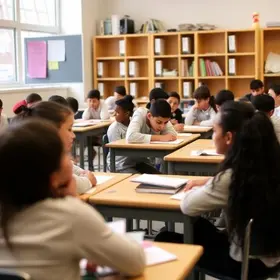
    Start by clarifying what matters most to your family—and students. Are you seeking rigorous academics, a STEM-strong program, small class sizes, a religious orientation, or robust arts/athletics? Do you need after-school care, transportation or boarding options? Your definition of “fit” will shape your school search.

    For example, one parent tells us: “We wanted a school where our daughter would experience not just strong math and science, but a community that aligned with our values.” That combination helped them narrow from dozens of options to three finalists.

    As you set priorities ask:

    • What grade levels does the school serve (K-12, middle + high, boarding)?

    • Is the school co-educational, single-gender, day or boarding?

    • What student-teacher ratios and class sizes can you anticipate?

    • What support services (learning differences, ADD/ADHD, ESL) are offered?

    • What is the cultural ethos and parent-community involvement like?

    2. Use robust search tools wisely

    Tools

    . . .read more

    Advanced Coursework in Private High Schools: 2025 Guide

    Updated
    |
    Advanced Coursework in Private High Schools: 2025 Guide
    Explore advanced coursework and dual-credit opportunities in private high schools to enhance college readiness and academic profiles.

    Introduction

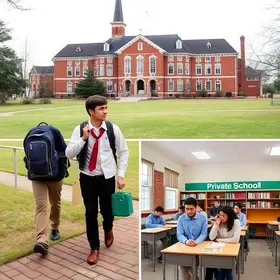
    In 2025, many private K–12 schools are strengthening their college-preparatory credentials by offering robust advanced coursework options. These may include Advanced Placement (AP), International Baccalaureate (IB), honors tracks, and in some cases dual-credit courses in partnership with accredited institutions. For families evaluating private high schools, understanding these options is vital: they can impact academic readiness, workload, and admissions prospects. This article outlines how such programs typically work, the benefits and challenges, and what parents and educators should consider during the selection or planning process.

    What Are Advanced Coursework and Dual-Credit Options in Private Schools?

    Private high schools often provide several types of advanced academic pathways:

    • Advanced Placement (AP): A program administered by the College Board that offers college-level courses and exams in various subjects. Scores may be used for college credit or placement, depending on the postsecondary institution.

    • International Baccalaureate Diploma Programme (IB DP): An internationally recognized curriculum combining higher-level courses, extended essays, and a Theory of Knowledge component. IB emphasizes critical thinking, global awareness, and academic rigor.

    • Honors or accelerated courses: Internal school offerings with increased demands and expectations, often covering material more deeply or at a faster pace than standard classes.

    • Dual-credit or dual-enrollment options: In some cases, a private school partners with an accredited institution to offer courses that count toward both high school graduation and early college credit—though acceptance of college credit depends on the college or university the student ultimately attends.

    These options differ from standard high-school courses in expectations,

    . . .read more

    Recent Articles

    Private Schools & Sustainability in 2026
    Private Schools & Sustainability in 2026
    Explore how private schools are advancing sustainability in 2026 through green campuses, eco-curriculum, and climate leadership initiatives.
    Global Instability and Private School Choices
    Global Instability and Private School Choices
    How global instability in 2026 shapes private school decisions, safety, curriculum, and opportunity for families.
    Private School Fees Increase Mid-Year: A Parent Action Plan
    Private School Fees Increase Mid-Year: A Parent Action Plan
    A 2026 parent action plan for managing mid-year private school tuition increases, including contracts, negotiation tips, and financial options.