Financial Aid

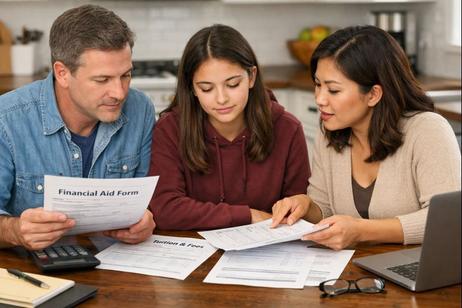
Paying for private school can be expensive and financial aid can be a huge help. Here we'll cover the financial aid options, how eligibility is determined and how it can affect the admissions process.

View the most popular articles in Financial Aid:

Financial Aid Appeals: When Should You Ask a Private School to Reconsider an Award?

Updated
|
Financial Aid Appeals: When Should You Ask a Private School to Reconsider an Award?
Learn when and how to appeal a private school financial aid award, what documents to provide, and strategies that improve your chances of success.

An acceptance letter from a private school can quickly turn from a moment of celebration into a difficult financial decision. A family may be pleased with the admission offer but discover that the financial aid award leaves a gap it cannot reasonably cover.

The initial award is not always the end of the conversation. A financial aid appeal allows a family to ask the school to reconsider its decision when important information was overlooked, misunderstood, or unavailable during the original review.

However, an appeal should not be treated as routine negotiation. Private schools generally expect families to provide a specific reason for reconsideration, supported by current financial documentation. Knowing when to appeal, how to present the request, and what outcome to expect can make the process more productive for both the family and the school.

Families unfamiliar with the process may benefit from first reviewing Financial Aid for Private Schools: 2026 Parent Guide and Financial Aid 101 for Private School Families 2026. These guides explain how schools evaluate need and why an award may differ from a family's expectations.

When a Financial Aid Appeal Is Appropriate

The strongest reason to appeal is a substantial change in the family's financial circumstances. This change may have occurred after the financial aid application was submitted or may not have been adequately represented in the original documents.

  • A job loss, reduction in work hours, business downturn, divorce, serious illness, or unexpected caregiving responsibility may significantly change what a household can
. . .read more

Financial Aid for Private Schools: 2026 Parent Guide

Updated
|
Financial Aid for Private Schools: 2026 Parent Guide
Learn how private school financial aid works in 2026, including grants, scholarships, and application tips for families.

Private school tuition can be a significant investment, but it is increasingly accessible thanks to a wide range of financial aid options. In 2026, more independent schools are prioritizing affordability and socioeconomic diversity, expanding aid programs and refining application processes to support families from varied financial backgrounds.

This updated guide explains how financial aid for private schools works, the types of assistance available, and how families can successfully navigate the process.

Understanding Financial Aid for Private Schools

Financial aid for private schools typically comes in the form of need-based grants rather than loans. Unlike colleges, most K–12 private schools do not expect repayment. Instead, schools allocate a portion of their operating budgets or endowment income to support families who demonstrate financial need.

According to the National Association of Independent Schools (NAIS), more than 20 percent of private school students receive some form of financial aid, and that percentage continues to grow as schools focus on access and inclusion.

Most schools use standardized financial assessment tools such as those provided by School and Student Services (SSS) to evaluate a family’s ability to pay.

Types of Private School Financial Aid

Families exploring financial aid for private schools should understand the different forms of assistance available.

1. Need-Based Grants

The most common type of aid, need-based grants are awarded based on a family’s financial situation. Schools consider:

  • Household income
  • Assets and savings
  • Number of children in tuition-charging schools
  • Cost of living factors

These grants can cover anywhere from a small percentage of

. . .read more

Sliding-Scale & Income-Based Tuition Guide 2026

Updated
|
Sliding-Scale & Income-Based Tuition Guide 2026
Explore sliding-scale and income-based tuition models in 2026. Learn how they work, who qualifies, and whether they fit your family’s needs.

Sliding-Scale & Income-Based Tuition Models: Are They Right for Your Family?

Private school tuition has long been one of the most significant considerations for families exploring independent education. In 2026, as tuition continues to rise nationwide, more schools are adopting flexible pricing structures designed to expand access and increase socioeconomic diversity. Among the most notable approaches are sliding-scale and income-based tuition models.

But are these options truly affordable? And more importantly, are they the right fit for your family?

This guide examines how sliding-scale and income-based tuition programs work, who qualifies, and what families should consider before applying.

The Rising Cost of Private Education in 2026

Private school tuition has steadily increased over the past decade. According to national education data compiled by the National Center for Education Statistics, average private school tuition continues to climb, particularly in urban and suburban regions. In some metropolitan areas, annual tuition for independent day schools now exceeds $30,000, while boarding schools may surpass $65,000 per year.

In response, many schools are rethinking traditional financial aid models. Instead of awarding aid only after families apply for assistance, some institutions now proactively structure tuition around a family’s income.

This shift reflects broader conversations about affordability, access, and long-term sustainability in private education.

What Are Sliding-Scale and Income-Based Tuition Models?

While the terms are sometimes used interchangeably, there are subtle distinctions.

Sliding-Scale Tuition

Under a sliding-scale model, tuition adjusts within a predetermined range based on a family’s financial profile. Schools establish

. . .read more

Financial Aid 101 for Private School Families 2026

Updated
|
Financial Aid 101 for Private School Families 2026
Guide to private school financial aid in 2026, with current costs, key planning timelines and practical steps parents need to maximize aid options.

Financial Aid 101: Updated Guide for 2026

Sending a child to private school continues to be a major financial commitment for many families in 2026. While tuition and fees have risen in recent years, financial aid, scholarships, vouchers and state programs play a critical role in making private education attainable for a broad range of households. This Financial Aid 101 guide updates key data, policy trends and planning strategies for parents now navigating the 2026 enrollment cycle.

Understanding Current Private School Costs

Private school tuition varies widely across the United States. According to recent national figures, annual tuition for private K-12 schools often ranges significantly based on school type and location, with many independent day schools charging well above the national median and boarding schools commanding even higher fees.

  • National averages for private K–12 tuition in the 2025–26 year are approximately $15,000 overall, with elementary grades slightly lower and high school grades often higher.

  • Independent and elite day schools frequently report tuition in the $30,000 to $50,000+ range, and boarding schools commonly exceed $55,000–$70,000 per year.

These costs reflect ongoing inflationary pressures, rising teacher compensation and expanded program offerings within many schools. Families need realistic expectations of total costs because tuition alone often does not include fees for textbooks, technology, transportation or extracurricular programs.

What Financial Aid Is and Why It Matters

Financial aid refers to funds provided by private schools, nonprofit organizations or state and federal programs to reduce the net cost for families. This can take the

. . .read more

How to Appeal for Financial Aid After Admission

Updated
|
How to Appeal for Financial Aid After Admission
Learn how to appeal for financial aid after admission to a private school, with expert steps, timelines, and 2026 updates for families.

How to Appeal for Financial Aid After Admission: Steps for New Private School Families

For many families, receiving a private school acceptance is a moment of excitement followed quickly by financial uncertainty. Even with an initial award, tuition and related costs may feel higher than expected. In these cases, families often ask whether it is possible to appeal for financial aid after admission. The answer is yes. With preparation, clarity, and respectful communication, families can successfully appeal for financial aid after admission and, in some cases, receive additional support.

This guide explains how to appeal for financial aid after admission in a professional and effective way. It reflects current 2026 financial aid practices, insights from admissions officers, and common policies at independent day and boarding schools. Parents who understand how to appeal for financial aid after admission are better positioned to advocate for their child while preserving a positive relationship with the school.

Understanding Financial Aid Appeals in 2026

Private schools continue to face increasing demand for tuition assistance. According to recent enrollment data summarized on PrivateSchoolReview.com, more than half of private school families now receive some form of need-based aid. As tuition rises, schools have refined how families may appeal for financial aid after admission.

An appeal for financial aid after admission is not a complaint. It is a formal request for reconsideration based on new, clarified, or changed financial information. Schools expect some families to appeal for financial aid after admission each year and typically build

. . .read more

Recent Articles

Should Your Child Stay at the Same Private School K–12?
Explore whether your child should attend the same private school from kindergarten through graduation, weighing academic continuity, friendships, changing needs, tuition costs, and opportunities at different educational stages.
When Your Child's Closest Friends Leave Private School
Learn how to support your child when close friends leave private school, manage loneliness, maintain friendships, encourage new connections, recognize emotional challenges, and decide when additional school support is needed.
When Your Child Doesn't Connect With Their Teacher
Discover when parents should intervene if their child struggles to connect with a private school teacher, including warning signs, communication strategies, classroom concerns, and practical steps toward improving relationships.

Paying For It