About the School
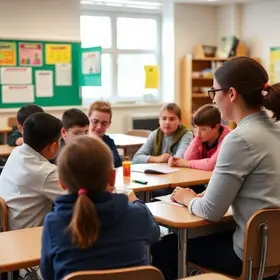
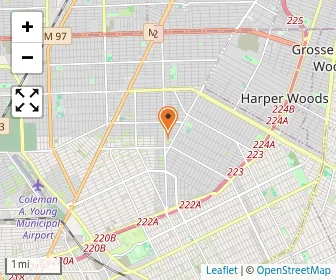
- St. Ambrose Academy in Detroit, MI, serves 116 co–ed udents from pre–kindergarten through eighth grade in a central city setting.
- The school has a udent–teacher ratio of 10:1 with 12 total teachers.
- Ambrose Academy is affiliated with the Catholic Church and is a member of the National Association of Episcopal Schools (NAES).
- The udent body is predominantly students of color, representing 98.1% of the enrollment.
- Private school tuition in Detroit averages $7,199 for elementary education, providing local context for families considering.
- Ambrose Academy.
School Facts
Student Body
Total Students
116 students
Student Body Type
Co-ed
% Students of Color
98%
State avg.: 19%
Academic Profile
Total Classroom Teachers
12 teachers
Student-Teacher Ratio
10:1
National avg.: 11:1
Tuition & Financial Aid
Admission Deadline
None / Rolling
Frequently Asked Questions
When is the application deadline for St. Ambrose Academy?
The application deadline for St. Ambrose Academy is rolling (applications are reviewed as they are received year-round).
Nearby Private Schools
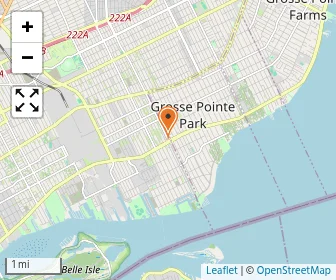
The nearest high school to St. Ambrose Academy is University Liggett School (4.0 miles away)
The nearest elementary school and preschool is St. Clare Of Montefalco School (1.2 miles away)
Show me:
Distance: 1.2 mi
Gr: PK-8 | 185 students
Catholic
16231 Charlevoix St
Grosse Pointe, MI 48230
(313) 647-5129
Distance: 2.3 mi
Gr: PK-K | 61 students
Montessori School
4351 Marseilles St
Detroit, MI 48224
(313) 881-2255
Distance: 2.8 mi
Gr: PK-8 | 232 students
Avg. class size: 15 students
Sports: 5 | Extracurriculars: 7
171 Lake Shore Road
Grosse Pointe, MI 48236
(313) 886-1221
Distance: 3.0 mi
Gr: PK-8 | 244 students
Avg. class size: 21 students
Sports: 10
Alternative School
2555 Burns
Detroit, MI 48214
(313) 822-0300
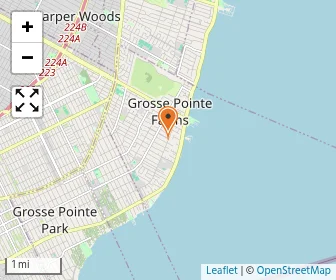
Distance: 3.1 mi
Gr: PK-8 | 305 students
Catholic
170 Grosse Pointe Blvd
Grosse Pointe, MI 48236
(313) 885-3430

Distance: 4.0 mi
Gr: PK-12 | 583 students
Avg. class size: 15 students
Sports: 18 | Extracurriculars: 4
1045 Cook Road
Grosse Pointe, MI 48236
(313) 884-4444
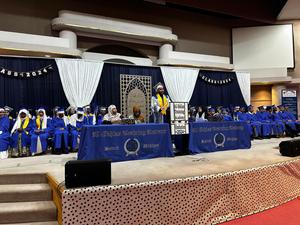
Distance: 6.7 mi
Gr: PK-12 | 276 students
Avg. class size: 25 students
Sports: 3
Islamic
12555 McDougall St.
Hamtramck, MI 48212
(313) 369-0880
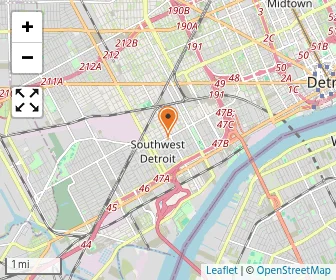
Distance: 9.2 mi
Gr: 9-12 | 289 students
Catholic
5679 W Vernor Hwy
Detroit, MI 48209
(313) 843-2747

Distance: 9.3 mi
Gr: 5-12 | 97 students
All-boys (Islamic)
28111 Imperial Dr
Warren, MI 48093
(586) 573-7777
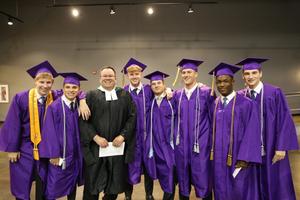
Distance: 9.8 mi
Gr: 9-12 | 735 students
Avg. class size: 21 students
Sports: 17 | Extracurriculars: 37
All-boys (Catholic)
14600 Common Road
Warren, MI 48088
(586) 778-2207
Distance: 1.2 mi
Gr: PK-8 | 185 students
Catholic
16231 Charlevoix St
Grosse Pointe, MI 48230
(313) 647-5129
Distance: 2.8 mi
Gr: PK-8 | 232 students
Avg. class size: 15 students
Sports: 5 | Extracurriculars: 7
171 Lake Shore Road
Grosse Pointe, MI 48236
(313) 886-1221
Distance: 3.0 mi
Gr: PK-8 | 244 students
Avg. class size: 21 students
Sports: 10
Alternative School
2555 Burns
Detroit, MI 48214
(313) 822-0300
Distance: 3.1 mi
Gr: PK-8 | 305 students
Catholic
170 Grosse Pointe Blvd
Grosse Pointe, MI 48236
(313) 885-3430
Distance: 3.5 mi
Gr: PK-8 | 12 students
All-boys | Alternative School
15255 Mayfield
Detroit, MI 48205
(313) 521-6228
Distance: 1.2 mi
Gr: PK-8 | 185 students
Catholic
16231 Charlevoix St
Grosse Pointe, MI 48230
(313) 647-5129
Distance: 2.3 mi
Gr: PK-K | 61 students
Montessori School
4351 Marseilles St
Detroit, MI 48224
(313) 881-2255
Distance: 2.8 mi
Gr: PK-8 | 232 students
Avg. class size: 15 students
Sports: 5 | Extracurriculars: 7
171 Lake Shore Road
Grosse Pointe, MI 48236
(313) 886-1221
Distance: 3.0 mi
Gr: PK-8 | 244 students
Avg. class size: 21 students
Sports: 10
Alternative School
2555 Burns
Detroit, MI 48214
(313) 822-0300
Distance: 3.1 mi
Gr: PK-8 | 305 students
Catholic
170 Grosse Pointe Blvd
Grosse Pointe, MI 48236
(313) 885-3430
School
(Math and Reading Proficiency)
(Math and Reading Proficiency)
Location
Miles
Quick Facts
Detroit Merit Charter Academy
Charter School
(Math: 19% | Reading: 30%)
Rank:
Rank:
3/
Bottom 50%10
1091 Alter Rd
Detroit, MI 48215
(313) 331-3328
Detroit, MI 48215
(313) 331-3328
0.1 miles
Gr: K-8 | 719 students Student-Teacher Ratio: 18:1
George Defer Elementary School
(Math: 65-69% | Reading: 80-84%)
Rank:
Rank:
10/
Top 5%10
15425 Kercheval Ave
Grosse Pointe, MI 48230
(313) 432-4000
Grosse Pointe, MI 48230
(313) 432-4000
0.6 miles
Gr: K-4 | 460 students Student-Teacher Ratio: 17:1 Minority enrollment: 19%
Pierce Middle School
(Math: 64% | Reading: 69%)
Rank:
Rank:
10/
Top 10%10
15430 Kercheval Ave
Grosse Pointe, MI 48230
(313) 432-4700
Grosse Pointe, MI 48230
(313) 432-4700
0.6 miles
Gr: 5-8 | 570 students Student-Teacher Ratio: 19:1 Minority enrollment: 22%
Golightly Career And Technical Center
Vocational School
900 Dickerson St
Detroit, MI 48215
(313) 822-8820
Detroit, MI 48215
(313) 822-8820
0.7 miles
Gr: 9-12
Carstens Elementarymiddle School
(Math: 10-14% | Reading: 15-19%)
Rank:
Rank:
2/
Bottom 50%10
13000 Essex Ave
Detroit, MI 48215
(313) 866-5500
Detroit, MI 48215
(313) 866-5500
0.8 miles
Gr: PK-8 | 266 students Student-Teacher Ratio: 14:1
Recent Articles

Private School Tuition Insurance: Is It Worth Buying?
Is private school tuition insurance worth buying? Learn what policies cover, compare costs and exclusions, and decide whether protecting your tuition investment makes financial sense for your family.

Medical Leave and Private School Tuition: Parent Guide
What happens to private school tuition during medical leave? Learn about refunds, tuition insurance, enrollment contracts, financial aid, and protecting your child's education while managing unexpected medical expenses and recovery.
Private School Commute: Is the Travel Time Worth It?
Is the commute to private school worth it? Learn how to calculate travel time, protect family routines, assess student well-being, and decide whether a longer journey makes educational sense.