

About the School
- Ateres Chaya is an all–girls Jewish elementary school located in Brooklyn, NY, serving grades Kindergarten through 5 in a large city community.
- The school has a total enrollment of 29 students with a student–teacher ratio of 6:1, supported by 5 teachers.
- Ateres Chaya offers a regular elementary program within a city–based environment in Brooklyn.
- Tuition information is not specified; however, the average elementary private school tuition in Brooklyn is $23,013.
- Nearby Jewish–affiliated schools in Brooklyn include Arista Preparatory Academy and Beis Chaya Mushka, offering education across multiple grade levels.
School Facts
Student Body
Total Students
29 students
Student Body Type
Academic Profile
Total Classroom Teachers
5 teachers
Student-Teacher Ratio
6:1
National avg.: 11:1
Tuition & Financial Aid
Admission Deadline
None / Rolling
Frequently Asked Questions
When is the application deadline for Ateres Chaya?
The application deadline for Ateres Chaya is rolling (applications are reviewed as they are received year-round).
Nearby Private Schools
The nearest high school to Ateres Chaya is United Lubavitcher Yeshivoth (0.2 miles away)
The nearest elementary school is Arista Preparatory Academy (0.2 miles away)
The nearest preschool is Beis Chaya Mushka (0.4 miles away)
Show me:

Distance: 0.2 mi
Gr: K-2 | 22 students
275 Kingston Ave
Brooklyn, NY 11213
(718) 756-5550

Distance: 0.2 mi
Gr: 9-12 | 117 students
All-boys (Jewish)
885 Eastern Pkwy
Brooklyn, NY 11213
(718) 735-6601
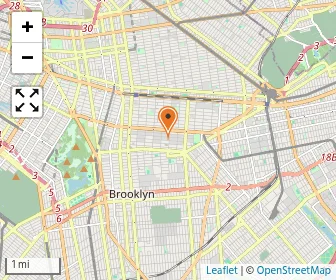
Distance: 0.4 mi
Gr: NS-12 | 287 students
All-girls (Jewish)
1505 Carroll St
Brooklyn, NY 11213
(718) 756-0770

Distance: 0.4 mi
Gr: K-12 | 1,644 students
All-boys | Specialized Curriculum (Jewish)
667 Eastern Pkwy
Brooklyn, NY 11213
(718) 778-3340
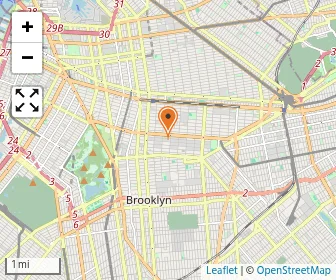
Distance: 0.4 mi
Gr: 5-8
Specialized Curriculum (Jewish)
1383 President Street
Brooklyn, NY 11213
(718) 467-0860
Distance: 0.2 mi
Gr: 9-12 | 117 students
All-boys (Jewish)
885 Eastern Pkwy
Brooklyn, NY 11213
(718) 735-6601
Distance: 0.4 mi
Gr: NS-12 | 287 students
All-girls (Jewish)
1505 Carroll St
Brooklyn, NY 11213
(718) 756-0770
Distance: 0.4 mi
Gr: K-12 | 1,644 students
All-boys | Specialized Curriculum (Jewish)
667 Eastern Pkwy
Brooklyn, NY 11213
(718) 778-3340
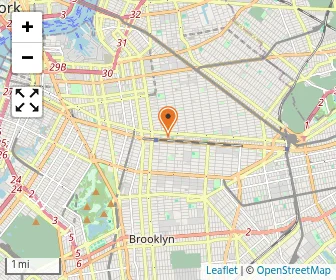
Distance: 0.5 mi
Gr: PK-12 | 625 students
All-girls (Jewish)
971 41st St
Brooklyn, NY 11219
(718) 234-2000
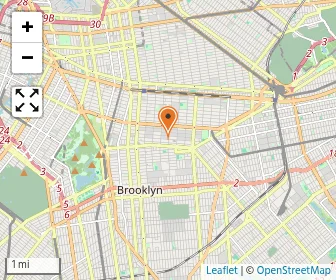
Distance: 0.5 mi
Gr: 9-12 | 62 students
All-girls | Alternative School (Jewish)
556 Crown St
Brooklyn, NY 11213
(718) 735-0030
Distance: 0.2 mi
Gr: K-2 | 22 students
275 Kingston Ave
Brooklyn, NY 11213
(718) 756-5550
Distance: 0.4 mi
Gr: NS-12 | 287 students
All-girls (Jewish)
1505 Carroll St
Brooklyn, NY 11213
(718) 756-0770
Distance: 0.4 mi
Gr: K-12 | 1,644 students
All-boys | Specialized Curriculum (Jewish)
667 Eastern Pkwy
Brooklyn, NY 11213
(718) 778-3340
Distance: 0.4 mi
Gr: 5-8
Specialized Curriculum (Jewish)
1383 President Street
Brooklyn, NY 11213
(718) 467-0860

Distance: 0.4 mi
Gr: PK-8 | 87 students
Avg. class size: 17 students
Seventh Day Adventist
920 Park Place
Brooklyn, NY 11213
(347) 533-4923
Distance: 0.4 mi
Gr: NS-12 | 287 students
All-girls (Jewish)
1505 Carroll St
Brooklyn, NY 11213
(718) 756-0770
Distance: 0.4 mi
Gr: PK-8 | 87 students
Avg. class size: 17 students
Seventh Day Adventist
920 Park Place
Brooklyn, NY 11213
(347) 533-4923

Distance: 0.4 mi
Gr: PK-8 | 133 students
Episcopal
1346 President St
Brooklyn, NY 11213
(718) 756-6602
Distance: 0.5 mi
Gr: PK-12 | 625 students
All-girls (Jewish)
971 41st St
Brooklyn, NY 11219
(718) 234-2000

Distance: 0.5 mi
Gr: PK-3 | 99 students
Jewish
440 Crown St
Brooklyn, NY 11225
(718) 676-8088
School
(Math and Reading Proficiency)
Location
Miles
Quick Facts
Kipp Always Mentally Prepared Charter School
Charter School
(Math: 56% | Reading: 49%)
Rank:
Rank:
6/
Top 50%10
1224 Park Pl-4th Fl
Brooklyn, NY 11213
(718) 943-3710
0.1 miles
Gr: K-8 | 891 students Student-Teacher Ratio: 21:1 Minority enrollment: 99%
School Of Integrated Learning
(Math: 55-59% | Reading: 60%)
Rank:
Rank:
7/
Top 50%10
1224 Park Pl
Brooklyn, NY 11213
(718) 774-0362
0.1 miles
Gr: 6-8 | 214 students Student-Teacher Ratio: 9:1 Minority enrollment: 99%
Academy For Health Careers
Vocational School
(Math: 11-19% | Reading: 60-79%)
Rank:
Rank:
5/
Bottom 50%10
150 Albany Ave
Brooklyn, NY 11213
(718) 773-0128
0.2 miles
Gr: 9-12 | 159 students Student-Teacher Ratio: 8:1 Minority enrollment: 96%
P.s. 289 George V Brower
(Math: 55-59% | Reading: 35-39%)
Rank:
Rank:
5/
Bottom 50%10
900 St Marks Ave
Brooklyn, NY 11213
(718) 493-3824
0.2 miles
Gr: PK-5 | 280 students Student-Teacher Ratio: 10:1 Minority enrollment: 97%
New Bridges Elementary School
(Math: 50-54% | Reading: 35-39%)
Rank:
Rank:
5/
Bottom 50%10
1025 Eastern Pkwy
Brooklyn, NY 11213
(718) 363-8200
0.3 miles
Gr: PK-5 | 431 students Student-Teacher Ratio: 11:1 Minority enrollment: 98%
Recent Articles

Changing Academic Tracks at Private School
Discover how your child can change academic tracks at private school without falling behind, including course prerequisites, transition planning, graduation requirements, academic support, transcript implications, and future college admission considerations.

When Private Schools Cannot Offer Advanced Subjects
Discover what parents can do when private schools cannot offer advanced subjects, including alternative courses, independent study, college partnerships, graduation requirements, and strategies for maintaining academic progress and future opportunities.

Child Refuses Private School Activities
Learn why children refuse private school group activities, how schools respond, when participation becomes mandatory, and practical ways parents can address anxiety, resistance, social difficulties, and student confidence effectively.