
Navigating Private School Finances: A Parent’s Guide (Updated for 2025)
Sending a child to a private school can be one of the most important financial decisions a family makes. With rising tuition rates, shifting enrollment, and growing financial-aid programs, understanding how to budget for private education is more critical than ever. This updated guide offers insights and practical recommendations for parents, students, and educators as of 2025 — based on the latest data, trends, and expert guidance.
Understanding the Cost Landscape in 2025
Tuition Trends Nationwide
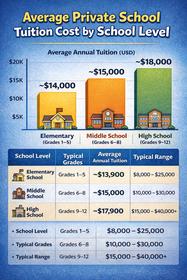
- The national average tuition for K–12 private schools in 2025–26 is about US$14,999 per year.
- For private elementary schools, the average is roughly US$14,018, while for private high schools it is about US$17,954.
- However, these averages mask wide variation: many day schools charge much more, and boarding schools often cost substantially more. A recent analysis found that some day schools now charge roughly US$49,284 annually, while boarding schools average around US$73,080. Bloomberg
- Among day-school families surveyed, nearly half reported tuition increases of 7 percent or more in the 2024–25 cycle — the most significant rise in a decade.
These figures illustrate that private school tuition continues to rise significantly, often outpacing general inflation and increasing household budget pressure.
Enrollment and Demographics
- As of fall 2021, approximately 4.7 million K–12 students were enrolled in private schools — roughly 9 percent of all U.S. K–12 enrollment.
- That number represented a slight increase compared with 2011, though there has been no strong long-term upward or downward trend
. . .read more