Kinds of Schools

Private schools are just as varied as public schools. From Catholic to progressive, military to special needs, private schools offer a lot of options. Take a comprehensive look into the many types of private schools, weigh the pros and cons of each, and get helpful tips on choosing one that works best for your child.

View the most popular articles in Kinds of Schools:

Teaching Boys

Updated
|
Teaching Boys
Why teach boys in a single sex setting? The answer to this question and several others here.

Why teach boys in a single-sex setting? Aren't boys' schools archaic and out of touch? Aren't boys more likely to succeed in a coeducational setting? What are the advantages of educating boys in a single-sex setting? The answers to these questions and many more are contradictory and subjective. Furthermore, the amount of research into boys' education is fairly limited. With those caveats in place, let's explore some sources and resources for the special corners of the education world: boys' schools.

The research

A good starting point for exploring boys' schools is the International Boys' Schools Coalition. Just like the International Coalition of Girls’ Schools is one of the major umbrella organizations for girls' schools, the International Boys' Schools Coalition is one of the major umbrella organizations for boys' schools around the globe. It champions boys' schools. It encourages research on the education of boys.

The IBSC terms its research papers Action Research Projects. Papers such as Teaching Boys at the Coal Face: Mining Key Pedagogical Approaches, Ready, Willing, and Able: Boys and Writing, Volumes I & II, Journeys into Masculinity, Positive Relationships, Positive Learning, Boys and Digital Literacy, and Boys and Reading give you and me valuable insights into teaching boys.

For more background on this educational model, read Single-Sex Education: An Overview.

As you read these papers, you begin to realize that the secret to boys' schools is that they are appropriate for many young men. Not all young men.
. . .read more

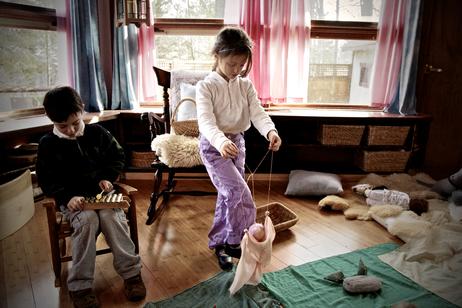
Why Waldorf?

Updated
|
Why Waldorf?
Vicki Larson provides detailed answers to my questions about Waldorf schools.

I asked Vicki Larson to give us some detailed answers to my questions about Waldorf education. (I must disclaim that my eldest daughter attended a Waldorf school.) Vicki is the Director of Communications and Marketing at Green Meadow Waldorf School in Chestnut Ridge, New York. She is also the school's Alumni Relations Coordinator and Diversity Committee Chair. ~ Rob Kennedy

What sets a Waldorf school apart from public schools? Is it curriculum? Teaching style? Philosophy? Other characteristics?

The Waldorf curriculum differs from a public school or other independent school curriculum in philosophy, teaching style, and the kinds of relationships the students develop with their teachers and classmates.

Philosophy

Uniquely designed to meet children at each developmental stage, Waldorf Education is based on child study and observation. Our academically challenging, arts-infused curriculum includes block-style learning and develops adults who have the opportunity to reach their full potential, excelling in many areas unafraid to take risks as they work to solve problems. In our school environment, academic standards are rigorous, and stress is minimized by strong relationships, ample artistic and physical activity, and opportunities for joy and discovery. Media and technology are managed very differently than in many other schools: they are introduced in an age-appropriate way. They are understood and used as tools rather than ends unto themselves. Waldorf Schools do not "teach to the test" (as independent schools, we are often exempt from state testing, though most Waldorf students take the SAT and other standardized tests),

. . .read more

You Know You Are in a Progressive School When...

Updated
|
You Know You Are in a Progressive School When...
In many ways progressive schools epitomize the uniqueness of the genre of K-12 education known as private or independent schools.

Progressive schools are different from so-called traditional schools. I am not being judgmental here. I am simply pointing out some differences between the two kinds of schools so that you can make an informed decision about which private schools to consider for your child.

Until the middle of the 20th-century, many schools simply taught their students facts and figures. You memorized and regurgitated information. Indeed I can remember being taught this way at Rosyln School and Westmount High School back in the '50s and '60s. That's just the way you were taught back then. All of your academic work was focused on what you could expect to be tested on in your final year-end exams. This all led inexorably to a forbidding set of examinations known as the Junior Matriculation. If you did well on that set of examinations administered at the end of Grade 11, you went off to university for more of the same.

Progressive schools by definition are schools that espouse the ideals and ideas of landmark educators and thinkers such as John Dewey and Francis Parker. At the beginning of the 20th-century, they were considered visionary by some, radical by others. The progressive curriculum was more varied and experiential. Students just didn't sit there passively listening to a teacher lecture about the material. They actually were encouraged to learn by discovery through a variety of hands-on activities. Teachers no longer had to get through a plethora of outdated materials simply to be able to

. . .read more

5 Facts About Progressive Schools

Updated
|
5 Facts About Progressive Schools
Progressive schools are different from traditional schools. These five facts highlight some of those differences.

This article has been updated to reflect 2026 data and recent developments.

Progressive schools are different from traditional schools. Their educational philosophies and teaching methods are different. Because there are relatively few schools that explicitly call themselves progressive, most people are surprised when they discover that these schools even exist. The Progressive Education Network continues to support progressive educators and schools in 2026, emphasizing active student participation, inquiry, collaboration, and the development of the whole child.

First, here is some of the background on the progressive movement here in the United States. The easiest way to understand how progressivism got started in this country is to realize that educators were also philosophers. For example, the Vermont native John Dewey (1859-1952), who founded the University of Chicago's Laboratory School, which many consider the flagship of progressive education, was a distinguished philosopher as well as an educator. The University of Chicago Laboratory Schools continue to describe their approach as rooted in Dewey's philosophy of experiential, student-centered learning. In a nutshell, Dewey knew that education was the way to make sweeping changes in society. After he had left the University of Chicago, Dewey was among the progressive educators who founded The New School in New York in 1919. The foundation of Dewey's approach to education rests on three lectures he gave back in the 1890s to raise money for his Laboratory School. The School and Social Progress, the School and the Life

. . .read more

Schools with Non-traditional Approaches

Updated
|
Schools with Non-traditional Approaches
Categorizing schools is not a neat process. But there are several educational approaches and philosophies offer some alternatives to traditional schools. Here are some pros and cons about alternative schools.

Are you thinking about something other than the usual public school experience for your toddler or primary school age child? If you are, then the next question you are most likely asking is exactly what kind of alternatives are out there anyway? How expensive are they? Are there schools in my area? How will the foundation these schools provide serve my child's future learning in grade school, high school and beyond? Let's take a look at each of these questions and offer some answers.

Early Education Options

  • Traditional teacher-led education?
  • A follow the child approach as championed by Maria Montessori?
  • The Steiner approach?
  • Reggio Emilia inspired?

Those are your broad choices.

Traditional teacher-led education remains popular. Most of us are familiar with this approach to teaching primary age school children because we ourselves are products of those classes. The public school system which I attended in Westmount, Montreal back in the '50s used that traditional approach. Indeed we all had desks lined up in rows. Looking back it seems rather quaint and not a little bit militaristic. But that's the way we were taught back then. We had homework. We were given grades. We were rapped on the knuckles if we misbehaved.

In the 21st century traditional teacher-led education is the norm in many schools both public and private. There are an infinite number of variations on this approach. Some retain the regimentation and strictness which we and our parents remember. Most, however, tend to have been softened with a deeper

. . .read more

Recent Articles

Should Your Child Stay at the Same Private School K–12?
Explore whether your child should attend the same private school from kindergarten through graduation, weighing academic continuity, friendships, changing needs, tuition costs, and opportunities at different educational stages.
When Your Child's Closest Friends Leave Private School
Learn how to support your child when close friends leave private school, manage loneliness, maintain friendships, encourage new connections, recognize emotional challenges, and decide when additional school support is needed.
When Your Child Doesn't Connect With Their Teacher
Discover when parents should intervene if their child struggles to connect with a private school teacher, including warning signs, communication strategies, classroom concerns, and practical steps toward improving relationships.

Why Private School