Kinds of Schools

Private schools are just as varied as public schools. From Catholic to progressive, military to special needs, private schools offer a lot of options. Take a comprehensive look into the many types of private schools, weigh the pros and cons of each, and get helpful tips on choosing one that works best for your child.

View the most popular articles in Kinds of Schools:

For-profit vs. Not-for-profit Schools

Updated
|
For-profit vs. Not-for-profit Schools
This comprehensive guide explores the differences between for-profit and not-for-profit private schools, discussing their organizational structures, advantages, and key considerations for parents. It emphasizes that a school's success is determined by its educational quality and management rather than its profit status.

Private schools are generally organized as for-profit or not-for-profit (nonprofit) entities.

A corporation or a private individual typically uses the for-profit version to make a profit, but is not eligible for tax-deductible contributions to the extent provided by law.

Most private schools opt to operate under a not-for-profit status, enabling them to generate revenue while also receiving tax-deductible donations to the extent permitted by law.

Advantages and Disadvantages

What are the advantages and disadvantages of a for-profit versus a nonprofit school? Is one kind of school better than the other? Let's look at some answers.

For-Profit Schools

A for-profit school is set up by allowing it to be controlled by an owner. That owner could be an individual or a group of individuals, as is often the case with many preschools and some elementary schools. Another form of ownership is a corporation.

This is often a corporation owned and operated by a group of local individuals. Typically, for-profit private schools are owned by a corporation that operates schools in multiple locations.

For-profit schools are typically in business to generate revenue or make a profit. They pay taxes on those profits. Parents pay for the school's services just as they would for any other service.

Examples of this sort of school include Le Rosey in Switzerland, Sylvan Learning Centers, the Nobel Schools, and thousands of small nursery and primary schools.

The school can be incorporated, a sole proprietorship, or some other
. . .read more

Classical Christian Schools

Updated
|
Classical Christian Schools
This article explores the concept of Classical Christian Schools, discussing their educational philosophy rooted in the trivium (grammar, logic, rhetoric) and Christian worldview. It outlines the historical background, teaching methods, and goals of these schools in providing a rigorous, faith-centered education.

Christian schools as a genre have been around since the 1950s. Recently, a subset of Christian schools known as classical Christian schools has become popular. This seems to have come about because standards in public education have steadily fallen. Many parents will not tolerate shoddy disciplinary standards, sloppy dress codes, violence in our schools, underachievement, and low expectations. As a result, they start their own schools.

Background

Classical Christian Schools trace their origins back to the revival of classical education in the late 20th century, particularly influenced by the works of scholars like Dorothy Sayers and Douglas Wilson. These schools seek to combine the rich heritage of classical education with a distinctly Christian worldview. The approach used in Classical Christian Schools is centered around the trivium, a three-part division of learning that includes the grammar stage, the logic stage, and the rhetoric stage. In the grammar stage, students focus on the foundational knowledge and facts of various subjects. The logic stage emphasizes critical thinking skills and logical reasoning, while the rhetoric stage focuses on effective communication and persuasive expression. Throughout all stages, the integration of Christian faith and principles is a guiding principle, with biblical teachings woven into the curriculum and classroom discussions. The goal is to cultivate students who are not only well-educated but also deeply grounded in their faith, equipped to engage with the world thoughtfully and confidently.

A classical Christian school proclaims Jesus Christ as Lord and Savior. It also adheres to the principles of

. . .read more

Special Needs Schools

Updated
|
Special Needs Schools
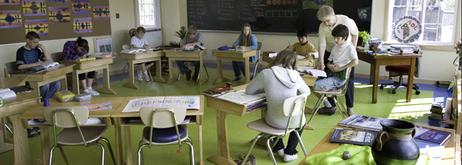
Do you think your son has a learning disability? Not sure what to do? A special needs school might be the way to go.

Perhaps you have come to this site because you have just found out that your son has dyslexia. It is a scary feeling on many levels when you find out something like that. I know. When we were living in Nassau, Bahamas, we discovered that our eldest son read on a second grade level even though he was in 7th grade. The lad had been socially promoted with one of his previous teachers ever flagging his learning disability. (Our adopted son had only come to live with us at age 12, so we had no idea that he even had a learning disability.) Our first reaction was to get him into one of the private day schools. However, since he could not read, we were referred to a special needs school run by a caring, brilliant, patient person by the name of Gail Wisdom. She spent a lot of 1 on 1 time with her handful of students. In a matter of months and with much encouragement at home, our son was reading at his grade level.

We had very few options in the Bahamas back then. But you will discover that you have plenty of education options. Perhaps you are reading this article because you have decided that your child needs the best teachers available to help her with her learning differences. She is very bright and highly motivated. That's not the issue. She just learns differently. Or maybe your child has ADHD (Attention Deficit

. . .read more

Alternative Schools

Updated
|
Alternative Schools
Sometimes a regular school is not the right fit for a child. Perhaps she needs an alternative school.

What is an alternative school? For most of us the term alternative school means a school with a non-traditional program. Its students could be 'gifted' or 'troubled' or have special learning needs.

Schools For The Gifted

Many schools for the gifted offer enrichment in academic subjects. Others specialize in the arts. Most of the students in these schools excel at their school work and in their artistic endeavors. They thrive in a school setting where they don't have to waste time on non-essential courses. The extra time gained is spent on music lessons, rehearsals and studio time.

Schools for Troubled Teens

Schools for troubled teens are often styled 'therapeutic' schools. Their students have been unable to succeed academically in regular schools. Perhaps discipline is a problem. Or the child has an eating disorder or is suicidal. The program at a therapeutic school tends to be highly structured so that a child learns how to cope. Some therapeutic schools deal with substance abuse issues. Children who are addicted to drugs and alcohol can find the professional help and counseling they need to change their lives. Other schools specialize in emotional growth issues.

Admission to these schools is on an 'as needed' basis. You won't have to wait until a certain date to admit your child. Some schools have minimum stays in order to ensure the effectiveness of their programs.

Schools for At Risk Teens

Several cities offer 'street schools' modeled after the highly successful Denver

. . .read more

Military Schools

Updated
|
Military Schools
Military schools offer structure and discipline as well as a top-notch education.

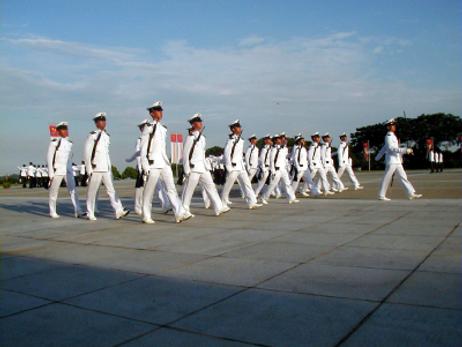
Does the term 'military school' conjure up images of a place where you send troubled young men or boys who can't keep their hands off a gun? Well, if it does, you are wrong. America's military prep schools carry on a proud tradition of academic and personal excellence which has withstood the assaults of negative media attention and changing fashions in education. Furthermore, many military schools are now co-ed reflecting the changes in the role of women in our armed forces at the national level.

A military school education embraces structure, teamwork, and a solid focus on self-discipline. And they are not just for men either. Several schools are co-educational. Technology plays a major role in military schools these days, reflecting the enormous changes technology has wrought across the entire defense spectrum in America today.

Military school graduates have gone on to be our nation's leaders. They have paid the price for defending our freedom.

Proudly you gathered, rank on rank, to war

As who had heard God’s message from afar;
All you had hoped for, all you had, you gave,
To save mankind—yourselves you scorned to save.

Stanza II from O Valiant Hearts by John S. Ark-wright

. . .read more

Recent Articles

Should Your Child Stay at the Same Private School K–12?
Explore whether your child should attend the same private school from kindergarten through graduation, weighing academic continuity, friendships, changing needs, tuition costs, and opportunities at different educational stages.
When Your Child's Closest Friends Leave Private School
Learn how to support your child when close friends leave private school, manage loneliness, maintain friendships, encourage new connections, recognize emotional challenges, and decide when additional school support is needed.
When Your Child Doesn't Connect With Their Teacher
Discover when parents should intervene if their child struggles to connect with a private school teacher, including warning signs, communication strategies, classroom concerns, and practical steps toward improving relationships.

Why Private School