Kinds of Schools

Private schools are just as varied as public schools. From Catholic to progressive, military to special needs, private schools offer a lot of options. Take a comprehensive look into the many types of private schools, weigh the pros and cons of each, and get helpful tips on choosing one that works best for your child.

View the most popular articles in Kinds of Schools:

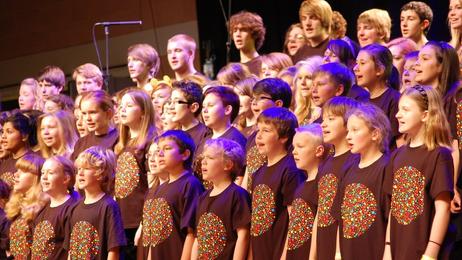
Schools For Children Who Sing

Updated
|
Schools For Children Who Sing
If you have a child who sings, you might want to consider a choir school. In the United States, most of these schools are day schools.

What is a choir school?

It is a private school serving the choristers of a cathedral, college or large parish church. The choristers can be boys or girls or boys and girls depending on the institution with which the school is affiliated. The United Kingdom enjoys a long history of this genre of private school. As the Choir Schools Association notes:

"Choir Schools are amazing places where young choristers enjoy learning and playing. Their work takes them into stunningly beautiful buildings on a daily basis. There is no better educational and musical training start for boys and girls aged seven years and up who love to sing."

Residential and day choir schools have seen a steady decline in their numbers since the 1950s for three reasons:

  1. Two devastating world wars in Britain drastically altered the social and economic landscape in that country.
  2. Changing values in modern society throughout the world have seen parents choose alternative forms of education for their children.
  3. Finally, the tremendous cost of educating children in a choir school has forced many sponsoring institutions to close their schools.

Why send your child to a choir school?

I remember a parishioner years ago asking me to support her son's application to Saint Thomas' Choir School. He was an only child and, frankly, she was the quintessential velcro mother. I was pleasantly surprised that they were keen on the residential choir school at Saint Thomas Church in New York City. It was a good solution to

. . .read more

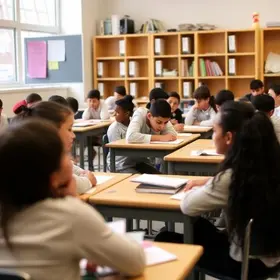
Single-Sex Education: An Overview

Updated
|
Single-Sex Education: An Overview
Sending your child to a single-sex school is one of several options you have when it comes to private schools.

When you think of single-sex education as a choice or an option when you are thinking about sending your child to private school, the subject becomes a little easier to understand in the 21st century. Historically private schools have offered single-sex education for decades. Indeed many of our older K-12 schools were founded with the purpose of educating boys or girls separately. That's the way things were done back in the 18th and 19th centuries. Colleges and universities were also set up as single-sex institutions. For example, Harvard University was an all-male university until 1977 when its sister college, Radcliffe, merged with it.

Characteristics of single-sex schools

How do we define a single-sex school? By definition, a single-sex school is a school which educates boys or girls exclusively. As a general rule classes will not be co-educational. On occasion, neighboring boys and girls schools which have an established relationship will host co-educational classes.

What grades do single-sex schools offer? Typically single-sex schools are high schools offering grades 9 through 12 and a Post Graduate year where available. A handful of single-sex schools offer the middle school grades 6 through 9. Even fewer schools offer PK-12. You will also notice that middle school grades go up to grade 9 and high school begins with grade 9 as well. Actually, grade 10 is probably the most common entry point for private high schools. That’s one reason for the overlap of the grades.

There are several different kinds of

. . .read more

A Look At An Athletic Academy

Updated
|
A Look At An Athletic Academy
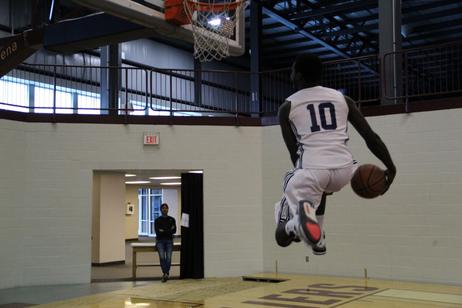
Learn how modern sports academies balance rigorous academics, elite athletic development, NCAA preparation, and student support for aspiring athletes in 2026.

Editor's note: I recently asked Bobby Bossman, Director of SPIRE Academy, to explain and outline the kind of athletic programs and training the Academy offers. Specialized sports academies have expanded significantly over the past decade, giving young women and men the opportunity to pursue elite athletic development while maintaining college-preparatory academics. SPIRE Academy remains one of the leading examples of this model. ~Rob

For talented student-athletes, balancing academics and athletic development can be one of the greatest challenges of the high school years. SPIRE Academy was designed to address that challenge by combining flexible academic scheduling with individualized athletic training, sports performance programs, and college preparation.

Below, Bobby Bossman explains how the Academy approaches student-athlete development.

How Does a Specialty Institute Such as SPIRE Academy Handle the Balance of Academics and Athletic Training?

By having flexibility with each student's time and the ability to create custom daily schedules, our staff can plan the most appropriate training day unique to each student-athlete. Some athletes may require more or less time in academic training based on progress. We have the ability to accommodate accordingly by infusing more academic time when needed and allowing those who are ahead academically extra periods of athletic training.

This is versus the traditional high school setting that blocks students into a structured school day before athletic activities even begin.

SPIRE also has the ability to condense the academic portion of the day by removing some filler blocks such as study halls and physical education

. . .read more

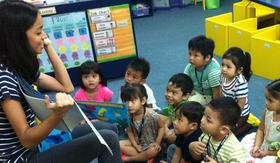
Cristo Rey Schools: A Different Kind of School

Updated
|
Cristo Rey Schools: A Different Kind of School
Cristo Rey schools are a unique blend of academic rigor, Catholic values, and practical work experience. They serve low-income students in urban areas by combining a quality education with a work-study program. This innovative approach allows students to gain real-world experience while offsetting tuition costs, providing them with a comprehensive educational experience that prepares them for future success.

Cristo Rey schools are unabashedly Roman Catholic. Through and through.

  • They teach Catholic values and religious beliefs.
  • However, they do something more unusual and significant.
  • Cristo Rey schools serve students from low-income families in urban areas who could not otherwise afford a private school education.
  • The way the Cristo Rey schools do this is to combine a work-study program with the academics, sports and extracurricular activities the schools offer.
  • Simply put, the Cristo Rey schools offer quality education with a work-study component.

History

The Cristo Rey schools got their start back in the 90s in Chicago.

  • The Catholic academic scene was a familiar, though depressing one.
  • The diocesan high schools were facing serious financial challenges.
  • Those schools had always been the ray of hope for struggling lower-income families who dreamed of an education for their children.
  • The Catholic schools run by various orders were in good shape because they attracted a clientele that could afford the substantially higher tuition that those schools charged.
  • The Jesuits met with parishioners in the Pilsen neighborhood of Chicago and asked what they needed most.
  • "A good high school" was the unequivocal response.

This short video clip shows what the Jesuits did.

The Program

As noted above, Cristo Rey schools have a work-study program, which is an integral part of the life and rhythm of each school.

  • Students work the equivalent of 5 days a month.
  • The school arranges the students' work-study assignments
. . .read more

Teaching Girls

Updated
|
Teaching Girls
Aren't girls more likely to succeed in a coeducational setting? Are there advantages to educating girls in a single sex setting? We look at some answers.

Why would anybody want to teach girls in a single sex setting? Aren't girls' schools quaint and out of touch? Aren't girls more likely to succeed in a coeducational setting? Are there advantages to educating girls in a single sex setting?

The answers to these and similar questions are varied, contradictory and subjective. Furthermore, the amount of research into girls' education is fairly limited. With those caveats in place let's explore some sources and resources for those special corners of the education world which are girls' schools.

Organizations which promote girls' schools

A good starting point for our exploration of girls' schools is the National Coalition of Girls' Schools. Just like the International Boys' Schools Coalition is one of the major umbrella organizations for boys' schools, so the National Coalition of Girls' Schools is one of the major umbrella organizations for girls' schools around the globe.

The NCGS champions girls' schools. And it champions them better and more vigorously than any other organization I know. The NCGS encourages research on the education of girls. It offers an Advanced Professional Certificate in Girls’ Education. "This unique blended learning program, which includes a separate track for STEM and for humanities faculty, helps teachers gain the expertise needed to forge a contemporary approach to teaching girls. It is intended for girls’ school educators who have distinguished themselves in classroom teaching and learning and wish to both learn from experts in the girls’ school community and connect with fellow learners."

. . .read more

Recent Articles

Should Your Child Stay at the Same Private School K–12?
Explore whether your child should attend the same private school from kindergarten through graduation, weighing academic continuity, friendships, changing needs, tuition costs, and opportunities at different educational stages.
When Your Child's Closest Friends Leave Private School
Learn how to support your child when close friends leave private school, manage loneliness, maintain friendships, encourage new connections, recognize emotional challenges, and decide when additional school support is needed.
When Your Child Doesn't Connect With Their Teacher
Discover when parents should intervene if their child struggles to connect with a private school teacher, including warning signs, communication strategies, classroom concerns, and practical steps toward improving relationships.

Why Private School