About the School
- Life Connections Childrens Learning Center in Milpitas, CA, offers early childhood education for grades PK through K in a nonsectarian, small city setting.
- The school serves a total enrollment of 100 students with one teacher, resulting in a student–teacher ratio of 100:1.
- Life Connections is a member of the National Association for the Education of Young Children, supporting professional early learning standards.
- The student body includes a diverse population with 3.45% students of color reflecting the Milpitas community.
- The program focuses on early childhood and kindergarten education within a city community type in Milpitas, California.
School Facts
School Type
Religious Affiliation
Grades Offered
Grades Prekindergarten-Kindergarten
Students By Grade
Student Body
Total Students
100 students
Student Body Type
Co-ed
% Students of Color
3%
State avg.: 52%
Academic Profile
Total Classroom Teachers
1 teacher
Tuition & Financial Aid
Admission Deadline
None / Rolling
Frequently Asked Questions
When is the application deadline for Life Connections Childrens Learning Center?
The application deadline for Life Connections Childrens Learning Center is rolling (applications are reviewed as they are received year-round).
Nearby Private Schools
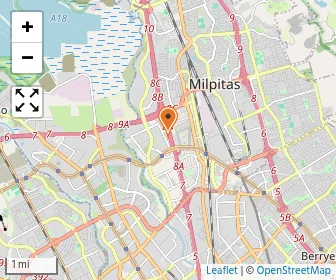
The nearest high school to Life Connections Childrens Learning Center is Stratford Preparatory Milpitas (1.2 miles away)
The nearest elementary school is St. John The Baptist Catholic School (0.7 miles away)
The nearest preschool is Milpitas KinderCare (0.6 miles away)
Show me:
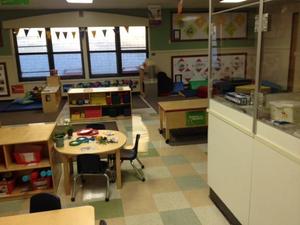
Distance: 0.6 mi
Gr: NS-PK | 74 students
Daycare / Preschool
400 S Abel St
Milpitas, CA 95035
(408) 263-7212

Distance: 0.7 mi
Gr: K | 24 students
Montessori School
200 Serra Way Ste 50
Milpitas, CA 95035
(408) 262-6227
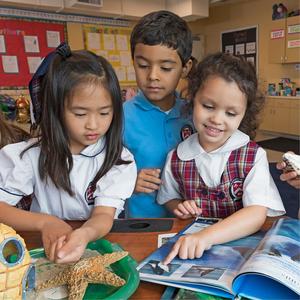
Distance: 0.7 mi
Gr: K-8 | 218 students
Avg. class size: 30 students
Sports: 2
Catholic
360 S Abel St
Milpitas, CA 95035
(408) 262-8110
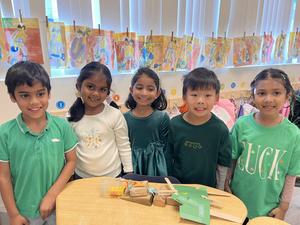
Distance: 0.7 mi
Gr: K-5 | 236 students
Avg. class size: 14 students
Extracurriculars: 5
25 Corning Avenue
Milpitas, CA 95035
(408) 766-3189
Distance: 0.8 mi
Gr: PK-8 | 680 students
Avg. class size: 14 students
Sports: 4 | Extracurriculars: 13
341 Great Mall Parkway
Milpitas, CA 95035
(408) 716-3855
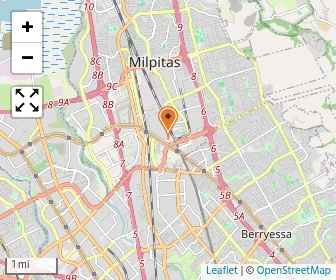
Distance: 1.2 mi
Gr: 6-12 | 224 students
Avg. class size: 24 students
1323 Great Mall Drive
Milpitas, CA 95035
(408) 307-8249

Distance: 2.4 mi
Gr: PK-11 | 171 students
Islamic
4415 Fortran Ct
San Jose, CA 95134
(408) 389-7607
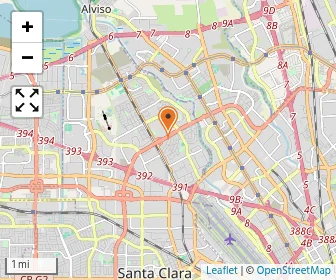
Distance: 2.7 mi
Gr: PK-12 | 257 students
Baptist
941 Clyde Ave
Santa Clara, CA 95054
(408) 988-8883
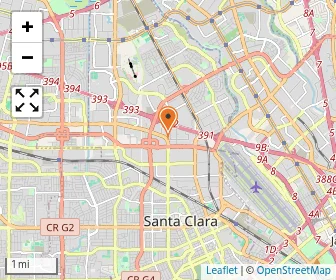
Distance: 3.8 mi
Gr: PK-12 | 441 students
Avg. class size: 21 students
Islamic
3003 Scott Blvd
Santa Clara, CA 95054
(408) 980-1161
Distance: 4.0 mi
Gr: NS-12 | 254 students
Avg. class size: 10 students
3000 Mission College Blvd
Santa Clara, CA 95050
(669) 230-0310
Distance: 0.7 mi
Gr: K-8 | 218 students
Avg. class size: 30 students
Sports: 2
Catholic
360 S Abel St
Milpitas, CA 95035
(408) 262-8110
Distance: 0.7 mi
Gr: K-5 | 236 students
Avg. class size: 14 students
Extracurriculars: 5
25 Corning Avenue
Milpitas, CA 95035
(408) 766-3189
Distance: 0.8 mi
Gr: PK-8 | 680 students
Avg. class size: 14 students
Sports: 4 | Extracurriculars: 13
341 Great Mall Parkway
Milpitas, CA 95035
(408) 716-3855
Distance: 1.2 mi
Gr: 6-12 | 224 students
Avg. class size: 24 students
1323 Great Mall Drive
Milpitas, CA 95035
(408) 307-8249
Distance: 1.3 mi
Gr: NS-8 | 503 students
Sports: 3
1500 Yosemite Dr
Milpitas, CA 95035
(408) 413-1471
Distance: 0.6 mi
Gr: NS-PK | 74 students
Daycare / Preschool
400 S Abel St
Milpitas, CA 95035
(408) 263-7212
Distance: 0.7 mi
Gr: K | 24 students
Montessori School
200 Serra Way Ste 50
Milpitas, CA 95035
(408) 262-6227
Distance: 0.8 mi
Gr: PK-8 | 680 students
Avg. class size: 14 students
Sports: 4 | Extracurriculars: 13
341 Great Mall Parkway
Milpitas, CA 95035
(408) 716-3855
Distance: 1.3 mi
Gr: NS-8 | 503 students
Sports: 3
1500 Yosemite Dr
Milpitas, CA 95035
(408) 413-1471
Distance: 1.4 mi
Gr: PK-2 | 83 students
125 N. Milpitas Blvd
Milpitas, CA 95035
(408) 539-5342
School
(Math and Reading Proficiency)
(Math and Reading Proficiency)
Location
Miles
Quick Facts
Anthony Spangler Elementary School
(Math: 57% | Reading: 72%)
Rank:
Rank:
9/
Top 20%10
140 North Abbott
Milpitas, CA 95035
(408) 635-2870
Milpitas, CA 95035
(408) 635-2870
0.9 miles
Gr: K-6 | 610 students Student-Teacher Ratio: 24:1 Minority enrollment: 95%
Pearl Zanker Elementary School
(Math: 57% | Reading: 65%)
Rank:
Rank:
9/
Top 20%10
1585 Fallen Leaf Dr.
Milpitas, CA 95035
(408) 635-2882
Milpitas, CA 95035
(408) 635-2882
0.9 miles
Gr: K-6 | 563 students Student-Teacher Ratio: 24:1 Minority enrollment: 97%
Abram Agnew Elementary School
(Math: 40-49%)
3534 Zanker Rd.
San Jose, CA 95134
(408) 669-4100
San Jose, CA 95134
(408) 669-4100
1.2 miles
Gr: K-5 | 505 students Student-Teacher Ratio: 21:1 Minority enrollment: 83%
3588 Zanker Rd.
San Jose, CA 95134
(669) 369-4400
San Jose, CA 95134
(669) 369-4400
1.2 miles
Gr: 9-12 | 683 students Student-Teacher Ratio: 19:1 Minority enrollment: 88%
Mabel Mattos Elementary School
(Math: 80% | Reading: 80-84%)
Rank:
Rank:
10/
Top 5%10
1750 Mccandless Dr.
Milpitas, CA 95035
(408) 635-2852
Milpitas, CA 95035
(408) 635-2852
1.2 miles
Gr: K-6 | 746 students Student-Teacher Ratio: 24:1 Minority enrollment: 94%
Recent Articles

Private School Tuition Insurance: Is It Worth Buying?
Is private school tuition insurance worth buying? Learn what policies cover, compare costs and exclusions, and decide whether protecting your tuition investment makes financial sense for your family.

Medical Leave and Private School Tuition: Parent Guide
What happens to private school tuition during medical leave? Learn about refunds, tuition insurance, enrollment contracts, financial aid, and protecting your child's education while managing unexpected medical expenses and recovery.
Private School Commute: Is the Travel Time Worth It?
Is the commute to private school worth it? Learn how to calculate travel time, protect family routines, assess student well-being, and decide whether a longer journey makes educational sense.