About the School
- Parwood Preschool in Long Beach, CA, serves 41 students in grades pre–kindergarten through kindergarten within a nonsectarian early learning program.
- The school operates with one teacher, resulting in a student–teacher ratio of 41:1.
- Located in a central city community, Parwood Preschool offers co–educational early childhood education.
- The student population is diverse, with 83.33% of students identified as students of color.
- Parwood Preschool is part of the Long Beach private preschool market, where average elementary tuition is approximately $11,387.
School Facts
School Type
Religious Affiliation
Grades Offered
Grades Prekindergarten-Kindergarten
Students By Grade
Student Body
Total Students
41 students
Student Body Type
Co-ed
% Students of Color
83%
State avg.: 52%
Academic Profile
Total Classroom Teachers
1 teacher
Student-Teacher Ratio
41:1
National avg.: 11:1
Tuition & Financial Aid
Admission Deadline
None / Rolling
Frequently Asked Questions
When is the application deadline for Parwood Preschool?
The application deadline for Parwood Preschool is rolling (applications are reviewed as they are received year-round).
Nearby Private Schools
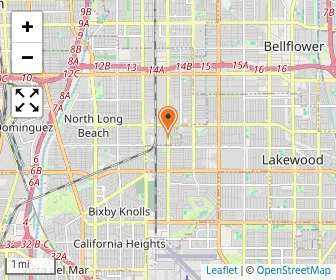
The nearest high school and preschool to Parwood Preschool is Gethsemane Baptist Christian School (1.2 miles away)
The nearest elementary school is St. Pancratius Elementary School (0.6 miles away)
Show me:
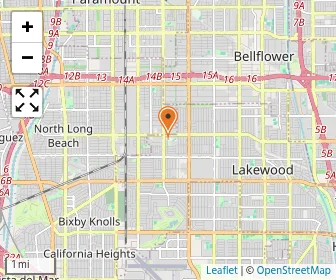
Distance: 0.6 mi
Gr: K-8 | 177 students
Avg. class size: 18 students
Sports: 7 | Extracurriculars: 5
Catholic
3601 Saint Pancratius Pl
Lakewood, CA 90712
(562) 634-6310
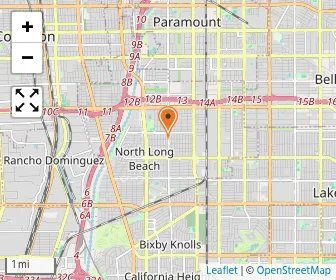
Distance: 1.2 mi
Gr: PK-12 | 84 students
Baptist
6095 Orange Ave
Long Beach, CA 90805
(562) 422-4206
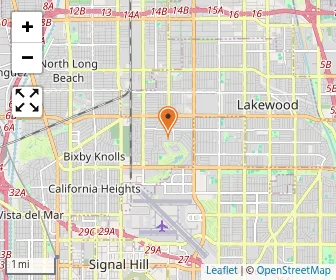
Distance: 1.2 mi
Gr: 6-8 | 11 students
Special Education School
3501 Country Club Dr
Lakewood, CA 90712
(562) 422-2845

Distance: 1.2 mi
Gr: 2-12 | 72 students
Special Education School
1022 E Market St
Long Beach, CA 90805
(562) 481-5738
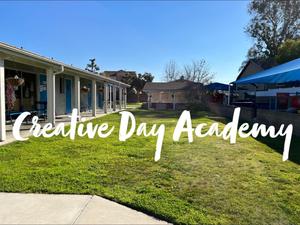
Distance: 1.4 mi
Gr: PK-K | 72 students
Avg. class size: 12 students
Sports: 3 | Extracurriculars: 1
Daycare / Preschool
8740 Ramona St
Bellflower, CA 90706
(562) 634-7527
Distance: 1.2 mi
Gr: PK-12 | 84 students
Baptist
6095 Orange Ave
Long Beach, CA 90805
(562) 422-4206
Distance: 1.2 mi
Gr: 2-12 | 72 students
Special Education School
1022 E Market St
Long Beach, CA 90805
(562) 481-5738
Distance: 2.5 mi
Gr: 9-12 | 461 students
Sports: 14 | Extracurriculars: 39
All-girls (Catholic)
5825 Woodruff Ave
Lakewood, CA 90713
(562) 925-5073
Distance: 3.4 mi
Gr: PK-12 | 114 students
Baptist
3332 Magnolia Ave
Long Beach, CA 90806
(562) 426-5214

Distance: 3.4 mi
Gr: 9-12 | 495 students
17700 Dumont Ave
Cerritos, CA 90703
(562) 865-0281
Distance: 0.6 mi
Gr: K-8 | 177 students
Avg. class size: 18 students
Sports: 7 | Extracurriculars: 5
Catholic
3601 Saint Pancratius Pl
Lakewood, CA 90712
(562) 634-6310
Distance: 1.2 mi
Gr: PK-12 | 84 students
Baptist
6095 Orange Ave
Long Beach, CA 90805
(562) 422-4206
Distance: 1.2 mi
Gr: 6-8 | 11 students
Special Education School
3501 Country Club Dr
Lakewood, CA 90712
(562) 422-2845
Distance: 1.2 mi
Gr: 2-12 | 72 students
Special Education School
1022 E Market St
Long Beach, CA 90805
(562) 481-5738
Distance: 1.5 mi
Gr: K-8 | 109 students
Catholic
5369 Linden Ave
Long Beach, CA 90805
(562) 428-7422
Distance: 1.2 mi
Gr: PK-12 | 84 students
Baptist
6095 Orange Ave
Long Beach, CA 90805
(562) 422-4206
Distance: 1.4 mi
Gr: PK-K | 72 students
Avg. class size: 12 students
Sports: 3 | Extracurriculars: 1
Daycare / Preschool
8740 Ramona St
Bellflower, CA 90706
(562) 634-7527
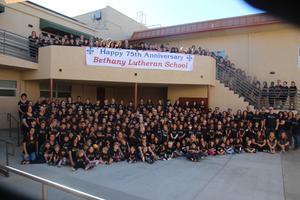
Distance: 1.7 mi
Gr: NS-8
Avg. class size: 20 students
Sports: 4 | Extracurriculars: 16
Lutheran Church Missouri Synod
5100 E Arbor Rd
Long Beach, CA 90808
(562) 420-7783
Distance: 1.8 mi
Gr: PK-K | 40 students
Daycare / Preschool
6951 Obispo Ave
Long Beach, CA 90805
(562) 633-5700
Distance: 2.0 mi
Gr: NS-8 | 416 students
Avg. class size: 20 students
Sports: 5 | Extracurriculars: 3
Baptist
5336 E Arbor Road
Long Beach, CA 90808
(562) 425-3358
School
(Math and Reading Proficiency)
(Math and Reading Proficiency)
Location
Miles
Quick Facts
Buena Vista High School
Alternative School
(Math: ≤5% | Reading: 15-19%)
Rank:
Rank:
1/
Bottom 50%10
3717 Michelson St.
Lakewood, CA 90712
(562) 602-8090
Lakewood, CA 90712
(562) 602-8090
0.7 miles
Gr: 9-12 | 180 students Student-Teacher Ratio: 11:1 Minority enrollment: 98%
Harte Elementary School
(Math: 26% | Reading: 33%)
Rank:
Rank:
4/
Bottom 50%10
1671 East Phillips St.
Long Beach, CA 90805
(562) 428-0333
Long Beach, CA 90805
(562) 428-0333
0.7 miles
Gr: K-5 | 749 students Student-Teacher Ratio: 27:1 Minority enrollment: 97%
Holmes Elementary School
(Math: 40-44% | Reading: 50-54%)
Rank:
Rank:
7/
Top 50%10
5020 Barlin Ave.
Lakewood, CA 90712
(562) 633-4427
Lakewood, CA 90712
(562) 633-4427
0.7 miles
Gr: K-5 | 378 students Student-Teacher Ratio: 22:1 Minority enrollment: 95%
Odyssey Stem Academy
(Math: 15-19% | Reading: 75-79%)
Rank:
Rank:
7/
Top 50%10
3701 Michelson St.
Lakewood, CA 90712
(562) 602-6025
Lakewood, CA 90712
(562) 602-6025
0.7 miles
Gr: 9-12 | 336 students Student-Teacher Ratio: 18:1 Minority enrollment: 97%
Captain Raymond Collins
(Math: 18% | Reading: 26%)
Rank:
Rank:
3/
Bottom 50%10
6125 Coke St.
Long Beach, CA 90805
(562) 602-8008
Long Beach, CA 90805
(562) 602-8008
1 miles
Gr: K-5 | 522 students Student-Teacher Ratio: 22:1 Minority enrollment: 98%
Recent Articles

Private School Tuition Insurance: Is It Worth Buying?
Is private school tuition insurance worth buying? Learn what policies cover, compare costs and exclusions, and decide whether protecting your tuition investment makes financial sense for your family.

Medical Leave and Private School Tuition: Parent Guide
What happens to private school tuition during medical leave? Learn about refunds, tuition insurance, enrollment contracts, financial aid, and protecting your child's education while managing unexpected medical expenses and recovery.

Private School Commute: Is the Travel Time Worth It?
Is the commute to private school worth it? Learn how to calculate travel time, protect family routines, assess student well-being, and decide whether a longer journey makes educational sense.