
About the School
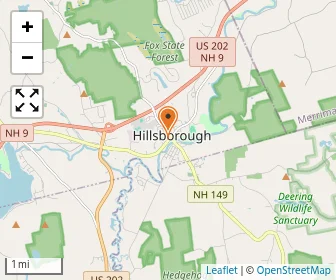
- Stone Bridge Montessori School in Hillsborough, NH, serves 24 students in pre–kindergarten through kindergarten within a nonsectarian Montessori early learning program.
- The school maintains a student–teacher ratio of 12:1 with two teachers supporting its co–ed preschool and kindergarten classes.
- Located in a town community, Stone Bridge Montessori offers an educational environment for early childhood learners in Hillsborough.
- The school enrolls mostly pre–kindergarten students, with only two kindergarteners among its total enrollment.
- It provides a small–scale, Montessori–based preschool program in Hillsborough, NH, accommodating families seeking early education in a town setting.
School Facts
School Type
Religious Affiliation
Grades Offered
Grades Prekindergarten-Kindergarten
Students By Grade
Student Body
Total Students
24 students
Student Body Type
Co-ed
Academic Profile
Total Classroom Teachers
2 teachers
Student-Teacher Ratio
12:1
National avg.: 11:1
Tuition & Financial Aid
Admission Deadline
None / Rolling
Frequently Asked Questions
When is the application deadline for Stone Bridge Montessori School?
The application deadline for Stone Bridge Montessori School is rolling (applications are reviewed as they are received year-round).
Nearby Private Schools
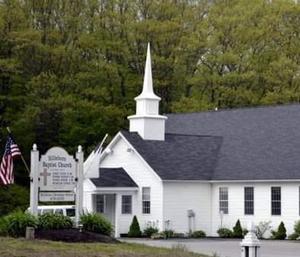
The nearest high school, elementary school and preschool to Stone Bridge Montessori School is Hillsboro Christian School (1.8 miles away)
Show me:
Distance: 1.8 mi
Gr: PK-12 | 46 students
Avg. class size: 3 students
Extracurriculars: 2
Baptist
337 Second New Hampshire Tpke
Hillsborough, NH 03244
(603) 478-2233
Distance: 2.8 mi
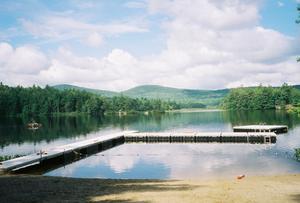
Gr: 6-12 | 44 students
Avg. class size: 6 students
All-boys | Special Education School
11 Bobcat Blvd
Hillsborough, NH 03244
(603) 478-5236

Distance: 4.6 mi
Gr: 9-12 | 7 students
100 Old N Branch Rd
Antrim, NH 03440
(603) 588-6800
Distance: 6.1 mi
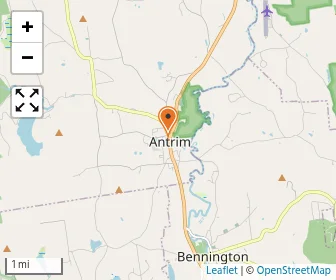
Gr: 8-12 | 8 students
All-girls | Specialized Curriculum
55 Main St
Antrim, NH 03440
(603) 588-3124
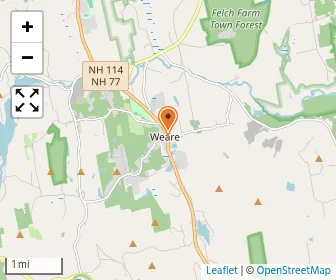
Distance: 8.5 mi
Gr: PK-K | 21 students
Daycare / Preschool
8 High St
Weare, NH 03281
(603) 529-2036
Distance: 1.8 mi
Gr: PK-12 | 46 students
Avg. class size: 3 students
Extracurriculars: 2
Baptist
337 Second New Hampshire Tpke
Hillsborough, NH 03244
(603) 478-2233
Distance: 2.8 mi
Gr: 6-12 | 44 students
Avg. class size: 6 students
All-boys | Special Education School
11 Bobcat Blvd
Hillsborough, NH 03244
(603) 478-5236
Distance: 4.6 mi
Gr: 9-12 | 7 students
100 Old N Branch Rd
Antrim, NH 03440
(603) 588-6800
Distance: 6.1 mi
Gr: 8-12 | 8 students
All-girls | Specialized Curriculum
55 Main St
Antrim, NH 03440
(603) 588-3124
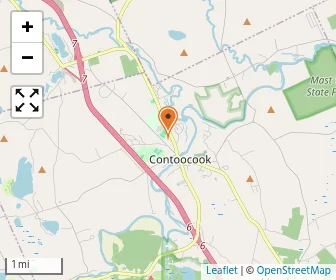
Distance: 11.9 mi
Gr: 6-12 | 11 students
Avg. class size: 5 students
Special Education School
40 Park Ln
Contoocook, NH 03229
(603) 746-7702
Distance: 1.8 mi
Gr: PK-12 | 46 students
Avg. class size: 3 students
Extracurriculars: 2
Baptist
337 Second New Hampshire Tpke
Hillsborough, NH 03244
(603) 478-2233
Distance: 2.8 mi
Gr: 6-12 | 44 students
Avg. class size: 6 students
All-boys | Special Education School
11 Bobcat Blvd
Hillsborough, NH 03244
(603) 478-5236
Distance: 6.1 mi
Gr: 8-12 | 8 students
All-girls | Specialized Curriculum
55 Main St
Antrim, NH 03440
(603) 588-3124
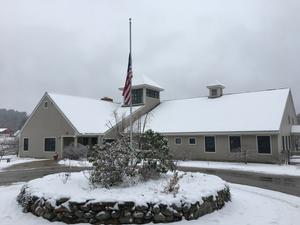
Distance: 11.8 mi
Gr: 5-8 | 44 students
Avg. class size: 10 students
Sports: 1
20 Beech Hill Rd.
Contoocook, NH 03229
(603) 715-5129
Distance: 11.9 mi
Gr: 6-12 | 11 students
Avg. class size: 5 students
Special Education School
40 Park Ln
Contoocook, NH 03229
(603) 746-7702
Distance: 1.8 mi
Gr: PK-12 | 46 students
Avg. class size: 3 students
Extracurriculars: 2
Baptist
337 Second New Hampshire Tpke
Hillsborough, NH 03244
(603) 478-2233
Distance: 8.5 mi
Gr: PK-K | 21 students
Daycare / Preschool
8 High St
Weare, NH 03281
(603) 529-2036
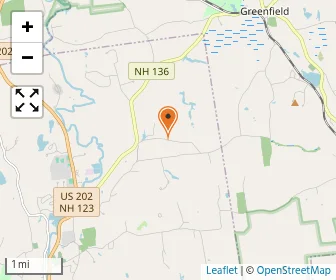
Distance: 13.5 mi
Gr: K | 19 students
Daycare / Preschool
132 Gulf Rd
Peterborough, NH 03458
(603) 924-7362
Distance: 13.8 mi
Gr: PK-K | 53 students
Daycare / Preschool
643 North Mast Road
New Boston, NH 03070
(603) 497-3202
Distance: 16.5 mi
Gr: PK-8 | 118 students
Avg. class size: 10 students
Sports: 2 | Extracurriculars: 6
36 Well School Road
Peterborough, NH 03458
(603) 924-6908
School
(Math and Reading Proficiency)
(Math and Reading Proficiency)
Location
Miles
Quick Facts
Hillsboro-deering Elementary School
(Math: 45-49% | Reading: 40-44%)
Rank:
Rank:
5/
Bottom 50%10
4 Hillcat Dr.
Hillsborough, NH 03244
(603) 464-1110
Hillsborough, NH 03244
(603) 464-1110
0.4 miles
Gr: PK-5 | 418 students Student-Teacher Ratio: 10:1 Minority enrollment: 10%
Hillsboro-deering Middle School
(Math: 30% | Reading: 25%)
Rank:
Rank:
2/
Bottom 50%10
6 Hillcat Dr.
Hillsborough, NH 03244
(603) 464-1120
Hillsborough, NH 03244
(603) 464-1120
0.4 miles
Gr: 6-8 | 229 students Student-Teacher Ratio: 12:1 Minority enrollment: 9%
Hillsboro-deering High School
(Math: 15-19% | Reading: 50-59%)
Rank:
Rank:
3/
Bottom 50%10
12 Hillcat Dr.
Hillsborough, NH 03244
(603) 464-1130
Hillsborough, NH 03244
(603) 464-1130
0.5 miles
Gr: 9-12 | 334 students Student-Teacher Ratio: 10:1 Minority enrollment: 8%
Henniker Community School
(Math: 39% | Reading: 49%)
Rank:
Rank:
5/
Bottom 50%10
51 Western Avenue
Henniker, NH 03242
(603) 428-3476
Henniker, NH 03242
(603) 428-3476
5.3 miles
Gr: PK-8 | 402 students Student-Teacher Ratio: 11:1 Minority enrollment: 6%
Antrim Elementary School
(Math: 40-49% | Reading: 30-39%)
Rank:
Rank:
4/
Bottom 50%10
10 School St.
Antrim, NH 03440
(603) 588-6371
Antrim, NH 03440
(603) 588-6371
6.3 miles
Gr: PK-4 | 133 students Student-Teacher Ratio: 8:1 Minority enrollment: 6%
Recent Articles

Private School Tuition Insurance: Is It Worth Buying?
Is private school tuition insurance worth buying? Learn what policies cover, compare costs and exclusions, and decide whether protecting your tuition investment makes financial sense for your family.

Medical Leave and Private School Tuition: Parent Guide
What happens to private school tuition during medical leave? Learn about refunds, tuition insurance, enrollment contracts, financial aid, and protecting your child's education while managing unexpected medical expenses and recovery.

Private School Commute: Is the Travel Time Worth It?
Is the commute to private school worth it? Learn how to calculate travel time, protect family routines, assess student well-being, and decide whether a longer journey makes educational sense.