
Advanced Learning Frameworks

This cluster highlights educational approaches, programs, and methodologies in private schools, offering insights into curricula, teaching philosophies, and standards shaping student experiences.

View the most popular articles in Advanced Learning Frameworks:

How Do They Teach?

Updated
|
How Do They Teach?
Evaluating the schools on your short list includes examining how the teaching is done.

"How do they teach?" is a question that you need to ask as you evaluate schools on your shortlist. This question has been on your mind ever since you began considering sending your child to private school. While it certainly is relevant at almost any stage of the school selection process, it becomes critically important now that you are circling around those final few schools on your list. Be sure to have the question answered. You can do this by asking the admissions staff how the teaching is done at their school. They are accustomed to answering the question and will provide a detailed explanation for you. Furthermore, I do recommend that you ask the identical question at each school you visit. Then you will be able to compare apples to apples, having asked the same question at each school.

Whether you are looking at your options for preschool, primary school, middle school or high school, how the teachers teach is just as important as what they teach. As you review each school's curriculum, familiarize yourself with how that curriculum is taught. Make sure that everything matches your requirements and expectations.

Laying the Groundwork for an Education

Let's look at three areas of concern that we as parents have faced outside the classroom as we raised our children. From infancy, we have had control of what we are taught. We have shaped our child's thinking up to the point where she went off to preschool and kindergarten. In


. . .read more

What If They Won't Have Your Child Back?

Updated
|
What If They Won't Have Your Child Back?
It's spring. You receive a letter from the school advising you that it will not be renewing its contract with you for next year. How can this happen? We offer some answers.

I can just hear you thinking "He's got to be kidding. After spending inordinate amounts of my valuable time and resources getting my child into private school, the school can decide it doesn't want her back next year?"

Yes, the school can do that. Sad. But true. Read the contract which you signed with the school when your daughter was first accepted. It very clearly spells out the rights each party to the contract has. One of those clauses states that the school does not have to renew its contract with you automatically. Most contracts have finite terms which are normally for one academic year.

How do you avoid the school sending a non-renewal notice? You make sure that the following are in order:

1. Acceptable academic progress

While it would be nice if your child could be first in every subject she takes, that is asking a bit too much. But you definitely want to keep her in the top third. If the school recommends extra help or even tutoring, don't fight that recommendation. Calculus may have been a breeze for you. But if she is struggling with it, be ahead of the curve. Accept the help offered.

This video offers a look at Academy Hill School in Springfield, Massachusetts.

All they really want is to see are her best efforts and maximum cooperation in achieving good results. There's a larger lesson that

. . .read more

5 Things Every Parent Should Do

Updated
|
5 Things Every Parent Should Do
Every private school parent is encouraged to help the school in whatever way he can. Here are some things you can do to make a contribution to your school.

If you are new to the school where your child has just been accepted, you may think that the school functions like a well-oiled machine with little help from outside. Nothing could be further from the truth. Your help and support as a parent are essential and, indeed, expected. In 2026, parent involvement remains especially important as schools manage student wellness needs, technology integration, enrollment pressures, and rising operating costs. Let's look at some ways in which we parents can contribute time, talent and treasure to our children's schools.

1. Support your school financially.

Depending on where you live and what your schedule is like, supporting the school financially may be all that you can do. If you have the means to make a significant gift, then contact the development office to see how best to use your munificence. Leadership gifts are critical to any school's fundraising success. In any case, give what you can. Gifts from parents are an important source of funding for most private schools.

In 2026, many schools also offer online giving portals, recurring donation options, and targeted campaigns for financial aid, security, technology, and student wellness initiatives. Parents who want more background on school finances can review Private School Endowments and Tuition Explained and Navigating Private School Finances: A Parent's Guide.

2. Be a class parent.

Primary schools, in particular, will appreciate help with all sorts of things. You will be worth your weight in gold if you are

. . .read more

An Interview with the Founder of Hyde Schools

Updated
|
An Interview with the Founder of Hyde Schools
Joseph Gauld is a distinguished educator who founded Hyde Schools in 1966.

Joseph Gauld is a distinguished educator who founded Hyde Schools in 1966. He very kindly agreed to answer some questions about Hyde Schools and his educational philosophy. The Editor.

1. Tell us a bit about the crisis of conscience that you had back in 1966. This is how the concept of Hyde Schools was shaped, correct?

As a director of admissions who taught calculus and coached football in 1962, I had a crisis of conscience when I realized I was part of a competitive educational system valuing certain abilities that blocked the full development of the unique potential of students.

On the other side of the spectrum, there was another student in the same class who was the classic “plugger.” Although he had considerable difficulty with the material, he embodied all of the qualities and virtues I hoped that schools would espouse: curiosity, strong work ethic, concern for others, honesty, etc. I praised his effort, yet ultimately—and reluctantly—gave him the lowest grade in the class.

This example represented what was wrong with our educational system, which values achievement, ability, and talent (so much so that it simply rewards and stops challenging students who have it) over attitude, effort, and character. I could not serve either of these students in the system I served with a traditional grading system, so I founded Hyde School in 1966, where I knew I could guide

. . .read more

Is Your Grandchild Going Away to Private School?

Updated
|
Is Your Grandchild Going Away to Private School?
There are several ways in which you can stay connected with your beloved grandchild.

Is your grandchild going away to private school? Perhaps you are wondering how you can fit into his new life away from home. You have always enjoyed watching him grow up. You've gone on trips and vacations together. Just because he's away at school doesn't mean you can't be close. After all, this is the 21st century when it's easy to stay connected.

Let's look at some of the special things a grandparent can do to stay connected with a beloved grandchild who's off at school.

Email

It's kind of old-fashioned these days, but email is still a pleasant way of keeping in touch. If you are in the least bit literary, it will be good for him to receive nicely crafted emails with news and gossip from back home. It is important for him to hear and reflect on your opinions about issues and events. Email handles that kind of communication extremely well.

email by Sean MacEntee, on Flickr Creative Commons Attribution 2.0 Generic License by Sean MacEntee

Just read your missives carefully before you hit the send button. Remember: you are not there to explain what you mean. So don't be cryptic. He's got plenty to do without wondering what's going on back home. It's also simply bad form to give him bad news in an email. Do that over the phone or

. . .read more

Recent Articles

How Private Schools Are Preventing Student Burnout
Discover how private schools are addressing student burnout through wellness programs, balanced academics, and expanded mental health support.
How Private Schools Evaluate “Soft Skills” Like Leadership and Grit
Learn how private schools assess leadership, grit, resilience, and character, and why these soft skills are becoming increasingly important in admissions.
How Private Schools Handle Cell Phones: Why Phone-Free Campuses Are Growing
Discover how private schools manage cell phones, why phone-free campuses are growing, and how reduced social media access can benefit students.

Advanced Learning Frameworks

ACADEMIC PHILOSOPHIES
This subcategory delves into the different educational approaches and philosophies adopted by private schools, such as Montessori, Waldorf, International Baccalaureate (IB), and traditional curricula. It explores how these programs shape the learning environment and student outcomes.
SUBJECT SPECIALIZATION
Here, we examine the range of subjects and courses offered in private schools, including core academic subjects, electives, advanced placement (AP) courses, and specialized programs. This section highlights how schools cater to diverse interests and academic needs.
ASSESSMENT AND EVALUATION
This subcategory focuses on the various methods used to measure student progress and academic achievement in private schools. It covers topics such as standardized testing, alternative assessment methods, grading systems, and how schools track and report student performance.
EDTECH & INNOVATION
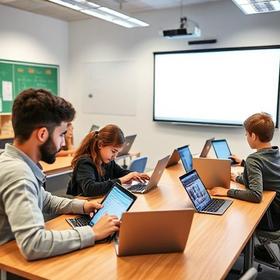
This section explores how private schools integrate technology and innovative teaching methods into their curriculum. It covers topics such as digital literacy, STEM/STEAM programs, project-based learning, and the use of educational technology to enhance the learning experience.
EARLY CHILDHOOD EDUCATION
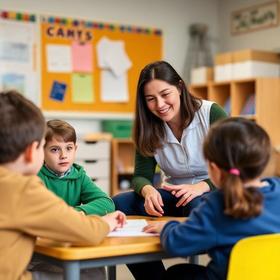
Information about preschool and primary grades.