Why Private School

A comprehensive look at private schools and why they might be right for your child. Explore the history of private school education, weigh the pros and cons of public vs. private school, and get valuable advice on making the best choice for your child. Learn more about the various types of private schools from military to progressive and review directories from a variety of resources including private school associations and offline publications.

View the most popular articles in Why Private School:

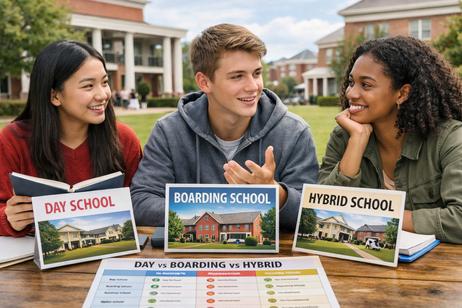
Comparing Day, Boarding & Hybrid Private Schools in 2026

Updated
|
Comparing Day, Boarding & Hybrid Private Schools in 2026
Explore how day, boarding, and hybrid private schools compare in 2026 to find the best fit for your child’s academics, lifestyle, and goals.

Comparing Day, Boarding & Hybrid Private Schools: Which Fits Your Child in 2026?

Choosing among day, boarding, and hybrid private schools is one of the most consequential education decisions families face. In 2026, this choice carries even greater weight as private schools adapt to shifting family lifestyles, expanded academic expectations, and post-pandemic innovations in student life. Day, boarding, and hybrid private schools now offer more flexible pathways than ever, but flexibility also brings complexity.

For parents evaluating day, boarding, and hybrid private schools, the right answer depends on far more than geography or tuition. Academic rigor, student independence, emotional readiness, family schedules, and long-term goals all play a role. Understanding how day, boarding, and hybrid private schools differ in today’s landscape helps families align school choice with a child’s needs rather than assumptions.

This guide offers a practical, up-to-date comparison of day, boarding, and hybrid private schools, with insights tailored to families planning for 2026 and beyond.

Understanding Day, Boarding, and Hybrid Private Schools

Day, boarding, and hybrid private schools share a commitment to small classes, individualized instruction, and mission-driven education. Where they diverge is in structure and daily experience.

Day private schools educate students during the academic day, typically from early morning through mid-afternoon. Students return home each evening and remain fully embedded in family life.

Boarding schools provide a residential experience where students live on campus during the academic term. Boarding, day, and hybrid private schools often share academic programs, but boarding schools add a 24/7
. . .read more

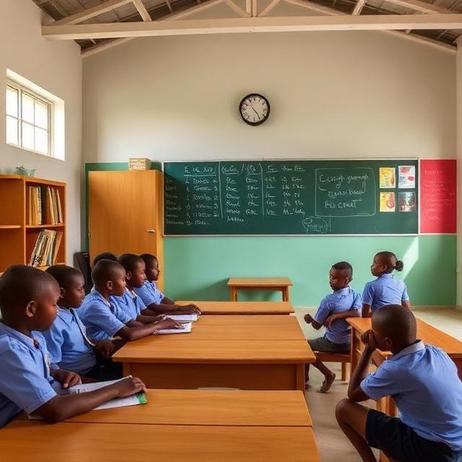
Independent Schools in Africa: Updated 2025 Overview

Updated
|
Independent Schools in Africa: Updated 2025 Overview
Explore the latest data, trends, costs and impacts of independent schools in Africa in 2025 for parents, educators and policymakers.

Independent Schools in Africa (Updated 2025)

Independent schools play an increasingly significant role across Africa’s education landscape, offering alternatives to government-run public schools for families seeking different academic models, curricula and learning environments. This updated review presents the latest available data, policy context, cost trends, and implications for parents, students, educators and policymakers in 2025.

Independent schools, sometimes called private schools, are institutions governed autonomously rather than by public education authorities. They include a wide range of models: faith-based schools, international curricula, low-fee private providers, for-profit chains and elite boarding schools. Their influence varies widely across the continent, shaped by economics, policy frameworks and local education needs.

Independent School Enrollment and Growth Trends

Across sub-Saharan Africa and other regions of the continent, independent education has grown steadily over the past two decades, responding to demand where public systems struggle to meet capacity and quality expectations. World Bank data prior to 2025 indicate that in some African countries private enrollment accounts for a significant share of total schooling, though averages vary widely across nations.

In Southern Africa, South Africa remains one of the most documented case studies. As of 2025, the country had several thousand independent schools, educating hundreds of thousands of learners. Estimates suggest more than 2,325 independent schools operate nationwide, enrolling around 400,000 students, or roughly 3 percent of the total learner population. Entrepreneur Hub SA

The Independent Schools Association of Southern Africa (ISASA), a major membership organization for private schools in the region, reported

. . .read more

Why Private School? Key Considerations for Families in 2025

Updated
|
Why Private School? Key Considerations for Families in 2025
Learn why families choose private school in 2025, including academics, class size, safety, tuition trends, and admissions guidance.

Why Private School? (2025 Edition)

Choosing the right school is one of the most important decisions families make. In 2025, conversations about education increasingly focus on academic quality, student well-being, safety, values, and long-term preparation. For many families, private school continues to be an appealing option because of its mission-driven approach, flexible programming, and emphasis on individualized learning.

This updated guide reflects current data, tuition trends, and program developments while remaining consistent with Private School Review’s role as a neutral, non-ranking resource. Rather than promoting specific schools, this article outlines the most common reasons families consider private school and the factors that shape those decisions.

Academic Focus and Instructional Quality

Academic rigor remains one of the most frequently cited reasons families explore private school options. Private schools have the autonomy to design curricula aligned with their educational philosophy, whether that includes classical education, STEM-focused instruction, arts integration, or faith-based learning.

In 2025, many private schools will continue to expand project-based learning, interdisciplinary coursework, and advanced academic offerings that emphasize critical thinking and communication skills. Smaller class sizes remain a defining characteristic, with many private schools averaging between 12 and 18 students per class. This structure allows teachers to provide individualized feedback and adapt instruction to students’ strengths and needs.

Faculty hiring practices also differ from those in public systems. Private schools typically prioritize subject expertise, teaching experience, and alignment with the school’s mission. While certification requirements vary, many schools invest heavily in professional development to maintain instructional quality

. . .read more

Private School Curriculum in 2025: Key Courses and Trends

Updated
|
Private School Curriculum in 2025: Key Courses and Trends
Explore what private schools are teaching in 2025, from core subjects and AI to global studies and tuition trends shaping private education today.

In 2025, the private school curriculum remains a cornerstone of what many parents and educators consider a forward-looking education. As private schools adapt to a rapidly evolving global economy, they balance timeless academic fundamentals with emerging disciplines and learning models designed to prepare students for future success. This updated review examines the priorities, breakthroughs, and challenges shaping private school curriculum offerings nationwide and internationally.

Core Academic Subjects and Enhanced Requirements

At the heart of every strong private school curriculum are core academic subjects, which private schools typically deliver at or above state standards. In 2025, schools continue to require rigorous study in English language arts, mathematics, science, and social studies while expanding requirements in areas such as technology, global languages, and arts education. Many independent schools now mandate four years of mathematics and science, with additional credits in foreign language and humanities integrated into graduation prerequisites.

Unlike many public systems, private schools retain the flexibility to accelerate or extend learning pathways. Educators report widespread implementation of sequencing that blends advanced English literature with media literacy, rigorous math with data analytics, and science with hands-on laboratory research. This depth reflects a curriculum strategy that aims to cultivate critical thinking and problem-solving skills early and continually.

Technology, AI, and Digital Fluency

One of the most significant shifts in the private school curriculum in 2025 is the integration of technology and artificial intelligence (AI) across grade levels. Rather than confining computing to elective status, many schools embed coding, machine learning concepts,

. . .read more

Student Success Predictors in Private K–12 Schools: A Guide for Families and Advisors

Updated
|
Student Success Predictors in Private K–12 Schools: A Guide for Families and Advisors
A practical guide to student success predictors at community colleges for private school advisors helping graduates navigate two-year pathways.

Families evaluating private K–12 schools often look for reliable indicators of student success. While each independent school offers a distinct mission, culture, and instructional model, certain predictors consistently correlate with strong academic growth, social development, and long-term readiness for higher education.

This guide synthesizes current practices within private elementary, middle, and high schools. It highlights the student success predictors that most strongly influence academic progress, engagement, and overall well-being. It also offers guidance for advisors and families who want to assess how well a school supports students at each developmental stage.

Private School Review’s mission is to offer clear, impartial information to families without ranking schools. In this spirit, the following framework is designed to help families understand what to look for as they compare options, visit campuses, and interpret school profiles.

Why Student Success Predictors Matter for Families Choosing a Private School

Private schools vary widely in size, philosophy, curriculum design, and support systems. When families understand key predictors of student success, they can:

  • Identify schools with strong academic foundations and supportive learning environments
  • Evaluate whether a school’s structure aligns with a student’s learning style, interests, and needs
  • Understand how well a school prepares students for the next level, whether that is kindergarten, middle school, high school, or college
  • Make informed decisions using neutral, research-informed criteria rather than marketing language alone

Families can review detailed school profiles, including student-to-teacher ratios, faculty credentials, and program offerings, on Private School Review. These data points provide an accessible starting point for evaluating a

. . .read more

Recent Articles

Should Your Child Stay at the Same Private School K–12?
Explore whether your child should attend the same private school from kindergarten through graduation, weighing academic continuity, friendships, changing needs, tuition costs, and opportunities at different educational stages.
When Your Child's Closest Friends Leave Private School
Learn how to support your child when close friends leave private school, manage loneliness, maintain friendships, encourage new connections, recognize emotional challenges, and decide when additional school support is needed.
When Your Child Doesn't Connect With Their Teacher
Discover when parents should intervene if their child struggles to connect with a private school teacher, including warning signs, communication strategies, classroom concerns, and practical steps toward improving relationships.

Why Private School

ABOUT PRIVATE SCHOOLS
An in depth look at private schools, including history, a comparison to public education, and a glimpse of what's being taught. Learn about the benefits of attending private school, to both students and parents. Explore private schools options when living abroad, and debunk many of the myths regarding private school education.
KINDS OF SCHOOLS
Private schools are just as varied as public schools. From Catholic to progressive, military to special needs, private schools offer a lot of options. Take a comprehensive look into the many types of private schools, weigh the pros and cons of each, and get helpful tips on choosing one that works best for your child.
SCHOOL LIFE
Get a glimpse of private school life. Here you'll find a survival guide for parents, brush up on terms and jargon, and learn why extracurricular activities are so important.
DIRECTORIES
We offer several directories to aid in your choice of a private school. Included are quick links to national, regional and state associations, a list of offline resources to aid in our decision, and local school directories for several metropolitan areas.