


Private School Review Blog

How Much Unstructured Time Does Your Child Have? - Learn why unstructured time matters during a private school day, how recess, lunch, free periods, and transitions affect students, and what parents should evaluate before enrolling. (Updated Oct. 6, 2026)
What Happens When Bullying Continues Outside School? - Learn how private schools may respond when bullying continues through social media, texts, gaming, and off-campus activities, and what parents should document, report, and expect. (Updated Oct. 6, 2026)
How Private Schools Handle Food Allergies - Learn how private schools manage food allergies, from emergency plans and epinephrine access to cafeteria procedures, staff training, field trips, and the questions parents should verify before enrolling their child. (Updated Oct. 6, 2026)

Quick Facts (26-27)

Updated
|
Do Your Child's SSAT or ISEE Scores Really Matter?
This article examines the significance of SSAT and ISEE scores in private school admissions. It discusses how schools use these scores, their impact on applications, and provides context on their importance relative to other admission factors

This article has been updated to reflect 2026 data and recent developments.

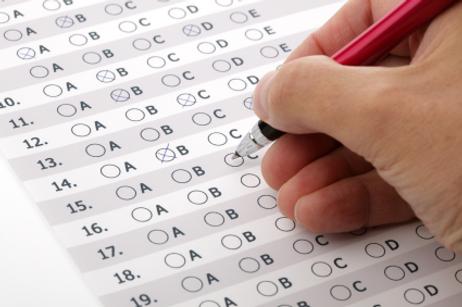
Standardized admissions tests are part of the drill in most private school admissions offices. You may well be wondering why your child's academic transcripts and teacher recommendations from her current school are not sufficient. Why is it necessary to prepare and register for a standardized admissions test? The results of a standardized admissions test indicate to the school what your child knows and doesn't know academically. Essentially, it would serve no purpose to accept your child only to have her flounder academically. You would be unhappy. Your child would be miserable. The school would also be in a difficult position of being unable to deliver the academic results it can achieve. To avoid this losing situation, most private schools will insist on all applicants taking a standardized admissions test. In 2026, requirements vary by school, so families should confirm each school's current admissions testing policy.

SSAT and ISEE

The two most commonly used admissions tests are the SSAT and ISEE. These tests measure your child's language and math skills. How do the admissions offices use the test scores the testing organizations send them? Primarily for comparison purposes. For example, if a school has an applicant pool with an average verbal score of 600 and yours is 700, you will be at the top of the list in that one aspect of all the factors the school looks at. Conversely, if your quantitative score is 550 and

. . .read more

5 Questions Your Consultant Can Ask and You Can't

Updated
|
5 Questions Your Consultant Can Ask and You Can't
Use an educational consultant to ask those tough questions you are not comfortable asking.

We parents are in a rather difficult position when it comes to finding out information about private schools. Because they are private schools, they are not subject to the usual sunshine or freedom of information laws. They are just like a privately-held company. They are under no legal obligation to tell you or the general public anything. You need to know exactly what is lurking behind those gorgeous web photos and enthusiastic classroom shots. You need to know the condition of the school from reliable sources. That's where hiring an educational consultant comes in. These professionals know their schools from the arts curriculum to the vintage of the Zamboni machine used on the hockey rink. This is information which you need in order to permit you to make the informed decisions you need to make about finding the right private school for your child.

One caveat, and it is a major one: there are educational consultants who claim to be able to get you into a school. Be careful. The sign of the genuine article is an educational consultant who will offer to help you find the best match for you and your child's requirements. Just be aware.

Questions to Ask Your Educational Consultant

The following questions are ones you might want to ask but probably feel uncomfortable asking. That's why it's a good thing to hire an educational consultant. She can ask such questions with relative impunity. Plus she will think of dozens of other

. . .read more

Athletics Are Not Optional

Updated
|
Athletics Are Not Optional
Learn why athletics remain central to private school education, student wellness, leadership development, and campus culture in 2026.

Athletic programs in private schools are an integral part of school life. They are not “optional.” All students participate in some athletic activity weekly while school is in session. Most private schools set aside a weekday afternoon, generally Wednesday, for athletics. There are no classes. Everybody is involved in some athletic activity somewhere on campus. In boarding schools, part of each Saturday is also given over to sports. Throughout this article, quotations from private school websites offer insight into how schools view competitive and recreational athletics.

“Competitive or recreational sports at The Putney School are valued for fostering individual skills and strengths. Sports do not conflict with art activities, so there is no need to choose between one or the other.” — The Putney School, Vermont

This is also a fundamental difference between many private and public schools. Public schools often face difficult budget decisions, and athletic funding can sometimes be reduced when districts must prioritize staffing and academic resources. Most private schools, however, continue to treat athletics as a core part of student development.

“The Gunnery's sports program cultivates competition and cooperation in the context of organized athletics. This is a tradition that stretches back, unbroken, to Mr. Gunn's era. A staunch advocate of physical fitness, he created the school's first athletic teams.” — The Gunnery, Connecticut

So, why the emphasis on athletics? And what is the point of making every student participate?

Most private school athletic programs teach students invaluable lessons about teamwork, resilience, discipline, and

. . .read more

Admissions Test Preparation: 2 Strategies

Updated
|
Admissions Test Preparation: 2 Strategies
Admissions tests are supposed to measure accomplishments. But what if your child has serious problems in math or English? What do you do then?

Admissions tests in private schools are supposed to measure your child's aptitude and readiness for the work in a serious private prep school. They are merely one tool for assessing a child's progress to date. Some children have learned their lessons well. Some children take tests well. Other children have deficiencies in certain skill areas. Still, others do not test well.

Long-term Test Preparation

In a perfect world, every child would master all the skills necessary to succeed academically. But children learn differently. Their teachers teach the same material differently. The school expects certain results in certain subject areas. That's why a standardized admissions test is a critical part of most private school admissions requirements.

If you can take the long-term approach to admissions test preparation, it certainly is the ideal. But you need to start a few years out from the actual admissions test itself. Here's what to do:

  1. Monitor your child's progress carefully.

    Identify any deficiencies and remediate them. Hire tutors if necessary. Create and maintain a climate for academic success. Set expectations accordingly.

  2. About eighteen months before the admissions test date, purchase the test preparation materials which are so widely available.

    Read about the test your child will be taking. Understand what is required. Then have your child take at least 2 practice tests six months before the actual test date. That will give you enough time to tweak any parts of the test

. . .read more

Which Is The Most Expensive Private School?

Updated
|
Which Is The Most Expensive Private School?
Tuition at private schools varies from nothing at a few schools to over $100,000 for the most expensive school.

The point of this article is to make the case for applying for financial aid, even if you think you might not need it. If you can afford to pay private school tuition, you have several payment options available to you. If you cannot afford the cost of a private school education, review Financial Aid 101. It will show you what to do. In every case, ask about financial aid. Private schools have generous financial aid programs. Financial aid is a tool that private schools use to make their school more diverse. Yes, many years ago, private schools had a less than positive reputation for being elitist. But thankfully, times have changed. Being able to pay for a private school education is no longer the only thing that matters. If your child has the qualifications which the school is looking for but you cannot afford to send her, then financial aid is certainly an option which you need to explore.

Le Rosey

Le Rosey, which bills itself as 'the prestigious international boarding school', tops the scale at a princely $114,000 in tuition for 2019-20. Boarding and sundries are not included. The school is located in Switzerland and is owned by a Swiss couple who are 'Les Directeurs'. What sort of clientele enjoys Le Rosey's proximity to some of the best skiing in the world? You guessed it: children of the rich and famous from every corner of the globe. The school does offer some

. . .read more

Recent Articles

How Much Unstructured Time Does Your Child Have?
Learn why unstructured time matters during a private school day, how recess, lunch, free periods, and transitions affect students, and what parents should evaluate before enrolling.
What Happens When Bullying Continues Outside School?
Learn how private schools may respond when bullying continues through social media, texts, gaming, and off-campus activities, and what parents should document, report, and expect.
How Private Schools Handle Food Allergies
Learn how private schools manage food allergies, from emergency plans and epinephrine access to cafeteria procedures, staff training, field trips, and the questions parents should verify before enrolling their child.