About the School
- Parkhill School operates exclusively with public revenues under contract with local public school districts.
- Districts refer students and fund school placement when there is no more appropriate program available in the student's local public school.
- Public revenues do not cover the total costs of services.
- Qualified, trained and caring staff works in partnership with parents, family members, community professionals, public and private agencies in a collaborative team approach.
- Emphasis is placed on creating a therapeutic instructional relationship between adult and student, which treats the individual student in his/her entirety, and allows for the maximum independent expression of one's humanity and developmental potential.
- The philosophy of Parkhill's Founders is implemented through a caring, personalized, therapeutic learning environment incorporating a strong, standards-based academic curriculum, which reinforces, promotes and challenges learning which commensurate with each student's abilities and interest.
- A highly structured, empirically-based school-wide behaviour management program and fully-integrated, professionally delivered, counseling support promotes self-direction, self-regulation, and mature emotional expression.
School Facts
Student Body
Total Students
60 students
Student Body Type
Co-ed
% Students of Color
64%
State avg.: 52%
Academic Profile
Total Classroom Teachers
3 teachers
Student-Teacher Ratio
20:1
National avg.: 11:1
Tuition & Financial Aid
Admission Deadline
None / Rolling
School Notes
- Parkhill School operates exclusively with public revenues under contract with local public school districts. Districts refer students and fund school placement when there is no more appropriate program available in the student's local public school. Public revenues do not cover the total costs of services. Qualified, trained and caring staff works in partnership with parents, family members, community professionals, public and private agencies in a collaborative team approach. Emphasis is placed on creating a therapeutic instructional relationship between adult and student, which treats the individual student in his/her entirety, and allows for the maximum independent expression of one's humanity and developmental potential. The philosophy of Parkhill's Founders is implemented through a caring, personalized, therapeutic learning environment incorporating a strong, standards-based academic curriculum, which reinforces, promotes and challenges learning which commensurate with each student's abilities and interest. A highly structured, empirically-based school-wide behaviour management program and fully-integrated, professionally delivered, counseling support promotes self-direction, self-regulation, and mature emotional expression.
Source: National Center for Education Statistics (NCES)
Frequently Asked Questions
When is the application deadline for Parkhill School?
The application deadline for Parkhill School is rolling (applications are reviewed as they are received year-round).
Related Schools
Show me:
People that viewed Parkhill School also viewed these schools: Faith Baptist Schools, I AM School, Fusion Academy Warner Center, East Valley Academy and Agbu Manoogian-demirdjian School.
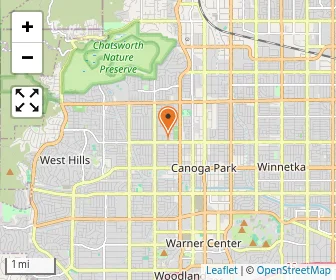
The nearest high school to Parkhill School is Faith Baptist Schools (0.4 miles away)
The nearest elementary school and preschool is West Valley Christian School (0.3 miles away)
Show me:
Show me:
Distance: 0.4 mi
Gr: PK-12 | 1,114 students
Sports: 11
Baptist
7644 Farralone Ave
Canoga Park, CA 91304
(818) 340-6131
Distance: 530.3 mi
Gr: K-12
Sports: 5
Christian
118 Siskiyou Ave
Mount Shasta, CA 96067
(530) 926-6263
Distance: 1.9 mi
Gr: 6-12 | 94 students
Avg. class size: 1 student
21650 Oxnard Street, Suite 100
Woodland Hills, CA 91367
(877) 673-8893
Distance: 2.7 mi
Gr: 6-12 | 70 students
8335 Winnetka Ave
Winnetka, CA 91306
(818) 727-9556
Distance: 2.8 mi
Gr: PK-12 | 1,002 students
6844 Oakdale Ave
Winnetka, CA 91306
(818) 883-2428
Distance: 0.4 mi
Gr: PK-12 | 1,114 students
Sports: 11
Baptist
7644 Farralone Ave
Canoga Park, CA 91304
(818) 340-6131
Distance: 530.3 mi
Gr: K-12
Sports: 5
Christian
118 Siskiyou Ave
Mount Shasta, CA 96067
(530) 926-6263
Distance: 1.9 mi
Gr: 6-12 | 94 students
Avg. class size: 1 student
21650 Oxnard Street, Suite 100
Woodland Hills, CA 91367
(877) 673-8893
Distance: 2.7 mi
Gr: 6-12 | 70 students
8335 Winnetka Ave
Winnetka, CA 91306
(818) 727-9556
Distance: 2.8 mi
Gr: PK-12 | 1,002 students
6844 Oakdale Ave
Winnetka, CA 91306
(818) 883-2428
Distance: 0.4 mi
Gr: PK-12 | 1,114 students
Sports: 11
Baptist
7644 Farralone Ave
Canoga Park, CA 91304
(818) 340-6131
Distance: 530.3 mi
Gr: K-12
Sports: 5
Christian
118 Siskiyou Ave
Mount Shasta, CA 96067
(530) 926-6263
Distance: 1.9 mi
Gr: 6-12 | 94 students
Avg. class size: 1 student
21650 Oxnard Street, Suite 100
Woodland Hills, CA 91367
(877) 673-8893
Distance: 2.7 mi
Gr: 6-12 | 70 students
8335 Winnetka Ave
Winnetka, CA 91306
(818) 727-9556
Distance: 2.8 mi
Gr: PK-12 | 1,002 students
6844 Oakdale Ave
Winnetka, CA 91306
(818) 883-2428
Distance: 0.4 mi
Gr: PK-12 | 1,114 students
Sports: 11
Baptist
7644 Farralone Ave
Canoga Park, CA 91304
(818) 340-6131
Distance: 2.8 mi
Gr: PK-12 | 1,002 students
6844 Oakdale Ave
Winnetka, CA 91306
(818) 883-2428
Distance: 6.9 mi
Gr: PK-12 | 239 students
Avg. class size: 18 students
Sports: 8 | Extracurriculars: 7
Specialized Curriculum
17100 Superior Street
Northridge, CA 91325
(818) 349-1394
Distance: 8.2 mi
Gr: NS-12 | 121 students
Avg. class size: 12 students
Christian
8854 Haskell Ave.
North Hills, CA 91343
(818) 894-3213
Distance: 15.2 mi
Gr: NS-12 | 154 students
Avg. class size: 13 students
Sports: 6 | Extracurriculars: 12
11341 Brainard Ave
Sylmar, CA 91342
(818) 583-1070
Distance: 0.3 mi
Gr: PK-8 | 291 students
Avg. class size: 23 students
Sports: 7 | Extracurriculars: 10
Christian
22450 Sherman Way
West Hills, CA 91307
(818) 884-4710
Distance: 0.4 mi
Gr: PK-12 | 1,114 students
Sports: 11
Baptist
7644 Farralone Ave
Canoga Park, CA 91304
(818) 340-6131
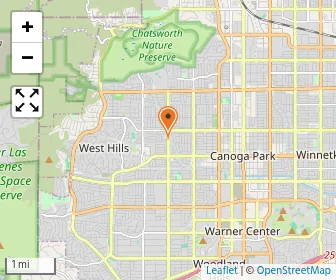
Distance: 0.5 mi
Gr: PK-K | 25 students
Montessori School
7475 Fallbrook Ave
West Hills, CA 91307
(818) 992-5341
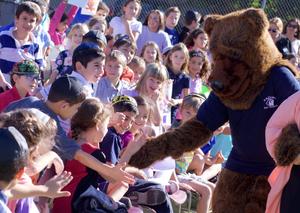
Distance: 0.5 mi
Gr: PK-8 | 290 students
Avg. class size: 15 students
Sports: 7 | Extracurriculars: 11
Jewish
7011 Shoup Avenue
West Hills, CA 91307
(818) 346-0849
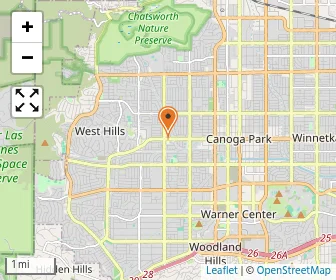
Distance: 0.5 mi
Gr: NS-K | 93 students
Daycare / Preschool
22700 Sherman Way
West Hills, CA 91307
(818) 443-0520
Distance: 0.4 mi
Gr: PK-12 | 1,114 students
Sports: 11
Baptist
7644 Farralone Ave
Canoga Park, CA 91304
(818) 340-6131
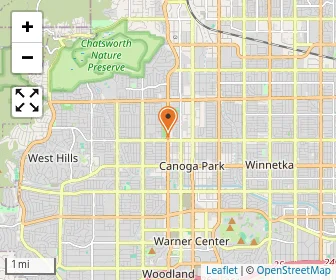
Distance: 0.6 mi
Gr: K-12 | 53 students
Lutheran Church Missouri Synod
7357 Jordan Ave
Reseda, CA 91335
(818) 703-6735
Distance: 0.8 mi
Gr: 6-12 | 33 students
Special Education School
7119 Owensmouth Avenue
Canoga Park, CA 91303
(818) 992-0301
Distance: 1.3 mi
Gr: 9-12 | 1,272 students
Avg. class size: 27 students
Sports: 18
Catholic
7500 Chaminade Avenue
Canoga Park, CA 91304
(818) 347-8300
Distance: 1.8 mi
Gr: 9-12 | 357 students
Avg. class size: 15 students
Sports: 14 | Extracurriculars: 10
Jewish
22622 Vanowen St.
West Hills, CA 91307
(818) 348-0048
Distance: 0.3 mi
Gr: PK-8 | 291 students
Avg. class size: 23 students
Sports: 7 | Extracurriculars: 10
Christian
22450 Sherman Way
West Hills, CA 91307
(818) 884-4710
Distance: 0.4 mi
Gr: PK-12 | 1,114 students
Sports: 11
Baptist
7644 Farralone Ave
Canoga Park, CA 91304
(818) 340-6131
Distance: 0.5 mi
Gr: PK-8 | 290 students
Avg. class size: 15 students
Sports: 7 | Extracurriculars: 11
Jewish
7011 Shoup Avenue
West Hills, CA 91307
(818) 346-0849
Distance: 0.6 mi
Gr: K-12 | 53 students
Lutheran Church Missouri Synod
7357 Jordan Ave
Reseda, CA 91335
(818) 703-6735
Distance: 0.6 mi
Gr: PK-8 | 176 students
Avg. class size: 17 students
Sports: 5 | Extracurriculars: 4
Catholic
22041 Gault St
Canoga Park, CA 91303
(818) 592-2894
Distance: 0.3 mi
Gr: PK-8 | 291 students
Avg. class size: 23 students
Sports: 7 | Extracurriculars: 10
Christian
22450 Sherman Way
West Hills, CA 91307
(818) 884-4710
Distance: 0.4 mi
Gr: PK-12 | 1,114 students
Sports: 11
Baptist
7644 Farralone Ave
Canoga Park, CA 91304
(818) 340-6131
Distance: 0.5 mi
Gr: PK-K | 25 students
Montessori School
7475 Fallbrook Ave
West Hills, CA 91307
(818) 992-5341
Distance: 0.5 mi
Gr: PK-8 | 290 students
Avg. class size: 15 students
Sports: 7 | Extracurriculars: 11
Jewish
7011 Shoup Avenue
West Hills, CA 91307
(818) 346-0849
Distance: 0.5 mi
Gr: NS-K | 93 students
Daycare / Preschool
22700 Sherman Way
West Hills, CA 91307
(818) 443-0520
School
(Math and Reading Proficiency)
(Math and Reading Proficiency)
Location
Miles
Quick Facts
Canoga Park Elementary School
(Math: 14% | Reading: 24%)
Rank:
Rank:
2/
Bottom 50%10
7438 Topanga Canyon Blvd.
Canoga Park, CA 91303
(818) 340-3591
Canoga Park, CA 91303
(818) 340-3591
0.5 miles
Gr: K-5 | 462 students Student-Teacher Ratio: 21:1 Minority enrollment: 96%
Ingenium Charter Middle School
Charter School
(Math: 10-14% | Reading: 20-24%)
Rank:
Rank:
2/
Bottom 50%10
7330 Winnetka Ave.
Winnetka, CA 91306
(818) 309-2777
Winnetka, CA 91306
(818) 309-2777
0.5 miles
Gr: 6-8 | 179 students Student-Teacher Ratio: 18:1 Minority enrollment: 98%
Canoga Park Middle School
(Math: 13% | Reading: 23%)
Rank:
Rank:
2/
Bottom 50%10
22250 Elkwood St.
Canoga Park, CA 91304
(818) 702-1200
Canoga Park, CA 91304
(818) 702-1200
0.6 miles
Gr: 6-8 | 579 students Student-Teacher Ratio: 17:1 Minority enrollment: 95%
Ingenium Charter
Charter School
(Math: 20-24% | Reading: 25-29%)
Rank:
Rank:
3/
Bottom 50%10
22250 Elkwood St.
Canoga Park, CA 91304
(818) 456-4590
Canoga Park, CA 91304
(818) 456-4590
0.6 miles
Gr: K-5 | 296 students Student-Teacher Ratio: 23:1 Minority enrollment: 97%
Enadia Way Technology Charter
Charter School
(Math: 45-49% | Reading: 55-59%)
Rank:
Rank:
8/
Top 30%10
22944 Enadia Way
West Hills, CA 91307
(818) 595-3900
West Hills, CA 91307
(818) 595-3900
0.7 miles
Gr: K-5 | 213 students Student-Teacher Ratio: 21:1 Minority enrollment: 83%
Recent Articles

Should Your Child Stay at the Same Private School K–12?
Explore whether your child should attend the same private school from kindergarten through graduation, weighing academic continuity, friendships, changing needs, tuition costs, and opportunities at different educational stages.

When Your Child's Closest Friends Leave Private School
Learn how to support your child when close friends leave private school, manage loneliness, maintain friendships, encourage new connections, recognize emotional challenges, and decide when additional school support is needed.

When Your Child Doesn't Connect With Their Teacher
Discover when parents should intervene if their child struggles to connect with a private school teacher, including warning signs, communication strategies, classroom concerns, and practical steps toward improving relationships.