
About the School
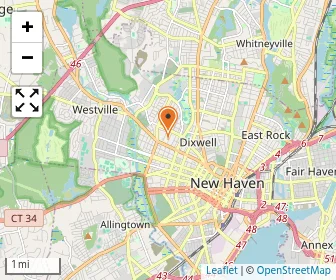
- Yeshiva Gedolah / Rabbinical Institutional Of New England is an all–boys Jewish private high school serving grades 9 through 12 in the Beaver Hills neighborhood of New Haven, CT. The school enrolls 86 students and employs 7 teachers, resulting in a student–teacher ratio of 12:1.
- Located in an urban setting, this New Haven religious private school offers programs for secondary education within a city community type.
Student Body
Total Students
86 students
Student Body Type
Academics & Faculty
Total Classroom Teachers
7 teachers
Student-Teacher Ratio
12:1
National avg.: 11:1
Tuition & Acceptance Rate
Admission Deadline
None / Rolling
Frequently Asked Questions
When is the application deadline for Yeshiva Gedolah / Rabbinical Institutional Of New England?
The application deadline for Yeshiva Gedolah / Rabbinical Institutional Of New England is rolling (applications are reviewed as they are received year-round).
In what neighborhood is Yeshiva Gedolah / Rabbinical Institutional Of New England located?
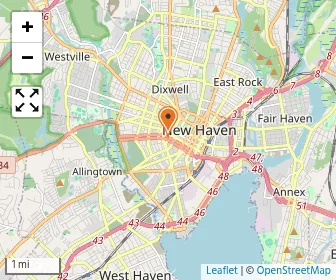
Yeshiva Gedolah / Rabbinical Institutional Of New England is located in the Beaver Hills neighborhood of New Haven, CT.
Nearby Private Schools
The nearest high school to Yeshiva Gedolah / Rabbinical Institutional Of New England is Yeshiva Beis Dovid Shlomo (0.0 miles away)
The nearest elementary school is Children's Community Programs Of Ct (0.4 miles away)
The nearest preschool is All Saints Catholic Academy (1.2 miles away)
Show me:
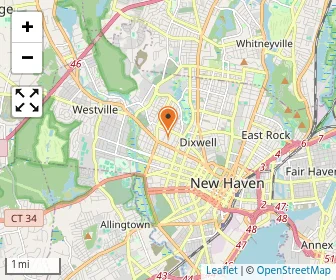
Gr: 9-12 | 95 students
All-boys (Jewish)
292 Norton Street
New Haven, CT 06511
(203) 776-9237
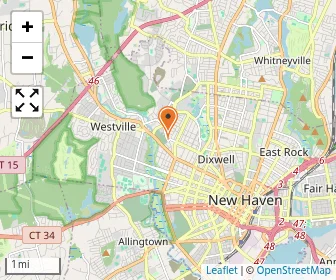
Distance: 0.4 mi
Gr: 6-12 | 44 students
Alternative School (Christian)
446a Blake St Ste 100
New Haven, CT 06515
(203) 468-5316
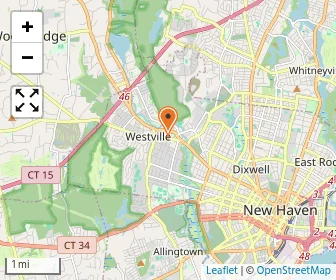
Distance: 1.1 mi
Gr: K-8 | 121 students
Catholic
351 Mckinley Ave
New Haven, CT 06515
(203) 387-5693
Distance: 1.1 mi
Gr: 1-10 | 14 students
Special Education School
230 S Frontage Rd
New Haven, CT 06519
(203) 688-5997

Distance: 1.2 mi
Gr: PK-8 | 157 students
Avg. class size: 15 students
Sports: 4 | Extracurriculars: 8
Catholic
423 Ferry St
New Haven, CT 06513
(203) 777-5352
Gr: 9-12 | 95 students
All-boys (Jewish)
292 Norton Street
New Haven, CT 06511
(203) 776-9237
Distance: 0.4 mi
Gr: 6-12 | 44 students
Alternative School (Christian)
446a Blake St Ste 100
New Haven, CT 06515
(203) 468-5316
Distance: 1.1 mi
Gr: 1-10 | 14 students
Special Education School
230 S Frontage Rd
New Haven, CT 06519
(203) 688-5997
Distance: 1.2 mi
Gr: 12 | 205 students
Avg. class size: 30 students
Sports: 12 | Extracurriculars: 6
Special Education School
1040 Whalley Avenue
New Haven, CT 06515
(203) 397-1714
Distance: 1.3 mi
Gr: 7-9 | 20 students
Avg. class size: 15 students
Specialized Curriculum
100 Audubon St.
New Haven, CT 06510
(203) 624-5189
Distance: 0.4 mi
Gr: 6-12 | 44 students
Alternative School (Christian)
446a Blake St Ste 100
New Haven, CT 06515
(203) 468-5316
Distance: 1.1 mi
Gr: K-8 | 121 students
Catholic
351 Mckinley Ave
New Haven, CT 06515
(203) 387-5693
Distance: 1.1 mi
Gr: 1-10 | 14 students
Special Education School
230 S Frontage Rd
New Haven, CT 06519
(203) 688-5997
Distance: 1.2 mi
Gr: PK-8 | 157 students
Avg. class size: 15 students
Sports: 4 | Extracurriculars: 8
Catholic
423 Ferry St
New Haven, CT 06513
(203) 777-5352
Distance: 1.3 mi
Gr: 7-9 | 20 students
Avg. class size: 15 students
Specialized Curriculum
100 Audubon St.
New Haven, CT 06510
(203) 624-5189
Distance: 1.2 mi
Gr: PK-8 | 157 students
Avg. class size: 15 students
Sports: 4 | Extracurriculars: 8
Catholic
423 Ferry St
New Haven, CT 06513
(203) 777-5352
Distance: 1.5 mi
Gr: PK-K | 51 students
Avg. class size: 18 students
Daycare / Preschool
150 Highland St
New Haven, CT 06511
(203) 764-9350
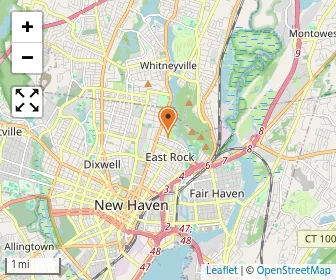
Distance: 1.8 mi
Gr: PK-K | 65 students
Daycare / Preschool
100 Cold Spring St
New Haven, CT 06511
(203) 624-1374
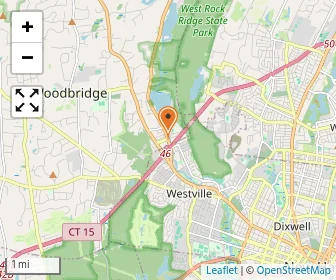
Distance: 2.2 mi
Gr: K | 7 students
Montessori School
1666 Litchfield Tpke
Woodbridge, CT 06525
(203) 397-8178
Distance: 2.3 mi
Gr: NS-12 | 650 students
Avg. class size: 12 students
Sports: 22 | Extracurriculars: 45
1108 Whitney Ave
Hamden, CT 06517
(203) 752-2610
School
(Math and Reading Proficiency)
(Math and Reading Proficiency)
Location
Miles
Quick Facts
Green's Farms School
(Math: 83% | Reading: 80-84%)
Rank:
Rank:
10/
Top 5%10
17 Morningside Dr. South
Westport, CT 06880
(203) 222-3610
Westport, CT 06880
(203) 222-3610
9402.9 miles
Gr: K-5 | 460 students Student-Teacher Ratio: 12:1 Minority enrollment: 23%
Long Lots School
(Math: 80% | Reading: 86%)
Rank:
Rank:
10/
Top 5%10
13 Hyde Ln.
Westport, CT 06880
(203) 341-1910
Westport, CT 06880
(203) 341-1910
9403.1 miles
Gr: K-5 | 571 students Student-Teacher Ratio: 12:1 Minority enrollment: 24%
Mill Hill School
(Math: 75-79% | Reading: 80-84%)
Rank:
Rank:
10/
Top 5%10
635 Mill Hill Terrace
Southport, CT 06890
(203) 255-8320
Southport, CT 06890
(203) 255-8320
9403.5 miles
Gr: K-5 | 371 students Student-Teacher Ratio: 11:1 Minority enrollment: 20%
Sherman School
(Math: 90-94% | Reading: 85-89%)
Rank:
Rank:
10/
Top 1%10
250 Fern St.
Fairfield, CT 06824
(203) 255-8330
Fairfield, CT 06824
(203) 255-8330
9403.7 miles
Gr: K-5 | 385 students Student-Teacher Ratio: 14:1 Minority enrollment: 16%
Tomlinson Middle School
(Math: 51% | Reading: 58%)
Rank:
Rank:
6/
Top 50%10
200 Unquowa Rd.
Fairfield, CT 06824
(203) 255-8336
Fairfield, CT 06824
(203) 255-8336
9403.7 miles
Gr: 6-8 | 584 students Student-Teacher Ratio: 10:1 Minority enrollment: 39%
Recent Articles

How Much Homework Is Too Much?
Learn how to compare private school homework expectations, recognize excessive workloads, evaluate assignment quality, and ask better questions about academic balance before choosing a school for your child.

Learning Support Without a Formal Program
Learn what private schools mean by informal learning support, how services differ from formal programs, and which questions families should ask before choosing the right school today.
Beyond AP vs. IB: How to Judge Academic Rigor
Learn how to judge academic rigor at private schools without AP or IB by examining curriculum depth, assessments, faculty expectations, advanced coursework, student work, and college preparation outcomes.