About the School
- Community Christian Academy exists to glorify God by partnering with parents to produce (with God's help) academically and spiritually mature students who know and love God and His Word and are equipped to impact their world for Jesus Christ.
School Facts
Student Body
Total Students
35 students
Student Body Type
Co-ed
% Students of Color
50%
State avg.: 52%
Academic Profile
Total Classroom Teachers
3 teachers
Student-Teacher Ratio
12:1
National avg.: 11:1
Average Class Size
10 students
Classroom Dress Code
Casual
Navy Blue pants/shorts; white polo - School T-shirt and Jeans on Fridays
Tuition & Financial Aid
Admission Deadline
None / Rolling
Yearly Tuition Cost
Tuition Notes
Monthly payment plans available. Does not include curriculum or application fees.
Acceptance Rate
95%
National avg.: 85%
Admissions Director
Mrs. Snyder
Frequently Asked Questions
How much does Community Christian Academy cost?
Community Christian Academy's tuition is approximately $5,000 for private students.
What is the acceptance rate of Community Christian Academy?
The acceptance rate of Community Christian Academy is 95%, which is higher than the national average of 83%.
When is the application deadline for Community Christian Academy?
The application deadline for Community Christian Academy is rolling (applications are reviewed as they are received year-round).
Nearby Private Schools
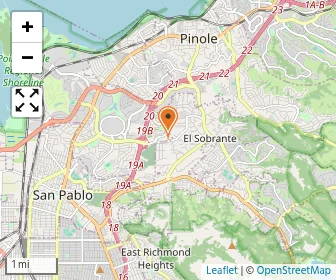
The nearest high school to Community Christian Academy is Salesian College Preparatory High School (1.5 miles away)
The nearest elementary school is Canterbury School (0.7 miles away)
The nearest preschool is La Petite Academy (0.8 miles away)
Show me:
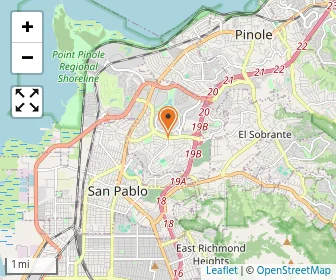
Distance: 0.7 mi
Gr: 1-8 | 41 students
3120 Shane Dr
San Pablo, CA 94806
(510) 222-5050
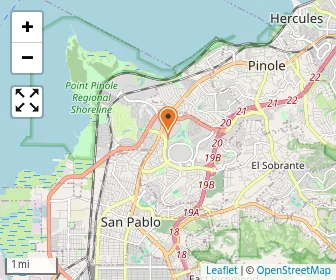
Distance: 0.8 mi
Gr: PK-K | 35 students
Daycare / Preschool
3891 Lakeside Dr
San Pablo, CA 94806
(510) 222-3070
Distance: 1.1 mi
Gr: Inquire with school | 44 students
Avg. class size: 8 students
Special Education School
4138 Lakeside Dr
San Pablo, CA 94806
(510) 262-1500
Distance: 1.2 mi
Gr: NS-PK | 26 students
Daycare / Preschool
3240 San Pablo Dam Rd.
El Sobrante, CA 94803
(510) 222-1144
Distance: 1.3 mi
Gr: NS-8 | 117 students
Catholic
1825 Church Lane
San Pablo, CA 94806
(510) 233-3080
Distance: 1.5 mi
Gr: 9-12 | 386 students
Catholic
2851 Salesian Ave
Richmond, CA 94804
(510) 234-4433
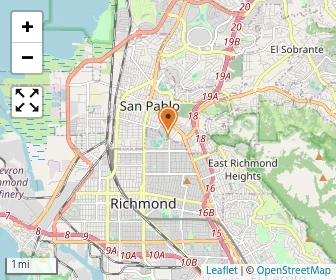
Distance: 1.5 mi
Gr: 9-12 | 386 students
Catholic
2851 Salesian Ave
Richmond, CA 94804
(510) 234-4433
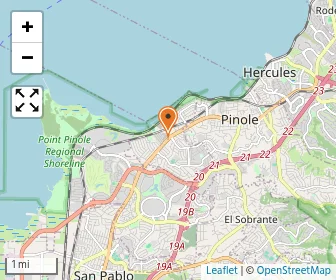
Distance: 1.9 mi
Gr: 1-12 | 38 students
Avg. class size: 8 students
Special Education School
16330 San Pablo Ave
San Pablo, CA 94806
(510) 724-4494

Distance: 2.1 mi
Gr: 4-12 | 24 students
Special Education School
1060 Manor Rd
El Sobrante, CA 94803
(510) 300-6350
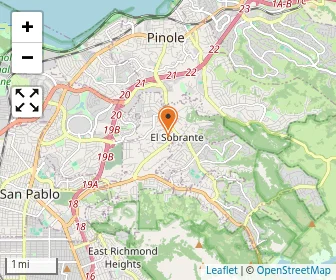
Distance: 2.4 mi
Gr: K-12 | 71 students
Baptist
431 Rincon Rd
El Sobrante, CA 94803
(510) 223-9550
Distance: 0.7 mi
Gr: 1-8 | 41 students
3120 Shane Dr
San Pablo, CA 94806
(510) 222-5050
Distance: 1.3 mi
Gr: NS-8 | 117 students
Catholic
1825 Church Lane
San Pablo, CA 94806
(510) 233-3080
Distance: 1.9 mi
Gr: 1-12 | 38 students
Avg. class size: 8 students
Special Education School
16330 San Pablo Ave
San Pablo, CA 94806
(510) 724-4494
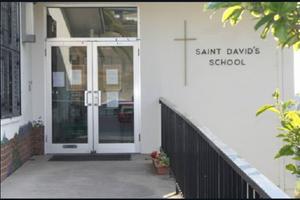
Distance: 2.1 mi
Gr: PK-8 | 177 students
Avg. class size: 17 students
Sports: 4 | Extracurriculars: 6
Catholic
871 Sonoma Street
Richmond, CA 94805
(510) 232-2283
Distance: 2.1 mi
Gr: 4-12 | 24 students
Special Education School
1060 Manor Rd
El Sobrante, CA 94803
(510) 300-6350
Distance: 0.8 mi
Gr: PK-K | 35 students
Daycare / Preschool
3891 Lakeside Dr
San Pablo, CA 94806
(510) 222-3070
Distance: 1.2 mi
Gr: NS-PK | 26 students
Daycare / Preschool
3240 San Pablo Dam Rd.
El Sobrante, CA 94803
(510) 222-1144
Distance: 1.3 mi
Gr: NS-8 | 117 students
Catholic
1825 Church Lane
San Pablo, CA 94806
(510) 233-3080

Distance: 1.4 mi
Gr: PK-K | 31 students
Montessori School
801 Park Central St
El Sobrante, CA 94803
(510) 223-0314
Distance: 1.7 mi
Gr: PK-K | 92 students
Montessori School
4555 Hilltop Dr
El Sobrante, CA 94803
(510) 222-6059
School
(Math and Reading Proficiency)
(Math and Reading Proficiency)
Location
Miles
Quick Facts
Bayview Elementary School
(Math: 10-14% | Reading: 9%)
Rank:
Rank:
1/
Bottom 50%10
3001 16th St.
San Pablo, CA 94806
(510) 231-1401
San Pablo, CA 94806
(510) 231-1401
0.4 miles
Gr: K-6 | 335 students Student-Teacher Ratio: 21:1 Minority enrollment: 97%
Middle College High School
(Math: 50-59% | Reading: 80-84%)
Rank:
Rank:
10/
Top 10%10
2600 Mission Bell Dr.
San Pablo, CA 94806
(510) 215-3881
San Pablo, CA 94806
(510) 215-3881
0.4 miles
Gr: 9-12 | 294 students Student-Teacher Ratio: 29:1 Minority enrollment: 94%
Lake Elementary School
(Math: 6-9% | Reading: 14%)
Rank:
Rank:
1/
Bottom 50%10
2700 Eleventh St.
San Pablo, CA 94806
(510) 231-1451
San Pablo, CA 94806
(510) 231-1451
0.7 miles
Gr: K-6 | 350 students Student-Teacher Ratio: 25:1 Minority enrollment: 96%
Aspire Richmond Ca. College Preparatory Academy
Charter School
(Math: 11% | Reading: 33%)
Rank:
Rank:
2/
Bottom 50%10
3040 Hilltop Mall Rd.
Oakland, CA 94606
(510) 684-8900
Oakland, CA 94606
(510) 684-8900
0.8 miles
Gr: 6-12 | 590 students Student-Teacher Ratio: 25:1 Minority enrollment: 99%
Aspire Richmond Technology Academy
Charter School
(Math: 29% | Reading: 33%)
Rank:
Rank:
5/
Bottom 50%10
3170 Hilltop Mall Rd.
Oakland, CA 94606
(510) 480-0660
Oakland, CA 94606
(510) 480-0660
0.8 miles
Gr: K-5 | 586 students Student-Teacher Ratio: 22:1 Minority enrollment: 98%
Recent Articles

Private School Tuition Insurance: Is It Worth Buying?
Is private school tuition insurance worth buying? Learn what policies cover, compare costs and exclusions, and decide whether protecting your tuition investment makes financial sense for your family.

Medical Leave and Private School Tuition: Parent Guide
What happens to private school tuition during medical leave? Learn about refunds, tuition insurance, enrollment contracts, financial aid, and protecting your child's education while managing unexpected medical expenses and recovery.

Private School Commute: Is the Travel Time Worth It?
Is the commute to private school worth it? Learn how to calculate travel time, protect family routines, assess student well-being, and decide whether a longer journey makes educational sense.